MEAL & NUTRITION SERVICES PROVIDER IN MARYLAND
By Fatumata Kaba · 2025-09-02 · 5 min read
Meal and Nutrition Services in Maryland provide essential health and wellness support for individuals with disabilities, chronic health conditions, or functional limitations by ensuring access to specialized meal delivery and professional dietary counseling. These Medicaid Home and Community-Based Services (HCBS) programs, including the Community First Choice (CFC) program and the Developmental Disabilities Administration (DDA) waivers, are designed to reduce health risks and foster independent living by integrating clinical nutrition standards directly into a participant's Person-Centered Plan (PCP).
Understanding the Governance of Maryland’s Nutritional HCBS
The administration of nutritional services in Maryland is a multi-agency effort requiring strict adherence to both state-level regulatory standards and federal oversight. The Maryland Department of Health (MDH) serves as the primary entity responsible for the clinical standards and the overarching management of Medicaid HCBS programs. Within this framework, the Developmental Disabilities Administration (DDA) acts as the specific authorizing body for participants enrolled in the Community Pathways, Community Supports, and Family Supports waivers, ensuring that nutritional services align with individual support goals.
Operational data and financial accountability are funneled through the Long-Term Services and Supports (LTSS Maryland) system, which tracks all billing and service documentation. Simultaneously, the Centers for Medicare & Medicaid Services (CMS) maintains federal compliance oversight, ensuring that these state-funded initiatives meet the quality and health requirements necessary for federal reimbursement. Providers must remain cognizant of the intersection between these agencies to maintain their good standing as active Medicaid participants.
Differentiating Between Meal Delivery and Professional Nutrition Services
Providers must clearly distinguish between the two primary pillars of nutritional HCBS: physical meal delivery and dietitian-led professional counseling. Meal delivery services involve the provision of prepared, ready-to-eat, or heat-and-serve meals directly to a participant's home. These services are specifically authorized for individuals who lack the functional capacity to shop for groceries or prepare their own meals. Providers must ensure that all delivered meals adhere to prescribed therapeutic diets, such as renal-friendly, diabetic, or low-sodium plans, with menus rigorously documented for nutritional content.
In contrast, nutrition services are clinical in nature and require the specialized expertise of a Licensed Dietitian (LD) or Registered Dietitian (RD). This tier of service focuses on long-term wellness outcomes, including comprehensive nutritional assessments, personalized meal planning, and education provided to both the participant and their caregivers. These professionals work in tandem with the participant's broader care team—including physicians and support planners—to monitor key health markers like weight management and blood sugar levels, ensuring that dietary interventions are responsive to the participant's changing medical needs.
Regulatory Compliance and Provider Approval Requirements
To enter the Medicaid provider network, organizations must satisfy a stringent set of licensing and administrative prerequisites. For businesses focused on home-delivered meals, this begins with legal registration through the Maryland Department of Assessments and Taxation (SDAT), obtaining a federal Employer Identification Number (EIN), and securing a Type 2 National Provider Identifier (NPI). Operational legitimacy is further proven through a commercial kitchen license or a formal subcontracting agreement with a licensed, health-inspected catering facility.
Professional nutrition providers must demonstrate different compliance markers, primarily focused on the credentials of their staff. Any business offering nutritional counseling must ensure all services are performed or supervised by an RD or LD who is licensed by the Maryland Board of Dietetic Practice. Both types of providers must maintain comprehensive liability insurance and adhere to HIPAA-compliant recordkeeping standards, ensuring that all participant data is protected across every step of the service delivery cycle.
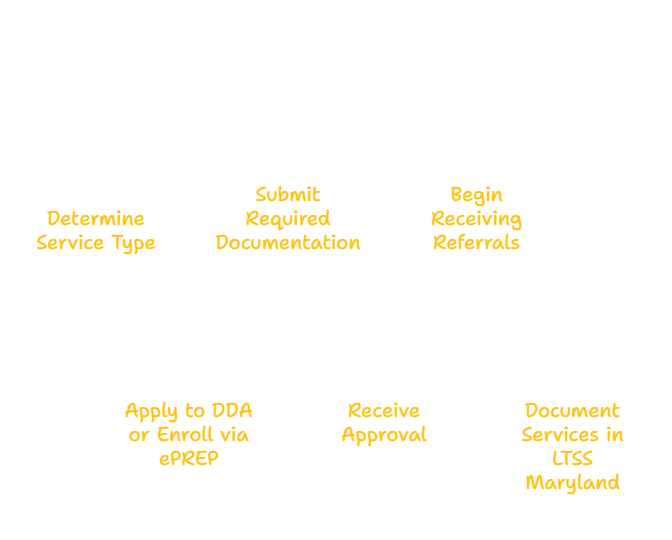
Streamlining the Enrollment and Service Authorization Workflow
The path to becoming an approved provider involves a systematic progression through state portals and oversight bodies. After confirming the scope of services, the provider must complete enrollment via the Medicaid ePREP system or the DDA provider application process. This stage requires the submission of a robust policy and procedure manual, which should detail everything from food safety and temperature control protocols for delivery drivers to standardized intake forms and clinical assessment templates for dietitians.
- Determine if the service model focuses on meal delivery, clinical nutrition, or both.
- Register the business and secure all necessary local health department permits.
- Submit credentials and operational documentation to DDA or through the Medicaid ePREP portal.
- Finalize service workflows in LTSS Maryland to ensure accurate billing and documentation.
- Commence service delivery upon approval and receive referrals through the participant’s assigned Case Coordinator (CCS) or support planner.
Staffing, Training, and Operational Oversight
Success in this sector relies on the professional competence of the staff and the consistency of training protocols. Meal delivery coordinators must possess documented experience in food safety and clear background checks, while food preparation personnel must hold active food handler certifications. For nutritional counseling, the emphasis shifts to the RD/LD staff, who must demonstrate competency in working with populations that have intellectual or developmental disabilities, as well as those managing complex chronic conditions.
Training programs must be rigorous and recurring, covering mandatory HIPAA privacy standards and emergency response protocols. For kitchen and delivery staff, training should emphasize infection control, temperature maintenance, and the delicate nature of cultural dietary preferences. Ensuring that staff are well-versed in these areas not only meets state and federal requirements but also significantly improves the quality of care provided to the participant, leading to better long-term health outcomes.
Frequently Asked Questions
What is the typical timeline for a new provider to begin receiving referrals?
The timeline varies based on the completeness of the initial application, but generally, business registration takes 1–2 weeks, followed by 2–3 weeks for policy development, and 4–8 weeks for Medicaid or DDA provider enrollment approval. Once approved, referral coordination with case managers begins immediately.
Are there specific requirements for meal delivery logs and temperature control?
Yes, providers are required to maintain strict documentation for all deliveries. This includes recording delivery times, verifying meal temperatures at the point of delivery to ensure food safety, and maintaining logs that are easily auditable by state agencies to prove compliance with health standards.
Can a single agency provide both meal delivery and nutrition counseling?
Yes, an agency may provide both services provided they meet the distinct regulatory requirements for each. This includes securing the necessary commercial kitchen permits for meal production and maintaining the active, state-licensed staff credentials for the professional nutrition counseling component.
Key Takeaway: Establishing a Medicaid-funded Meal and Nutrition Service in Maryland requires a meticulous approach to regulatory compliance, encompassing both the food safety standards governed by the Department of Health and the clinical requirements managed by the DDA. By building a robust operational framework that prioritizes HIPAA compliance, staff credentialing, and systematic documentation, providers can effectively serve the needs of Maryland’s vulnerable populations while maintaining eligibility for ongoing Medicaid funding.
Last verified: May 2024. The information provided is for educational purposes and does not constitute legal or financial advice. We encourage all prospective and current providers to consult directly with the Maryland Department of Health and the Developmental Disabilities Administration for the most current regulatory updates and specific compliance guidance.