MEAL & NUTRITION SERVICES PROVIDER IN ARIZONA
By Fatumata Kaba · 2025-07-01 · 5 min read
PROMOTING HEALTH AND INDEPENDENCE THROUGH NUTRITIONAL SUPPORT AND HOME-DELIVERED MEALS FOR INDIVIDUALS WITH DISABILITIES
Meal & Nutrition Services in Arizona provide critical support to eligible individuals by ensuring consistent access to high-quality, medically necessary meals. Operated under the Arizona Long Term Care System (ALTCS) and various Home and Community-Based Services (HCBS) waivers, these programs assist individuals who face significant barriers to meal preparation or who require specific dietary interventions to maintain their health and independence.
What Are the Governing Agencies for Arizona Nutrition Services?
The regulatory framework for nutrition services in Arizona is multi-layered, involving both state and federal oversight to ensure that services remain safe, consistent, and aligned with Medicaid standards. Providers must operate within the guidelines set by these entities to maintain their qualified vendor status and eligibility for reimbursement.
The primary agencies involved include:
- Arizona Health Care Cost Containment System (AHCCCS): As the state's Medicaid agency, AHCCCS administers the funding and sets the overarching standards for clinical necessity and compliance within HCBS waivers.
- Arizona Department of Economic Security (DES) – Division of Developmental Disabilities (DDD): This division serves as the primary gateway for authorizing vendors to provide nutritional support specifically for individuals with developmental disabilities.
- Centers for Medicare & Medicaid Services (CMS): This federal body provides the ultimate authority, enforcing federal Medicaid regulations and overseeing the integrity of waiver programs across the state.
How Do Providers Design and Deliver Nutritional Services?
Nutritional services are not merely about food delivery; they are defined by the delivery of nutritionally balanced, specialized diets that cater to the unique medical needs of the participant. Whether provided in a congregate setting or through home-delivered meal programs, the service must be meticulously documented to track compliance with both safety standards and the member's Individual Support Plan (ISP).
Approved providers are typically responsible for the following service components:
- Executing home-delivered meal schedules on a daily or weekly basis.
- Managing congregate meal sites where applicable to foster community integration.
- Ensuring all menus are designed or reviewed by a registered dietitian to meet nutritional standards.
- Providing specialized diets, such as renal-friendly, diabetic-safe, low-sodium, or allergy-sensitive meal plans.
- Delivering education on proper food preparation and nutrition when outlined in the service plan.
- Maintaining comprehensive documentation regarding delivery logs, client meal preferences, and dietary compliance.
What Are the Licensing and Provider Approval Requirements?
Before an agency can accept referrals from support coordinators, it must navigate a rigorous credentialing process. This involves establishing a legitimate business structure, securing specialized professional identifiers, and satisfying local health and safety inspections. Because these services involve food handling for vulnerable populations, the barriers to entry are designed to protect the health and safety of the members.
Key prerequisites for providers include:
- Registering the business entity with the Arizona Corporation Commission.
- Obtaining an Employer Identification Number (EIN) from the IRS and a Type 2 National Provider Identifier (NPI).
- Submitting a formal application through the Qualified Vendor Application and Directory System (QVADS) for DDD-related services.
- Complying with all local health department mandates, including kitchen inspections and food handler certifications specific to the county of operation (e.g., Maricopa County).
- Formalizing a contractual relationship with a registered dietitian to oversee menu development and nutritional integrity.
What Steps Are Involved in the DDD Qualified Vendor Enrollment Process?
The enrollment process is structured to ensure that only capable and compliant entities become vendors. The process begins with an orientation phase and concludes with the execution of a formal agreement, which subsequently allows the provider to receive meal referrals from support coordinators.
The roadmap for enrollment follows these distinct stages:
- Orientation and Application: Prospective vendors must attend the DDD Qualified Vendor orientation and submit a detailed QVADS application that outlines their specific service plans, dietary protocols, and delivery logistics.
- Documentation Submission: Agencies must provide proof of kitchen licensure, comprehensive sample menus, and verified food safety training records. Additionally, providers must demonstrate the existence of robust intake and consumer tracking systems.
- Contract Execution: Upon successful review and approval by the state, the provider signs a Qualified Vendor Agreement, officially authorizing them to serve DDD members and participate in the referral network.
How Do You Maintain Operational Compliance and Staffing Standards?
Operational success relies on high-quality internal policies and the rigorous training of staff. An agency must maintain a comprehensive policy and procedure manual that covers everything from meal preparation and packaging to emergency delivery backup procedures and HIPAA-compliant data management.
Staffing requirements are equally stringent to ensure consistent service quality:
- Nutrition Program Coordinator: Requires demonstrated experience in food service or health program management and must hold a valid ServSafe Manager certification.
- Meal Prep Staff and Drivers: Must hold active food handler cards, undergo thorough background checks, and maintain clean driving records.
- Ongoing Training: All staff must undergo regular training on food safety, allergen management, confidentiality, incident reporting, and the specifics of client interaction within a home-based setting.
Frequently Asked Questions
What is the typical timeline for launching a meal and nutrition service business in Arizona?
The launch process generally spans several months, including business formation (1–2 weeks), securing food licenses and kitchen space (30–45 days), navigating the QVADS application process (60–90 days), and finalizing AHCCCS enrollment for claims processing (30–60 days).
Is a registered dietitian mandatory for all meal programs?
While basic meal services may require general compliance, a registered dietitian is necessary if the provider intends to offer therapeutic or medically complex meal plans, which are often required under specific HCBS waiver authorizations.
What specific documentation must be kept on file for audits?
Providers must maintain comprehensive records, including articles of incorporation, NPI/EIN verification, kitchen inspection reports, weekly delivery logs, client consent forms, incident reports, and detailed menu planning compliance tools to ensure readiness for state audits.
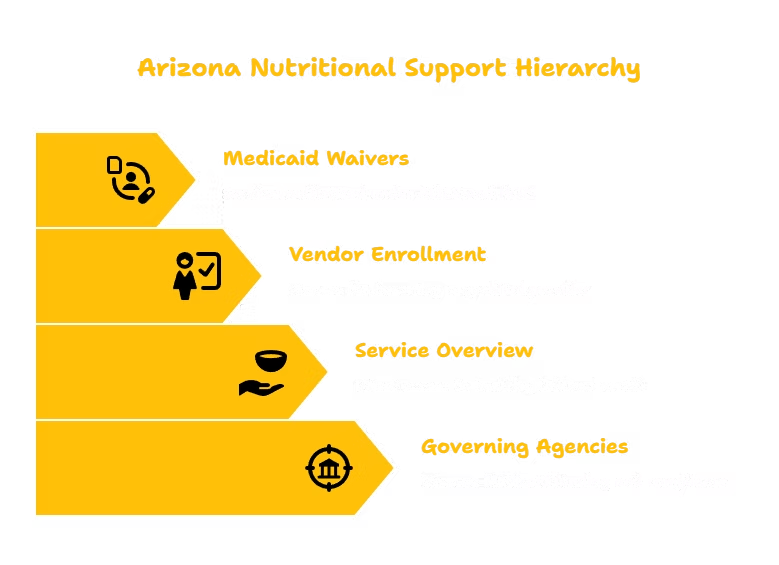
KEY TAKEAWAY: Establishing a Medicaid-compliant meal and nutrition service in Arizona requires a disciplined approach to regulatory compliance, prioritizing the intersection of food safety, professional nutritional oversight, and the rigorous documentation standards required by AHCCCS and the Division of Developmental Disabilities.
Last verified: October 2023. This content is for informational purposes only and does not constitute legal or professional advice. Always consult the official AHCCCS and DES-DDD provider manuals for the most current regulatory requirements.