MEAL DELIVERY SERVICES PROVIDER IN ALABAMA
By Fatumata Kaba · 2025-06-27 · 5 min read
SUPPORTING INDIVIDUALS WITH INTELLECTUAL AND DEVELOPMENTAL DISABILITIES BY PROVIDING NUTRITIOUS, HOME-DELIVERED MEALS TO PROMOTE HEALTH AND INDEPENDENCE
Meal Delivery Services in Alabama are specialized home-based supports authorized under Home and Community-Based Services (HCBS) Medicaid Waivers to ensure individuals with intellectual and developmental disabilities (IDD) maintain proper nutrition. These services provide essential, ready-to-eat, or heat-and-serve meals tailored to specific dietary needs, enabling individuals to live independently and safely within their own communities.
Why Are Meal Delivery Services Essential for Alabama’s IDD Population?
For many individuals with intellectual and developmental disabilities, the ability to independently purchase groceries or prepare nutritionally balanced meals is often compromised by limited mobility, cognitive challenges, or safety concerns regarding kitchen equipment. Meal Delivery Services bridge this critical gap, ensuring that nutritional intake is consistent and medically appropriate.
By integrating these services into a person-centered service plan, the Alabama Department of Mental Health (ADMH) and the Alabama Medicaid Agency ensure that participants receive food that accommodates specific health requirements, such as low-sodium, diabetic, renal-friendly, or texture-modified diets. Beyond simple nutrition, these services facilitate a foundational component of long-term community living, reducing the risk of malnutrition and preventing premature institutionalization.
What Governing Agencies Oversee Alabama Meal Delivery Providers?
Provider agencies must operate within a strict regulatory framework managed by three primary entities. Each organization plays a distinct role in ensuring that the services rendered are safe, compliant, and reimbursed accurately according to federal and state standards.
- Alabama Department of Mental Health (ADMH): Serves as the primary regulator responsible for approving providers, overseeing service delivery, and ensuring that meal quality meets state-mandated nutritional and HCBS standards.
- Alabama Medicaid Agency: Manages the financial side of the program, including provider enrollment, billing procedures, and the final reimbursement process for rendered services.
- Centers for Medicare & Medicaid Services (CMS): Provides the overarching federal guidance and oversight for HCBS waivers to ensure that states maintain compliance with federal mandates for home-based support programs.
How Do Providers Meet Licensing and Operational Requirements?
Entering the market as a Meal Delivery Service provider requires rigorous adherence to both business and public health regulations. Before approaching the ADMH for approval, an agency must establish a formal business entity and secure the necessary food service infrastructure. This includes registering the business with the Alabama Secretary of State and obtaining both an Employer Identification Number (EIN) and a Type 2 National Provider Identifier (NPI).
Operational standards are equally stringent. Providers must operate a licensed commercial kitchen or maintain a valid, formal contract with an existing licensed food preparation vendor. Local health department permits are mandatory, and agencies must demonstrate the capability to maintain cold chain integrity, safe food handling, and accurate delivery tracking. Additionally, all documentation and client management systems must be fully HIPAA-compliant to protect the privacy of the individuals served.
What Is the Step-by-Step Process for ADMH Enrollment?
The enrollment process is structured to verify that the provider is fully prepared to handle the nutritional and logistical requirements of the IDD population. The journey begins with submitting an application packet to the ADMH, which must include comprehensive service plans, sample menus, and evidence of food safety protocols. Following the initial review, the agency undergoes a background and credentialing check for all staff members.
A crucial phase is the Program Readiness Review, where officials evaluate the provider's logistical capacity, including delivery route planning, emergency backup procedures, and the verification of consumer complaint resolution processes. Once ADMH grants approval, the provider proceeds to the Alabama Medicaid Agency to complete the enrollment, where they will link specific Medicaid billing codes to their provider profile to begin receiving reimbursement.
What Documentation Is Necessary for Sustained Compliance?
Maintaining status as an approved provider requires meticulous record-keeping. Administrative leaders must assemble an ADMH-Compliant Policy & Procedure Manual that covers every facet of the operation, from the nutritional standards and portion control guidelines to the specific procedures for handling missed deliveries or emergency service interruptions.
- Corporate Documentation: Articles of Incorporation, EIN letter, and NPI confirmation.
- Operational Proof: Commercial kitchen leases or vendor contracts and local health department permits.
- Clinical/Safety Records: Signed consumer meal consent forms, dietary preference sheets, staff training logs, and vehicle sanitation checklists.
- Administrative Logs: Detailed delivery logs and documentation of adherence to confidentiality and HIPAA-compliant data handling.
Staffing Requirements and Training Standards
Personnel management is a core pillar of service quality in the meal delivery industry. The agency must appoint a Program Manager or Nutrition Coordinator who possesses an appropriate background in food service, healthcare, or nutrition. This individual is responsible for overseeing the quality of the meals and the efficiency of the delivery operations. Delivery drivers and kitchen staff must also meet specific standards, including valid credentials, clean background checks, and documented training in infection control and food safety.
All staff are required to undergo ADMH orientation and specific training related to the HCBS waiver program. Annual training sessions must cover ethical considerations, client confidentiality, and safe handling practices to ensure that the individuals receiving care remain protected at all times.
Frequently Asked Questions
Which Alabama Medicaid Waivers cover Meal Delivery Services?
Meal Delivery Services are authorized under the ID (Intellectual Disabilities) Waiver, the LAH (Living at Home) Waiver, and the State of Alabama Community Waiver Program.
What is the typical timeline to launch a meal delivery business?
Business formation typically takes up to one week, while securing kitchen licensing and health department approval ranges from 30–60 days. The ADMH application review and subsequent Medicaid enrollment typically each require 60–90 days, leading to an estimated 6-month launch window.
What happens if a meal is not delivered on time?
Providers are required to have established emergency preparedness and service interruption policies. Documentation of these instances, including the reason for the missed delivery and the steps taken to ensure the client’s nutritional needs were met, must be recorded per ADMH guidelines.
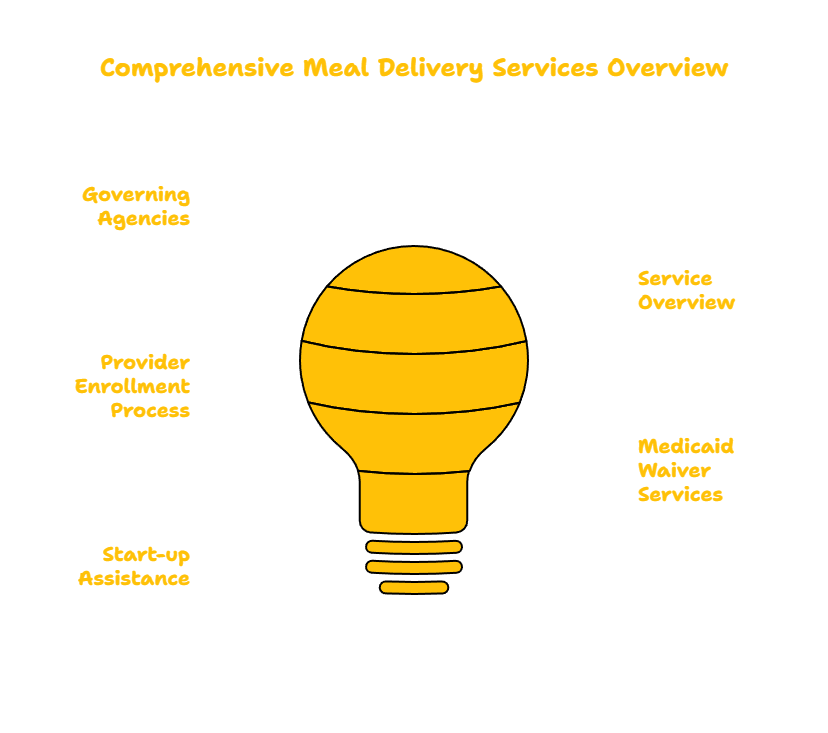
WAIVER CONSULTING GROUP'S START-UP ASSISTANCE SERVICE — ALABAMA MEAL DELIVERY SERVICES PROVIDER
We assist new providers in launching Meal Delivery Services under Alabama’s HCBS waiver programs by providing support with business formation, ADMH application guidance, policy manual development, and Medicaid billing setup.
Key Takeaway: Establishing a Meal Delivery Service in Alabama requires a dual commitment to food safety standards enforced by local health authorities and the specialized regulatory requirements of the ADMH and Alabama Medicaid Agency. Success depends on rigorous staff training, robust delivery tracking, and a steadfast adherence to person-centered documentation protocols that ensure the health and independence of the IDD population.
Last verified: 2024. This information is intended for educational purposes and does not constitute legal or financial advice. Regulations regarding Alabama Medicaid waivers and ADMH policies are subject to change. Consult directly with the Alabama Department of Mental Health and the Alabama Medicaid Agency for the most current regulatory guidance and official application requirements.