MEAL AND NUTRITION SERVICES PROVIDER IN SOUTH CAROLINA
By Fatumata Kaba · 2025-10-13 · 5 min read
Promoting Health, Dignity, and Nutritional Independence for Individuals with Disabilities, Aging Needs, or Medically Complex Conditions
Meal and Nutrition Services in South Carolina are vital interventions that support Medicaid participants by providing structured food provision and diet-related education. These services, available through the South Carolina Medicaid State Plan, Community Long Term Care (CLTC) program, and various Home and Community-Based Services (HCBS) Waivers, ensure that individuals who cannot independently shop for or prepare meals can maintain their nutritional health while remaining in their homes or preferred community settings.
Understanding the Governing Agencies and Regulatory Framework
The delivery of nutritional support services in South Carolina is governed by a multi-layered regulatory structure designed to protect participant health and ensure the responsible use of Medicaid funding. The South Carolina Department of Health and Human Services (SCDHHS) serves as the primary authority, overseeing Medicaid reimbursement, the authorization of meal delivery services, and the enrollment process for providers. Understanding the scope of these agencies is the first step toward operational compliance.
In addition to SCDHHS, the South Carolina Department of Health and Environmental Control (DHEC) plays a critical role by licensing food service establishments and monitoring compliance with state-mandated food safety and sanitation laws. Furthermore, the South Carolina Department on Aging (SCDOA) coordinates congregate and home-delivered meal programs, which sometimes overlap or blend with Medicaid-funded initiatives. Finally, the Centers for Medicare & Medicaid Services (CMS) establishes the overarching federal regulations that guide how states structure these services under various waiver and state plan programs.
- SCDHHS: Manages reimbursement, provider enrollment, and service authorization.
- DHEC: Ensures food safety, sanitation, and facility-level licensure.
- SCDOA: Coordinates aging-specific nutrition programs and resources.
- CMS: Provides federal oversight and policy frameworks for waiver-based services.
Core Components of Meal and Nutrition Services
Providers operating in this space must offer more than just meal delivery; they must provide a comprehensive nutritional support system that focuses on maintaining or improving the health of the individual. Approved providers generally focus on the intersection of logistics, clinical nutrition, and personalized care. Because each participant’s needs are different—ranging from diabetic-friendly menus to texture-modified diets—the service model must be both scalable and highly individualized.
The scope of service includes home-delivered meals, which may be fresh or frozen and must be tailored to specific health conditions like cardiac, renal, or diabetic requirements. Some providers may also facilitate congregate meals at authorized senior centers or adult day facilities. Beyond the physical provision of food, services often encompass nutrition counseling by licensed dietitians, feeding assistance, meticulous dietary tracking, and the development of therapeutic menus that align with a participant’s broader care plan.
Provider Enrollment and Licensing Prerequisites
Entering the South Carolina Medicaid provider network requires a systematic approach to business registration and regulatory adherence. Before a provider can begin billing, they must formalize their legal status, secure essential tax and identification documentation, and meet specific food handling standards. This ensures that every entity, whether a startup or an existing catering business, meets the high clinical and safety bars required for working with vulnerable populations.
- Register the business with the South Carolina Secretary of State.
- Obtain a Federal Employer Identification Number (EIN) and a Type 2 National Provider Identifier (NPI).
- Acquire necessary DHEC licensure or a food establishment permit for meal preparation.
- Establish a partnership with a licensed commercial kitchen or qualified food service vendor if in-house production is not possible.
- Develop a comprehensive Meal and Nutrition Services Policy & Procedure Manual that addresses food safety, delivery protocols, and documentation standards.
Navigating the South Carolina Provider Enrollment Process
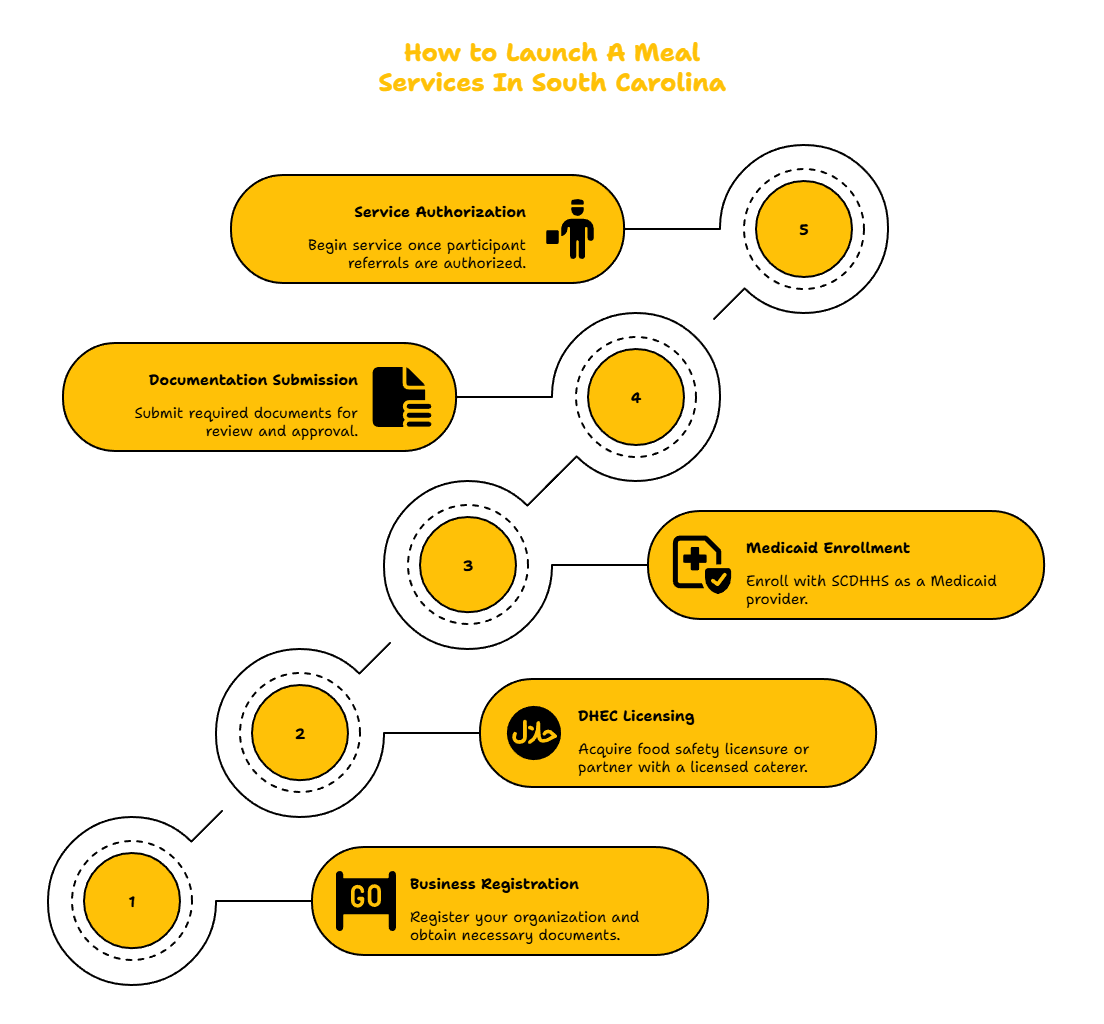
The transition from a business idea to an authorized Medicaid provider follows a specific sequence. Initially, entrepreneurs must secure their foundational credentials, including general liability, product liability, and workers' compensation insurance. Once the business foundation is laid, the focus shifts to regulatory compliance via DHEC, followed by formal submission to the SCDHHS provider enrollment portal.
Following the submission of documentation, which includes menu samples and safety protocols, the state will review the application to ensure the provider can meet the needs of Medicaid participants. Once the provider is fully enrolled and approved, they can begin accepting referrals and delivering services as outlined in the participant's specific waiver care plan. Documentation is the backbone of this process; providers must maintain rigorous records of delivery logs, nutritional assessments, and service summaries to satisfy future audits.
Staffing, Training, and Clinical Requirements
Staffing requirements are designed to ensure that both the nutritional quality of the food and the safety of the participant are prioritized during every interaction. A Nutrition Services Coordinator typically oversees the operation, requiring experience in food service or community care. For direct delivery personnel, the requirements include rigorous background checks, food handling certification, and a clean driving record to ensure safe interaction with participants in their homes.
If the agency provides medical nutrition therapy, they must employ or contract with a Registered Dietitian (RD) licensed in South Carolina. Regardless of role, all staff must undergo standardized training modules. These include HIPAA and participant rights training, emergency response and incident reporting protocols, infection control, and procedures for home-entry, all of which are essential to maintaining compliance with state and federal standards.
Frequently Asked Questions
What types of Medicaid programs cover meal services in South Carolina?
Meal and Nutrition Services are supported through the Community Long Term Care (CLTC) program, the Head and Spinal Cord Injury (HASCI) Waiver, the Community Supports Waiver, the State Plan Medicaid for medical nutrition therapy, and the Katie Beckett/TEFRA Program for pediatric dietary monitoring.
Is it mandatory to have a commercial kitchen on-site?
No, providers are not required to own a commercial kitchen. If a provider does not produce meals in-house, they may partner with a licensed commercial kitchen or qualified food service vendor, provided that the partner maintains the necessary DHEC food establishment permits and follows safety protocols.
What specific documentation must be kept for Medicaid audits?
Providers must maintain organized delivery logs, dietary intake forms, participant satisfaction surveys, food safety/sanitation records, staff training certifications, and documentation of adherence to the agency’s Policy & Procedure Manual. All records must be stored in accordance with HIPAA confidentiality requirements.
Key Takeaway
Successfully launching a Meal and Nutrition Services provider agency in South Carolina requires a balanced approach to food safety, clinical documentation, and strict adherence to Medicaid enrollment requirements. By establishing robust internal policies, securing proper DHEC licensure, and maintaining high standards for staff competency, providers can effectively support the independence and health outcomes of South Carolina's most vulnerable residents.
Last verified: October 2023. Disclaimer: This guide is for informational purposes only and does not constitute legal or professional advice. Always verify current regulations and requirements directly with the South Carolina Department of Health and Human Services (SCDHHS) and the South Carolina Department of Health and Environmental Control (DHEC) before initiating your provider enrollment process.