MEAL AND NUTRITION SERVICES PROVIDER IN OHIO
By Fatumata Kaba · 2025-09-17 · 5 min read
SUPPORTING HEALTH AND INDEPENDENCE THROUGH NUTRITIONALLY BALANCED MEALS AND DIETARY SUPPORT
Meal and Nutrition Services in Ohio are specialized home and community-based support programs designed to ensure that individuals with disabilities, chronic health conditions, or aging-related limitations receive consistent access to healthy, diet-appropriate food. By providing structured meal preparation, delivery, and nutritional education, these services empower participants to maintain their health, safety, and independence within their own homes, ultimately reducing the need for institutionalization.
Why Is Becoming an Ohio Medicaid Nutrition Provider a Critical Step for Your Business?
The demand for Home and Community-Based Services (HCBS) in Ohio continues to grow as more participants prefer to age in place or remain in community settings rather than moving into nursing facilities. Becoming an authorized Medicaid provider for meal and nutrition services allows your organization to fill a vital gap in the long-term care continuum. By integrating professional culinary standards with Medicaid compliance, your business plays a central role in clinical outcomes, as proper nutrition is foundational to managing conditions like diabetes, heart disease, and mobility-related frailty.
Operating under Ohio’s Medicaid waiver programs provides a stable platform for business growth, as these services are mandated components of the Individualized Service Plans (ISPs) for thousands of waiver-enrolled participants. Success in this sector requires more than just culinary skill; it necessitates a deep commitment to regulatory compliance, standardized documentation, and the ability to operate within the specific oversight frameworks of the Ohio Department of Medicaid (ODM), the Ohio Department of Aging (ODA), and the Ohio Department of Developmental Disabilities (DODD).
How Do the Governing Agencies Oversee Nutrition Services?
Navigating the Ohio Medicaid landscape requires understanding the hierarchical structure of regulatory oversight. The Centers for Medicare & Medicaid Services (CMS) sets the federal standards for all HCBS waiver programs, ensuring that states maintain the health, welfare, and safety of participants. Within Ohio, this federal guidance is translated into state-level policies that govern provider billing, enrollment, and operational performance.
The Ohio Department of Medicaid (ODM) serves as the primary authority, managing the financial aspects of waiver funding and billing authorizations. Concurrently, the Ohio Department of Aging (ODA) oversees services for the aging population, specifically through the PASSPORT waiver and the coordination of the state’s regional aging networks. For participants with intellectual and developmental disabilities, the Ohio Department of Developmental Disabilities (DODD) sets the specific requirements and coordinates services under the Individual Options (IO), SELF, and Level One waivers. Understanding which agency governs your specific client demographic is essential for accurate enrollment and compliant service delivery.
What Are the Core Service Requirements for Providers?
Meal and Nutrition Services encompass a wide array of support, ranging from the actual preparation of meals to the logistics of delivery and nutritional education. Approved providers must demonstrate the capability to accommodate specialized dietary needs, including low-sodium, diabetic, heart-healthy, and allergen-specific meal plans. The objective is to provide a comprehensive support system that monitors the participant’s nutritional health through structured interaction and consistent, high-quality food service.
- Meal Preparation and Delivery: Preparing and transporting fresh or frozen meals that meet specific nutritional criteria.
- Special Diet Meals: Customizing meal plans to align with medical directives for chronic health conditions.
- Grocery Shopping Assistance: Providing the physical or logistical support needed for participants to acquire staple food items.
- Nutrition Education: Teaching clients and their primary caregivers about healthy food choices and proper food handling.
- In-Home Meal Assistance: Assisting participants with the physical tasks of eating, meal setup, or reheating pre-prepared meals.
- Coordination and Documentation: Maintaining rigorous delivery logs, dietary notes, and ensuring all services match the participant’s Individualized Service Plan (ISP).
How Do You Manage Licensing, Enrollment, and Compliance?
The pathway to becoming a Medicaid-approved provider is a structured process involving multiple administrative milestones. Before beginning the enrollment application, your business must be formally established with the Ohio Secretary of State and hold an active Employer Identification Number (EIN) and National Provider Identifier (NPI) Type 2. Beyond standard business registration, you must secure general liability and food service liability insurance, which are non-negotiable requirements for mitigating the risks associated with food preparation and transport.
Operational readiness is evaluated through your ability to meet local health department standards. This includes holding valid food service permits and adhering to strict sanitation protocols. The enrollment process involves submitting a comprehensive Policy & Procedure manual that covers everything from emergency food delivery protocols to HIPAA-compliant data management. The state conducts a readiness review, which may include inspections of your preparation facilities, to ensure that your business has the infrastructure to safely and consistently serve vulnerable populations.
What Are the Essential Staffing and Operational Standards?
Maintaining high-quality nutrition services requires a tiered staffing model that prioritizes both technical culinary skill and specialized healthcare knowledge. A Nutrition Program Administrator is generally responsible for oversight, ensuring that all dietary planning aligns with regulatory standards. Meal preparation staff must hold active food handler certifications and demonstrate proficiency in commercial kitchen safety, while delivery staff must be vetted through rigorous background checks and trained in the specifics of handling perishable items during transport.
All staff members are required to undergo comprehensive training that includes HIPAA compliance, participant rights, and emergency preparedness. Furthermore, providers should maintain a training log for every employee, tracking initial onboarding and annual refresher courses in safety, sanitation, and documentation procedures. This commitment to ongoing education is a key metric in demonstrating quality assurance to state auditors and managed care plans.
Frequently Asked Questions
Which Ohio Medicaid waivers cover meal and nutrition services?
These services are primarily covered under the PASSPORT Waiver, the Ohio Home Care Waiver, the Individual Options (IO) Waiver, the SELF Waiver, the Level One Waiver, and through MyCare Ohio managed care plans.
What is the typical timeline to launch an Ohio nutrition provider business?
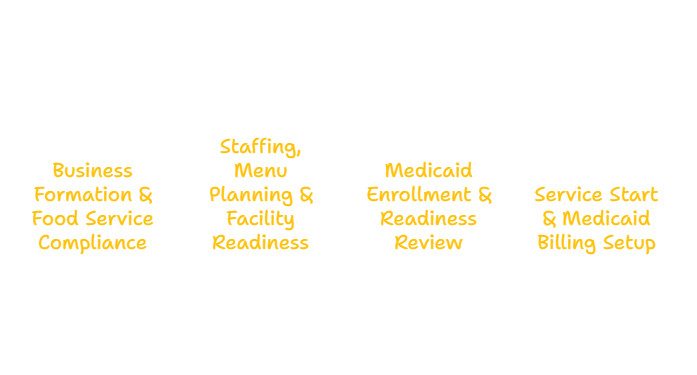
The process generally takes between 5 to 10 months. This includes 1–2 months for business formation, 2–3 months for facility and staff readiness, 60–90 days for Medicaid enrollment and state reviews, and 30–45 days for final billing system setup.
What specific documentation is required for the Medicaid enrollment application?
You must provide articles of incorporation, an IRS EIN confirmation, an NPI registration, proof of insurance, a comprehensive Policy & Procedure manual, and proof of food safety certifications and staff background clearances.
Key Takeaway
Successful entry into the Ohio Medicaid Meal and Nutrition services market requires a disciplined approach to regulatory compliance, a clear understanding of the specific requirements of the PASSPORT, DODD, and ODM waiver programs, and a steadfast commitment to participant health and safety standards. Providers that invest in rigorous policy development and consistent operational documentation are best positioned to serve the community while maintaining sustainable, compliant business operations.
Last verified: 2024. This information is provided for general guidance purposes. Always consult with the Ohio Department of Medicaid, the Ohio Department of Aging, and the Ohio Department of Developmental Disabilities directly for the most current regulations, forms, and policy updates as they relate to your specific provider certification and enrollment needs.