MEAL AND NUTRITION SERVICES PROVIDER IN NORTH DAKOTA
By Fatumata Kaba · 2025-09-18 · 5 min read
Meal and Nutrition Services in North Dakota play a critical role in the Home and Community-Based Services (HCBS) ecosystem, providing essential dietary support for individuals with disabilities, chronic conditions, or age-related limitations. By offering structured meal preparation, delivery, and professional dietary planning, these services are instrumental in managing health outcomes and fostering greater independence for participants residing in their own homes.
What Are the Primary Objectives of Meal and Nutrition Services in North Dakota?
The core objective of these services is to ensure that vulnerable North Dakota residents receive the caloric and nutritional intake necessary to support their specific health needs. Many participants in Medicaid waiver programs face physical or cognitive challenges that make independent grocery shopping, meal planning, and safe cooking difficult. By filling these gaps, providers help prevent malnutrition and reduce the risk of acute health episodes that could lead to unnecessary institutionalization.
Beyond basic sustenance, these services are designed to be therapeutic. Whether an individual requires a diabetic-friendly diet, heart-healthy meal plans, or assistance due to limited mobility, providers offer a customized approach. These services also serve as a social connection, particularly for those receiving meals in community settings or via regular delivery, which can significantly improve the participant's overall quality of life and mental well-being.
Who Provides Oversight for North Dakota Nutrition Waiver Services?
Navigating the regulatory landscape of North Dakota’s Medicaid waiver program requires a clear understanding of the hierarchy of oversight. The North Dakota Department of Human Services (NDDHS) serves as the primary governing body responsible for administering the Medicaid waiver funding and managing the standards for service delivery. This agency maintains the ultimate authority over provider enrollment and reimbursement protocols.
Specific operational oversight is distributed across several key divisions. The North Dakota Medical Services Division (MSD) oversees the broader Medicaid waiver service landscape and maintains the rules for participant eligibility and provider participation. Additionally, the North Dakota Division of Aging Services provides targeted oversight to ensure that nutrition programs adequately meet the needs of the elderly and adults with disabilities. At the federal level, the Centers for Medicare & Medicaid Services (CMS) ensures that all services meet national benchmarks for safety, person-centered care, and financial integrity.
What Are the Essential Requirements for Provider Approval?
Becoming an approved Medicaid provider is a rigorous process that demands strict adherence to regulatory documentation and operational standards. Before beginning the enrollment process, an agency must be properly registered with the North Dakota Secretary of State and possess a valid EIN from the IRS and a Type 2 National Provider Identifier (NPI). These foundational elements confirm the entity’s legal status and operational capacity.
Prospective providers must also demonstrate that they have robust internal infrastructure. This includes the development of comprehensive policy and procedure manuals that cover every aspect of the service, from food safety protocols to dietary management. Providers must maintain adequate general and professional liability insurance to protect the business and its participants. Furthermore, all personnel must undergo thorough background checks and health screenings to ensure they meet the safety standards required for working with Medicaid participants.
- Formal registration with the North Dakota Secretary of State.
- Obtaining a valid Type 2 NPI and IRS-issued EIN.
- Establishing comprehensive policies for meal planning, safety, and dietary compliance.
- Securing necessary professional and general liability insurance.
- Implementing a systematic process for staff background checks and mandatory training.
How Do You Successfully Navigate the Enrollment Process?
The enrollment process for Meal and Nutrition Services occurs through the North Dakota Medicaid Management Information System (MMIS). The journey begins with the submission of an initial application, where the applicant identifies themselves as a provider for HCBS waivers. This initial phase serves as the entry point for the NDDHS and MSD to begin their evaluation of the agency's credentials and proposed service model.
Following the submission of the application, agencies must provide a substantial portfolio of documentation, including articles of incorporation, proof of insurance, and detailed staff training logs. The program readiness review is a critical stage where state officials evaluate whether the agency has the infrastructure to deliver safe, compliant care. Once the agency passes this review and demonstrates full alignment with state expectations, they are granted authority to bill Medicaid using designated service codes.
Which Staffing Roles Are Required for Program Compliance?
The quality of a nutrition program is heavily dependent on the professional credentials of its staff. At the top of the organizational structure, the Nutrition Program Director should typically be a Registered Dietitian (RD) with a Bachelor’s or Master’s degree in Nutrition or Dietetics, ensuring that the agency’s dietary plans are grounded in clinical expertise. Dietitians and nutritionists working under this director must also hold state licensure to provide specialized dietary counseling.
Operational roles, such as meal preparation staff and delivery drivers, are just as vital to the day-to-day success of the program. These team members require hands-on experience in food service and high standards for customer service. Every staff member must participate in ongoing training, covering HIPAA compliance, participant rights, and emergency response. This ensures that the agency remains compliant with the standards set forth by the North Dakota Medicaid program and maintains a high level of safety for all participants.
Frequently Asked Questions
What waivers in North Dakota cover Meal and Nutrition Services?
Meal and Nutrition Services are accessible through several key Medicaid waivers, including the Aged and Disabled Waiver, the Technology Dependent Waiver, the Developmental Disabilities Waiver, and the broader Home and Community-Based Services (HCBS) Waiver program.
What is the typical timeline for launching a new nutrition service provider?
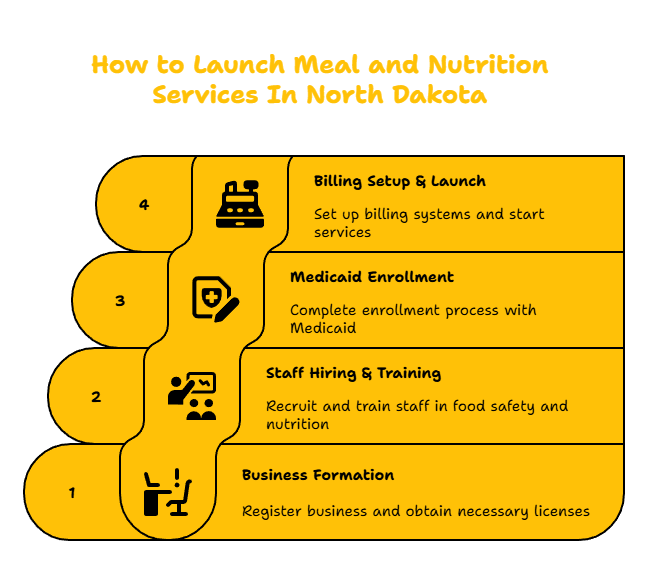
The launch process is phased, typically taking several months. Business formation and initial compliance preparation take 1–2 months, followed by 2–3 months for staffing and program development. The Medicaid provider enrollment and readiness review stage generally takes 60–90 days, with final billing setup and launch occurring within 30–45 days.
What documentation is essential for a Medicaid audit?
Agencies must maintain meticulous records, including staff credentialing and training logs, dietary plans for every participant, records of meals served, incident reports, and evidence of compliance with food safety and hygiene protocols. All documentation must be readily available to meet state and federal audit requirements.
WAIVER CONSULTING GROUP’S START-UP ASSISTANCE SERVICE — NORTH DAKOTA MEAL AND NUTRITION SERVICES PROVIDER
WCG supports agencies in launching Medicaid-compliant Meal and Nutrition Services in North Dakota, offering:
- Business registration, Medicaid enrollment, and licensing assistance.
- Policy manual development for dietary planning and meal safety.
- Staff credentialing, training program templates, and compliance documentation.
- Medicaid billing setup and audit-prepared financial management.
- Branding, website development, and client outreach strategies.
- Quality assurance systems for meal service and compliance monitoring.
- Collaboration with dietitians, healthcare providers, and community organizations.
Key takeaway: Success as a Medicaid Meal and Nutrition Services provider in North Dakota relies on a combination of strict clinical compliance, rigorous documentation, and a deep understanding of the regulatory requirements established by the NDDHS and CMS.
Last verified: May 2024. This information is intended for educational purposes and does not constitute legal or professional advice. Always consult with the North Dakota Department of Human Services or legal counsel when establishing a healthcare agency.