MEAL AND NUTRITION SERVICES PROVIDER IN NEW JERSEY
By Fatumata Kaba · 2025-09-04 · 6 min read
PROMOTING HEALTH AND WELL-BEING THROUGH NUTRITIONAL SUPPORT
Meal and Nutrition Services in New Jersey are specialized HCBS offerings designed to support individuals with disabilities, chronic health conditions, or age-related limitations by providing essential dietary management and food delivery. These services ensure that participants receive balanced, medically appropriate nutrition directly aligned with their Individualized Service Plan (ISP) to maintain health and prevent institutionalization.
Operating under the state’s Medicaid Home and Community-Based Services (HCBS) waiver programs, these providers act as a vital link in the continuum of care. By addressing food insecurity and specialized dietary needs, providers help individuals remain safely within their homes and communities, reducing the risk of complications associated with malnutrition or improper dietary management.
How Are Meal and Nutrition Services Governed in New Jersey?
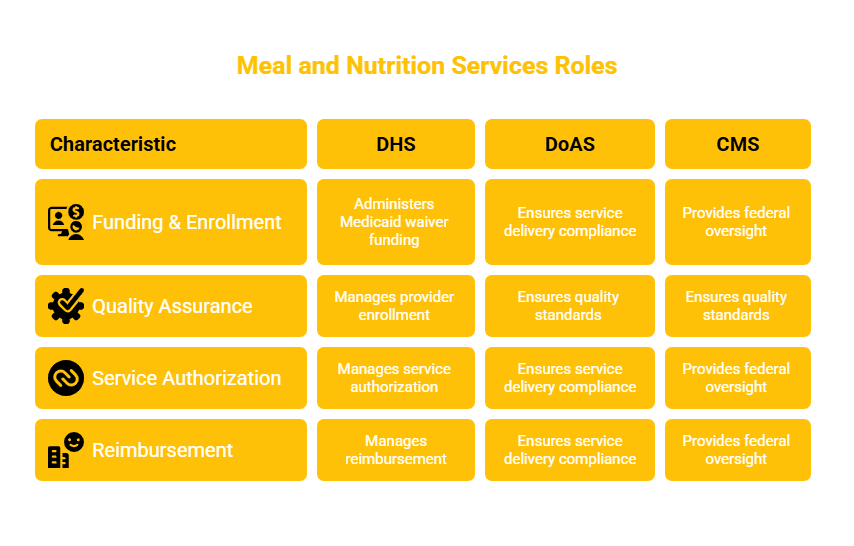
The oversight of Meal and Nutrition Services in New Jersey is a multi-tiered regulatory process involving state and federal authorities. The New Jersey Department of Human Services (DHS) serves as the primary agency responsible for administering Medicaid waiver funding, managing provider enrollment, and overseeing service authorization and reimbursement protocols.
The Division of Aging Services (DoAS) works in tandem with the DHS to ensure that service delivery remains consistent with high-quality standards and that providers remain in strict compliance with state regulations. At the federal level, the Centers for Medicare & Medicaid Services (CMS) provides overarching guidance, ensuring that New Jersey’s programs adhere to national benchmarks for person-centered planning, participant protection, and the efficacy of Home and Community-Based Services.
- Department of Human Services (DHS): Manages waiver funding and the enrollment lifecycle.
- Division of Aging Services (DoAS): Monitors quality standards and ensures operational compliance.
- Centers for Medicare & Medicaid Services (CMS): Sets federal standards for safety and person-centered service delivery.
What Are the Core Components of Meal and Nutrition Services?
Providers authorized to deliver these services perform a range of duties that go beyond basic food preparation. The goal is to provide comprehensive nutritional support that stabilizes a participant's health. This includes the development of customized meal plans that account for specific medical needs, such as low-sodium requirements for hypertension or controlled carbohydrate intake for diabetes.
Service delivery is highly structured, often incorporating home-delivered meals for those who are homebound, as well as congregate meal settings that foster social interaction. Providers must also implement rigorous dietary monitoring to track nutritional intake and adjust plans as a participant’s health status changes, always adhering to food safety and hygiene protocols that protect the health of vulnerable populations.
- Meal Planning & Preparation: Designing and cooking nutritious meals tailored to individual health conditions.
- Nutritional Counseling: Providing professional guidance on maintaining a balanced, health-promoting diet.
- Specialized Diets: Managing specific requirements like pureed, allergen-free, or therapeutic diets.
- Dietary Monitoring: Maintaining records of nutritional intake and ensuring alignment with medical goals.
What Are the Licensing and Provider Approval Prerequisites?
Establishing an agency to provide Meal and Nutrition Services requires a systematic approach to business and regulatory compliance. Before seeking Medicaid authorization, the business entity must be formally registered with the New Jersey Division of Revenue and Enterprise Services and secure a federal Employer Identification Number (EIN) and a Type 2 National Provider Identifier (NPI).
Beyond standard business licensing, providers must obtain a food establishment license from the New Jersey Department of Health (NJDOH). This is a critical step in demonstrating that the agency has the infrastructure to handle, store, and prepare food safely. Furthermore, providers must carry adequate general and professional liability insurance and have formal policies regarding staff background checks, health screenings, and comprehensive food safety training.
How Does the Enrollment Process Work for New Jersey Providers?
The transition from a business entity to a Medicaid-authorized provider involves a multi-stage enrollment and review process. Applicants must first initiate the process through the New Jersey Medicaid Provider Enrollment Portal. This application requires the submission of all corporate documentation, NPI credentials, and active food establishment licenses.
Once the initial application is submitted, the DHS and DoAS conduct a program readiness review. This review is intended to verify that the provider has established the necessary systems for meal preparation, staff training, and compliance reporting. If the agency satisfies these requirements, they are formally approved to begin billing for services using the specific Medicaid billing codes designated for the waiver programs they serve.
- Initial Registration: Create a profile and submit an application via the New Jersey Medicaid Provider Enrollment Portal.
- Documentation Phase: Submit all business licenses, proof of insurance, and internal policy manuals.
- Readiness Review: Participate in a state-led evaluation of operational and safety protocols.
- Billing Authorization: Final approval and activation of the ability to submit Medicaid claims.
What Are the Staffing and Documentation Standards?
Staffing requirements are rigorous to ensure the quality of nutritional care. The program must be led by a qualified Program Director, typically holding a degree in nutrition, dietetics, or food service management. Dietitians or nutritionists involved in the program must be licensed or registered, ensuring that all dietary planning is backed by clinical expertise.
Documentation is the backbone of Medicaid compliance. Providers must maintain a robust policy and procedure manual that covers everything from HIPAA compliance and participant rights to specific safety protocols for meal storage and delivery. Regular staff training—including food handler certifications such as ServSafe—and ongoing competency evaluations are mandatory to maintain certification and ensure the safety of the individuals being served.
Which Medicaid Waivers Cover These Services?
Meal and Nutrition Services are integrated into several key New Jersey Medicaid waiver programs. These programs are designed to provide alternatives to institutional care for individuals with specific needs, such as the elderly, those with physical disabilities, or individuals living with an acquired brain injury. The services provided under these waivers are tailored to the specific limitations and health goals identified in the participant’s Individualized Service Plan.
- Community Care Program for the Elderly and Disabled (CCPED)
- Supports Program Waiver
- Acquired Brain Injury (ABI) Waiver
- Personal Care Assistant (PCA) Waiver
- Home and Community-Based Services (HCBS) Waiver
Frequently Asked Questions
What is the typical timeline to launch a Meal and Nutrition agency?
The timeline typically spans several months. Business formation and initial compliance preparation generally take 1–2 months, followed by 2–3 months for staff hiring and credentialing. The formal Medicaid provider enrollment and readiness review take 60–90 days, with an additional 30–45 days required for final billing setup and service launch.
Is a food service license mandatory for all providers?
Yes, all providers must obtain a food establishment license from the New Jersey Department of Health (NJDOH). This license is a fundamental requirement to ensure that the agency meets state safety, sanitation, and food handling standards before it can be enrolled as a Medicaid provider.
Do staff members need specific certifications to prepare meals?
Yes, all staff involved in meal handling, preparation, and delivery must possess appropriate food safety certifications, such as ServSafe. Additionally, staff must undergo regular background checks, health screenings, and annual training to maintain compliance with both state health regulations and Medicaid standards.
Key Takeaway
Launching a Medicaid-compliant Meal and Nutrition Services agency in New Jersey requires a disciplined approach to both food service regulation and Medicaid policy compliance. Success hinges on obtaining the necessary health department permits, maintaining comprehensive documentation, and ensuring that all staff meet the high educational and safety standards required by the Department of Human Services. Agencies that prioritize these foundational requirements will be well-positioned to deliver high-quality support and maintain eligibility for Medicaid reimbursement.
Last verified: August 2024. This content is provided for informational purposes only and does not constitute legal or professional advice. Always consult with the New Jersey Department of Human Services or the Division of Aging Services for the most current regulatory guidance and requirements.