MEAL AND NUTRITION SERVICES PROVIDER IN NEVADA
By Fatumata Kaba · 2025-09-04 · 6 min read
Promoting Health and Well-Being Through Nutritional Support
Meal and Nutrition Services in Nevada provide essential dietary support for individuals with disabilities, chronic conditions, or age-related challenges to promote independence and prevent institutionalization. By delivering medically necessary meals, nutritional planning, and education, these services are authorized under various Nevada Medicaid Home and Community-Based Services (HCBS) waiver programs to ensure participants can thrive within their own homes.
What Are the Governing Agencies for Nevada Nutrition Services?
The delivery of Medicaid-funded nutrition services in Nevada is overseen by a structured hierarchy of federal and state agencies. The Nevada Department of Health and Human Services (DHHS) serves as the primary state authority, responsible for managing Medicaid waiver funding, provider enrollment processes, service authorization, and the mechanics of reimbursement. By establishing the framework for how providers interact with the state, DHHS ensures that funding is allocated to qualified entities serving eligible populations.
Complementing the DHHS, the Aging and Disability Services Division (ADSD) focuses on operational oversight. ADSD is responsible for ensuring that providers adhere to quality standards, service delivery protocols, and overall compliance requirements under HCBS waiver programs. At the federal level, the Centers for Medicare & Medicaid Services (CMS) provides the overarching regulatory environment. CMS oversight guarantees that all Medicaid-funded services align with federal mandates regarding person-centered planning, participant protection, and the maintenance of health and safety standards across the HCBS landscape.
What Scope of Services Can Providers Offer?
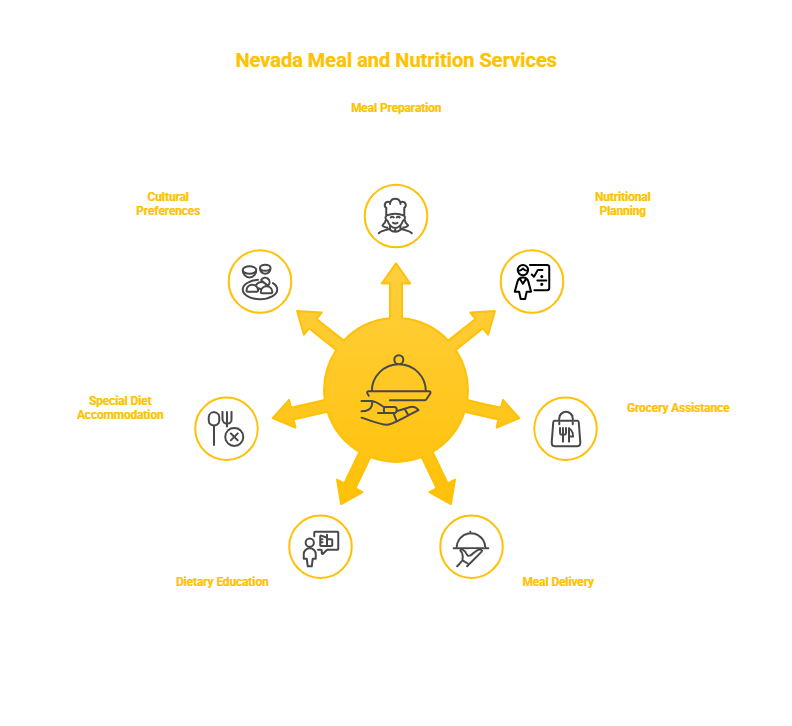
Meal and Nutrition Services encompass a broad range of activities designed to support an individual's specific health trajectory. Approved providers generally deliver services that include the preparation of meals tailored to individual dietary needs—such as diabetic-friendly, low-sodium, or pureed options—ensuring that the food provided is both safe and medically appropriate. Beyond cooking, providers are often tasked with nutritional planning, creating comprehensive meal plans that align with the participant’s health requirements and personal goals.
Providers may also facilitate grocery assistance, which involves the professional purchasing and delivery of essential food supplies. Delivery logistics are a core component, ensuring that prepared meals arrive at the participant’s home on a consistent schedule. Furthermore, providers play a vital role in dietary education, teaching participants and their caregivers how to manage meal preparation and maintain a balanced diet. These services are strictly governed by the Individualized Service Plan (ISP), ensuring every aspect of the service—including cultural preferences or specific food allergies—is addressed in a way that respects the participant's autonomy.
- Meal Preparation: Specialized cooking based on medical directives.
- Nutritional Planning: Development of structured diet plans.
- Grocery Assistance: Procurement and delivery of food supplies.
- Meal Delivery: Reliable transportation of meals to the participant’s residence.
- Dietary Education: Training for participants and caregivers on healthy choices.
- Special Diet Accommodation: Adjusting menus for clinical needs or intolerances.
- Cultural Adaptation: Ensuring meal plans reflect the user’s personal and cultural background.
How Do Providers Navigate Licensing and Enrollment?
Launching a Medicaid-authorized meal service requires strict adherence to administrative prerequisites. First, a provider must establish a formal business entity registered with the Nevada Secretary of State. Once the business is formed, the provider must obtain an Employer Identification Number (EIN) from the IRS and a National Provider Identifier (NPI) Type 2, which is critical for all Medicaid billing activities. Additionally, providers must secure relevant food handling permits from the Nevada Department of Health, ensuring that the facility and processes meet local health department standards.
Financial and operational stability is verified through proof of general and professional liability insurance. Furthermore, providers must develop a robust suite of policies governing meal preparation, dietary compliance, and overall safety. This includes rigorous vetting of staff; all employees must undergo background checks and health screenings. Once these foundations are established, the provider must enroll via the Nevada Medicaid Provider Enrollment Portal. The state will conduct a program readiness review to evaluate whether the provider is prepared to meet the clinical and dietary demands of the HCBS waiver population.
What Documentation Is Required for Compliance?
Maintaining high-quality documentation is a regulatory necessity for all Medicaid providers. Agencies must compile a comprehensive Policy & Procedure Manual that serves as the blueprint for daily operations. This manual must explicitly cover meal planning, preparation protocols, and delivery logistics, while also detailing how the provider will accommodate special dietary needs and ensure HIPAA compliance. Protecting client rights and implementing a transparent grievance handling process are also mandatory components of the documentation suite.
Specific documentation requirements include, but are not limited to, Articles of Incorporation, proof of valid insurance, and evidence of staff credentialing. Providers must keep detailed records of food safety training, infection control measures, and ongoing competency evaluations for all employees. Because Medicaid is a billable program, the agency must also maintain precise records of meal tracking, which serves as the evidence of service delivery for audit purposes. These files must be kept organized and readily available for review by DHHS or ADSD auditors at any time.
What Are the Essential Staffing and Training Standards?
The quality of nutrition services is dependent upon the qualifications and training of the staff. A program director must typically possess a bachelor’s degree in nutrition, dietetics, or food service management, complemented by experience in food safety systems. When the program requires professional dietary assessments, licensed Registered Dietitians (RD) or certified nutritionists are required to oversee planning and counseling. These professionals ensure that the dietary services provided are clinically sound and safe for participants with complex medical profiles.
Support staff, including food service workers, cooks, and delivery drivers, must also meet stringent requirements. Every staff member must hold a food handler certification and pass a thorough background check. Beyond initial hiring requirements, all employees must participate in ongoing training, including HIPAA compliance and privacy training, to ensure that the participant's data and rights are protected. Continuous education regarding food preparation techniques and dietary compliance is essential to maintaining the high standards expected under Nevada's Medicaid waiver programs.
Frequently Asked Questions
Which Medicaid waivers currently cover Meal and Nutrition Services in Nevada?
These services are supported under the Home and Community-Based Waiver for Persons with Intellectual and Developmental Disabilities (HCBS-IDD), the Frail Elderly (FE) Waiver, the Physical Disabilities Waiver, the Traumatic Brain Injury (TBI) Waiver, and the Aged and Disabled (AD) Waiver.
How long does the provider enrollment process typically take?
The timeline involves several phases, starting with 1-2 months for business formation and compliance. Staff hiring and credentialing typically take 2-3 months. The formal Nevada Medicaid Provider Enrollment and Readiness Review takes approximately 60-90 days, followed by 30-45 days for final billing setup and launch.
What does the "Readiness Review" entail for a new provider?
The Readiness Review is a critical evaluation conducted by DHHS and ADSD to ensure the provider is operationally prepared. It includes an audit of food safety protocols, verification of dietary compliance systems, an assessment of staff qualifications, and confirmation that all required policies and procedures are in place and aligned with Medicaid standards.
Key Takeaways
Success as a Meal and Nutrition Services provider in Nevada requires a dual focus: meeting the clinical nutritional needs of vulnerable populations while maintaining strict administrative compliance with DHHS and ADSD regulations. By investing in professional credentialing, robust food safety policies, and efficient billing infrastructure, providers can build a sustainable agency that delivers essential support to participants across multiple HCBS waiver programs. Success is defined by the ability to remain audit-ready while consistently delivering high-quality, personalized nutritional care.
Last verified: September 2023. Disclaimer: This information is for educational purposes only and does not constitute legal or professional consulting advice. State regulations regarding Medicaid and HCBS waivers are subject to change; always refer to the latest guidance from the Nevada Department of Health and Human Services (DHHS) and the Centers for Medicare & Medicaid Services (CMS) for current policy requirements.