MEAL AND NUTRITION SERVICES PROVIDER IN NEBRASKA
By Fatumata Kaba · 2025-08-08 · 6 min read
Meal and Nutrition Services in Nebraska are critical components of the state's Medicaid Home and Community-Based Services (HCBS) framework, designed to support individuals with disabilities, chronic illnesses, and age-related functional limitations. By providing structured meal preparation, delivery, and dietary counseling, these services help participants maintain their health, avoid institutionalization, and achieve nutritional stability within their own homes and communities.
Administered under the oversight of the Nebraska Department of Health and Human Services (DHHS) and the Division of Medicaid and Long-Term Care (MLTC), these services must adhere to rigorous person-centered planning and safety standards. Providers play an essential role in bridging the gap between clinical health requirements and daily living needs, ensuring that vulnerable Nebraskans have access to the dietary resources necessary for independence.
What Are the Governing Agency Roles and Responsibilities?
The successful operation of a Meal and Nutrition Services agency in Nebraska requires navigation through a multi-layered regulatory environment. At the state level, the Nebraska Department of Health and Human Services (DHHS) serves as the primary authority, managing the administrative aspects of Medicaid waiver funding, provider enrollment protocols, and ongoing reimbursement processes. Compliance with DHHS regulations is foundational to maintaining provider status and securing consistent Medicaid payments.
Complementing the DHHS, the Nebraska Medicaid and Long-Term Care (MLTC) Division focuses on the qualitative aspects of service delivery. Their role includes ensuring that all meal preparation and delivery activities meet established dietary compliance standards and safety protocols. Furthermore, because these programs are often funded through federal-state partnerships, the Centers for Medicare & Medicaid Services (CMS) provides federal oversight. CMS mandates that all services align with national HCBS quality benchmarks, prioritizing participant protection and the integrity of person-centered service plans.
How Do Providers Deliver Comprehensive Nutrition Services?
Meal and Nutrition Services extend beyond simple food delivery; they are designed as a comprehensive support system tailored to the unique clinical profile of each waiver participant. Providers are expected to implement services that align strictly with the Individualized Service Plan (ISP) developed for the individual. This ensures that the nutritional intervention is both medically necessary and practically suited to the participant’s functional capabilities and personal preferences.
The scope of service typically includes a range of professional activities designed to support long-term health outcomes. Approved providers may be responsible for the following service components:
- Meal Preparation: Executing daily or weekly preparation of meals that specifically account for prescribed dietary restrictions.
- Meal Delivery: Coordinating the logistical aspects of transporting prepared meals directly to the participant's place of residence while maintaining temperature and hygiene standards.
- Dietary Planning: Developing customized meal plans that align with specific medical or nutritional requirements identified by a clinician.
- Nutritional Counseling: Providing ongoing education to participants and their caregivers on maintaining a balanced diet and managing nutritional health.
- Specialized Diets: Delivering meals specifically formulated for individuals managing diabetes, hypertension, celiac disease, or other chronic conditions.
- Group Meals: Facilitating community-based meal programs to encourage social interaction, which can be vital for the emotional well-being of the waiver population.
What Steps Are Necessary for Provider Approval and Enrollment?
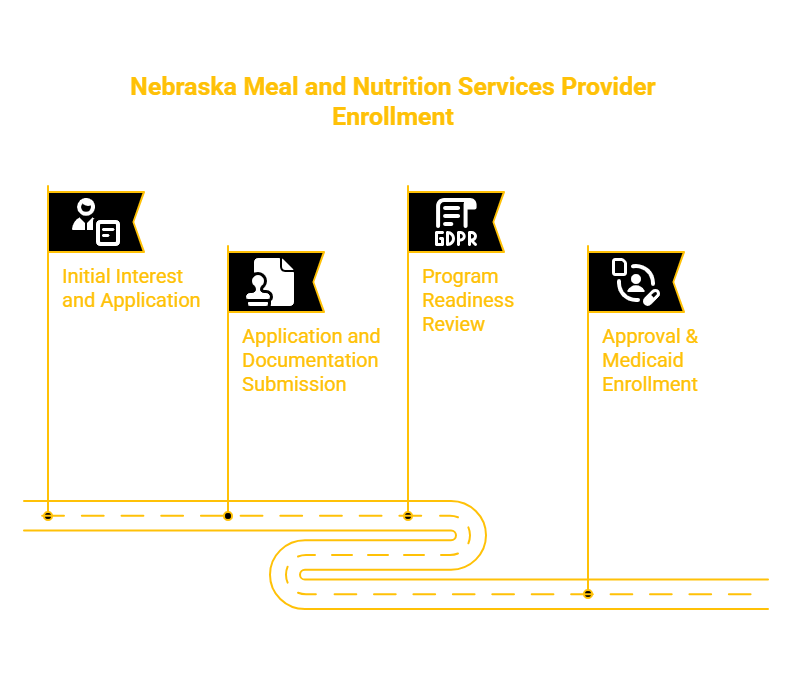
The path to becoming a recognized Nebraska Medicaid Meal and Nutrition Services provider begins with establishing a formal business entity. Prospective providers must first register with the Nebraska Secretary of State and secure the necessary tax identification, including an EIN from the IRS and a Type 2 NPI. Before submitting any state-level applications, the business must possess the appropriate food service licenses required by the DHHS to ensure the legal operation of kitchen or meal preparation facilities.
Once the business is legally structured, the provider must navigate the enrollment process through the Nebraska Medicaid Provider Enrollment Portal. This phase requires the submission of a comprehensive documentation package, which includes evidence of liability insurance—both general and professional—and a detailed Policy and Procedure Manual. The DHHS will then conduct a program readiness review to evaluate the provider’s ability to manage dietary planning, adhere to strict food safety protocols, and execute efficient meal delivery. Only after this readiness is verified and the provider is fully enrolled will they receive authorization to bill Medicaid using the designated service codes.
What Documentation Is Required for Operational Compliance?
Operational excellence in this sector is defined by meticulous record-keeping and audit readiness. Providers are required to maintain a robust document library that demonstrates compliance with both state and federal regulations. Central to this is the Policy and Procedure Manual, which must cover critical operational areas including food handling, staff vetting, and HIPAA-compliant data management. This manual serves as the primary document for internal audits and external reviews by state regulators.
When compiling documentation, providers should be prepared to present the following items during the enrollment and subsequent audit processes:
- Proof of current business standing, such as Articles of Incorporation and valid state licenses.
- Documentation of tax status and NPI classification.
- Comprehensive liability insurance certificates covering the agency and its professional staff.
- Detailed internal protocols for food hygiene, sanitation, and emergency safety in the event of power failures or delivery disruptions.
- Specific procedures for incident reporting, grievance handling, and the management of sensitive client health information.
- Records of staff background checks, health screenings, and proof of ongoing training and competency evaluations.
How Should Agency Staffing and Training Be Structured?
The quality of Meal and Nutrition Services depends heavily on the competence of the personnel performing the work. Administrative leadership, such as a Program Director, should ideally possess a background in nutrition or dietetics, coupled with current food safety certifications like ServSafe. Their primary responsibility is to ensure that the organizational structure supports high-quality service delivery and adheres to all regulatory mandates.
Clinical and operational staff must also be appropriately credentialed. Registered Dietitians (RD) are often required for advanced dietary planning, while cooks and meal preparation staff must hold valid food handling certifications and pass rigorous background checks. Delivery personnel, who represent the agency during daily contact with participants, must be trained in safe food handling and maintain a clean driving record. All staff members, regardless of their role, are required to undergo continuous professional development to ensure that hygiene and safety standards remain a top priority within the agency.
WAIVER CONSULTING GROUP’S START-UP ASSISTANCE SERVICE — NEBRASKA MEAL AND NUTRITION SERVICES PROVIDER
WCG supports agencies in launching Medicaid-compliant Meal and Nutrition Services in Nebraska, offering:
- Business registration, Medicaid enrollment, and licensing support.
- Policy manual development for meal planning and dietary compliance.
- Staff credentialing, training program templates, and food safety guidance.
- Medicaid billing setup and audit-prepared financial management.
- Branding, website development, and community outreach strategies.
- Quality assurance systems for food safety, hygiene, and meal tracking.
- Partnership development with local food suppliers and community organizations.
Frequently Asked Questions
Which Medicaid waivers currently cover Meal and Nutrition Services in Nebraska?
These services are available under several HCBS waiver programs, including the Aged and Disabled (AD) Waiver, the Traumatic Brain Injury (TBI) Waiver, the Developmental Disabilities (DD) Waiver, the Children with Disabilities Waiver, and the general Home and Community-Based Services (HCBS) Waiver.
How long does the provider enrollment process typically take?
The timeline involves several phases: business formation (1–2 months), staff and program development (2–3 months), the Medicaid Provider Enrollment and Readiness Review (60–90 days), and final billing setup (30–45 days). Providers should anticipate a multi-month commitment to achieve full operational status.
What is the role of the Program Director in this service model?
The Program Director oversees the entire service delivery chain, including dietary compliance and food safety. This individual is typically required to have a Bachelor’s degree in a nutrition-related field, food safety certification, and supervisory experience to ensure that the agency meets the stringent expectations set by the Nebraska DHHS.
Key Takeaway: Successfully launching a Meal and Nutrition Services agency in Nebraska requires a dual focus on rigorous food safety compliance and meticulous Medicaid administrative standards. By aligning internal policies with DHHS requirements and ensuring staff are adequately trained and credentialed, provider agencies can effectively support the nutritional needs of HCBS waiver participants while maintaining long-term financial and operational sustainability.
Last verified: May 2024. This article is intended for informational purposes only and does not constitute legal or professional advice. Readers are encouraged to consult with the Nebraska Department of Health and Human Services or professional consultants to verify current regulations and requirements.