MEAL AND NUTRITION SERVICES PROVIDER IN MONTANA
By Fatumata Kaba · 2025-08-06 · 5 min read
SUPPORTING HEALTH AND WELL-BEING THROUGH NUTRITIONAL ASSISTANCE AND MEAL PREPARATION
Meal and Nutrition Services in Montana provide essential support for individuals with disabilities, chronic illnesses, or age-related conditions by ensuring access to balanced, medically appropriate nourishment. These services are a critical component of Montana’s Home and Community-Based Services (HCBS) waiver landscape, designed to prevent malnutrition, support chronic disease management, and enable participants to remain in their own homes rather than transitioning to institutional care.
How Are Meal and Nutrition Services Regulated in Montana?
The delivery of Meal and Nutrition Services is overseen by a structured regulatory framework involving state and federal authorities. The Montana Department of Public Health and Human Services (DPHHS) serves as the primary administrative body, managing waiver funding, provider enrollment, and reimbursement protocols. Within DPHHS, the Developmental Disabilities Program (DDP) plays a specialized role in ensuring that providers adhere to quality standards, dietary compliance, and the rigorous safety benchmarks required for vulnerable populations.
At the federal level, the Centers for Medicare & Medicaid Services (CMS) provides overarching guidance. CMS mandates that all Medicaid-funded services align with HCBS quality standards, specifically focusing on person-centered planning and participant protections. Providers must operate within these federal guidelines while navigating the state-specific requirements set forth by DPHHS to ensure service delivery is both compliant and clinically sound.
What Are the Core Components of Approved Nutrition Services?
Providers authorized to deliver these services must offer a comprehensive approach to nutrition that extends beyond simple food delivery. Services are fundamentally tied to the participant's Individualized Service Plan (ISP), which outlines specific dietary, medical, and functional requirements. A robust service model typically encompasses the entire continuum of nutritional support.
- Meal Preparation: Provision of daily or weekly meal preparation tailored to individual preferences and specific medical dietary restrictions.
- Meal Delivery: Safe transport and delivery of prepared meals directly to the participant's place of residence, ensuring food temperature and safety integrity are maintained.
- Dietary Planning & Counseling: Development of customized meal plans and ongoing education for participants and their caregivers to promote long-term health.
- Specialized Diets: Formulation and preparation of meals designed for specific health conditions, such as diabetes, hypertension, or celiac disease.
- Group Meals: Participation in community-based settings that offer social interaction alongside nutritional support.
What Are the Essential Requirements for Provider Approval?
Becoming an approved Medicaid waiver provider is a rigorous process that begins with establishing a formal business entity. Prospective providers must register with the Montana Secretary of State, obtain a federal Employer Identification Number (EIN), and secure a Type 2 National Provider Identifier (NPI). These administrative foundations are required before applying for enrollment through the Montana Medicaid Provider Enrollment Portal.
Operational compliance is equally critical. Providers must hold valid food service licenses issued by the DPHHS and maintain comprehensive general and professional liability insurance. Furthermore, every applicant must develop a formal policy and procedure manual. This document serves as the backbone of the organization, detailing protocols for food safety, hygiene, staff background checks, HIPAA compliance, incident reporting, and audit readiness to ensure the agency meets the state’s high standards for participant care.
How Does the Enrollment and Launch Process Work?
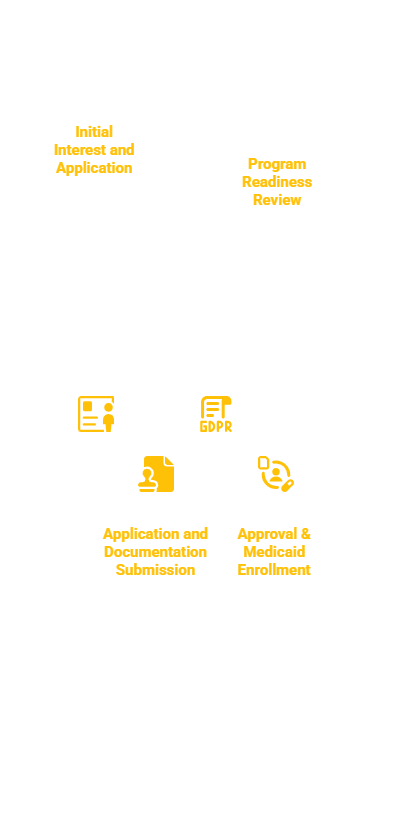
The path to becoming an active Medicaid provider in Montana is sequenced to ensure organizational readiness. Initially, providers submit their application via the Montana Medicaid Provider Enrollment Portal, accompanied by all necessary legal and insurance documentation. Once the application is submitted, the DPHHS conducts a Program Readiness Review. This phase focuses on verifying that the provider's operational procedures, dietary planning methodologies, and safety protocols align with the requirements of the HCBS waiver program.
Following a successful readiness review and formal enrollment approval, the agency gains the authorization to begin billing Medicaid using specific service codes. This transition requires significant preparation, generally following a timeline of 1–2 months for business formation, 2–3 months for staffing and credentialing, 60–90 days for the Medicaid review process, and an additional 30–45 days to finalize billing systems and launch services.
Who Must Staff a Meal and Nutrition Program?
Successful program delivery depends on qualified, well-trained personnel. Agencies are expected to recruit staff who hold the necessary certifications and expertise to handle food safety and dietary management for medically fragile populations. All staff, from the Program Director to delivery personnel, must undergo background checks and health screenings to ensure the safety of the participants they serve.
- Meal Services Program Director: Requires a degree in nutrition, dietetics, or a related field, alongside food safety certification (e.g., ServSafe) and relevant supervisory experience.
- Registered Dietitians (RD): Must hold state licensure and demonstrate expertise in creating therapeutic meal plans for specialized dietary needs.
- Kitchen and Delivery Staff: Must possess food handling certifications and training in meal safety and transportation protocols.
Frequently Asked Questions
Which Medicaid waiver programs cover meal services in Montana?
Meal and Nutrition Services are available under several programs, including the Big Sky Waiver (Aged and Disabled), the Comprehensive Waiver for Individuals with Developmental Disabilities, the Traumatic Brain Injury (TBI) Waiver, the Community Supports Waiver for Adults with Physical Disabilities, and the Children's Autism Waiver.
Are providers required to undergo periodic inspections?
Yes, providers are subject to ongoing competency evaluations and health inspections as part of the DPHHS oversight process. Maintaining audit readiness through meticulous record-keeping of food safety, meal tracking, and staff training is a continuous obligation.
What documentation is critical for the initial provider application?
Applicants must provide their Articles of Incorporation, EIN and NPI confirmation, valid food service licenses, proof of insurance, and a comprehensive policy manual covering areas such as dietary compliance, participant rights, grievance procedures, and emergency protocols.
Key Takeaway
Launching a Meal and Nutrition Services provider in Montana requires a disciplined approach to administrative compliance, food safety standards, and Medicaid billing requirements. By adhering to the guidelines set by the DPHHS and ensuring that all staff are properly credentialed and trained, providers can play a vital role in supporting the health and independence of Montanans enrolled in HCBS waiver programs.
Last verified: 2024. This information is intended for educational purposes only and does not constitute legal or professional advice. Always consult the Montana Department of Public Health and Human Services (DPHHS) official documentation and current Medicaid manuals for the most accurate and up-to-date program requirements.