MEAL AND NUTRITION SERVICES PROVIDER IN KENTUCKY
By Fatumata Kaba · 2025-07-25 · 5 min read
Understanding the Role of Meal and Nutrition Services in Kentucky Medicaid
Meal and Nutrition Services in Kentucky are critical supports designed to help Medicaid-eligible individuals maintain proper nutritional health while living independently in their own homes and communities. These services are integrated into Kentucky Medicaid’s Home and Community-Based Services (HCBS) waiver programs to proactively mitigate risks associated with malnutrition, food insecurity, and chronic health complications.
By providing structured nutritional planning, meal delivery, and professional dietary interventions, these services empower individuals with disabilities, seniors, and those with complex medical conditions to sustain their independence. As a provider, your role is to deliver high-quality, compliant nutrition support that aligns with the participant’s unique Person-Centered Service Plan (PCSP) while navigating the regulatory framework established by the Kentucky Cabinet for Health and Family Services (CHFS).
Who Regulates and Governs Kentucky Nutrition Services?
The delivery of Medicaid-funded nutrition services in Kentucky is governed by a multi-tiered regulatory structure that ensures service quality, federal compliance, and financial accountability. Understanding these relationships is the first step in successful provider operations.
The Kentucky Cabinet for Health and Family Services (CHFS), through the Department for Medicaid Services (DMS), holds primary responsibility for administering Medicaid and HCBS waivers, overseeing provider enrollment, and managing reimbursement protocols. Simultaneously, the Kentucky Department for Aging and Independent Living (DAIL) plays a vital role by overseeing waivers specifically for aging populations and establishing the clinical and operational standards for nutrition-related services.
Furthermore, providers must operate in coordination with Managed Care Organizations (MCOs), which manage the day-to-day authorization of services, credentialing, and quality outcomes for the majority of Medicaid participants in the state. At the federal level, the Centers for Medicare & Medicaid Services (CMS) ensures that all Kentucky programs adhere to federal mandates for person-centered service delivery and program integrity.
Defining the Scope of Service Delivery
Approved Meal and Nutrition Services providers deliver a range of support options tailored to meet the participant’s functional and dietary requirements. These services are not merely about food provision; they encompass a comprehensive approach to health management that requires careful planning and professional oversight.
Providers generally offer the following components to eligible participants:
- Home-delivered meals, including hot, cold, frozen, or shelf-stable options that meet nutritional requirements.
- Congregate or community-based meal services where applicable for social and nutritional support.
- Nutritional risk screenings and the development of individualized meal plans.
- Medical Nutrition Therapy (MNT) provided under specific physician referral.
- Educational programming on meal preparation, financial budgeting for nutrition, and food safety.
- Caregiver training designed to assist families in managing dietary needs and mealtime support.
- Ongoing coordination with primary care physicians, dietitians, and assigned case managers.
Navigating the Provider Enrollment and Credentialing Process
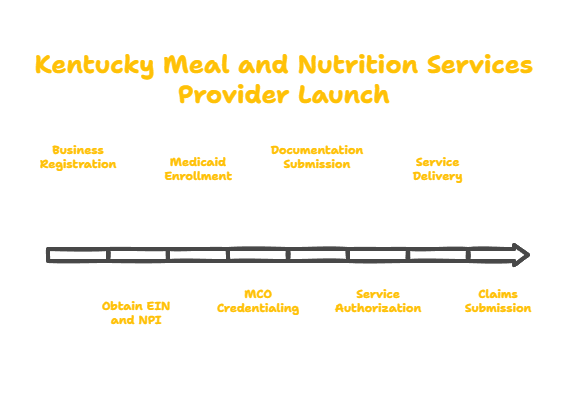
Becoming an authorized provider in Kentucky requires a structured approach to business formation, regulatory compliance, and system enrollment. The process begins with establishing a formal business entity registered with the Kentucky Secretary of State and obtaining the necessary federal documentation, including an IRS EIN and a Type 2 NPI.
The formal enrollment process is handled through the Kentucky Medicaid Partner Portal Application (MPPA). Providers must navigate the portal to enroll under the appropriate HCBS provider types, such as Home-Delivered Meals or Nutrition Counseling. Once the Medicaid enrollment is initiated, providers must then undergo the credentialing process with Kentucky’s various MCOs, such as Aetna Better Health, Humana Healthy Horizons, and WellCare.
During this stage, you must submit all necessary business documentation, including proof of liability insurance, food service permits from the local health department, and evidence of staff credentials. Success in this phase relies on your organization’s ability to present a cohesive policy and procedure manual that demonstrates readiness to serve vulnerable populations according to state and federal standards.
Required Documentation and Operational Compliance
Operational integrity in Kentucky’s HCBS system is evidenced by rigorous documentation. Providers must maintain a robust record-keeping system that is fully HIPAA-compliant and accessible for state audits or MCO reviews. Your internal systems must demonstrate that every service delivered is linked to an authorized Person-Centered Service Plan (PCSP).
Core documentation that must be maintained at your facility includes:
- Articles of Incorporation or official Kentucky business licenses.
- IRS EIN and NPI confirmation documentation.
- Current general liability insurance policies and valid food handler certifications for all relevant staff.
- Active licensure for all Registered Dietitians (RD) and Licensed Dietitian/Nutritionists (LDN) on staff.
- A comprehensive Policy & Procedure Manual covering menu planning, dietary intake logs, and nutrition risk assessments.
- Detailed participant service documentation, including delivery logs, service quality tracking, and emergency meal delivery protocols.
- Standardized grievance procedures and participant consent forms.
Staffing Standards and Personnel Requirements
The quality of service delivery depends heavily on the competency and training of your personnel. Kentucky regulations dictate specific requirements for those involved in both the administrative and clinical aspects of meal services. All staff must undergo comprehensive training covering HIPAA privacy, participant confidentiality, food safety, and infection control.
Meal preparation staff and delivery drivers are required to hold food handler’s permits and must pass necessary background screening clearances. Furthermore, for the clinical components of the program—such as menu oversight, individual assessments, and patient education—you must employ or contract with an RD or LDN who is licensed to practice within the state of Kentucky.
Frequently Asked Questions
Which Medicaid waivers cover Meal and Nutrition Services?
These services are primarily authorized under the Supports for Community Living (SCL) Waiver, the Michelle P. Waiver (MPW), the Home and Community-Based (HCB) Waiver, the Acquired Brain Injury (ABI and ABI-LTC) Waivers, and the Model II Waiver (MIIW).
Is a physician’s order required for all services?
While standard meal delivery is generally based on the Person-Centered Service Plan (PCSP), components such as Medical Nutrition Therapy (MNT) typically require a specific physician referral or order to be eligible for reimbursement.
What is the typical timeline to launch a new service provider?
From initial business registration to the first service delivery, the process typically takes four to seven months. This includes 1–2 months for business licensing, 60–90 days for MPPA enrollment and MCO credentialing, and additional time for staff hiring, menu development, and operational testing.
Key Takeaway
Launching a Meal and Nutrition Services program in Kentucky requires a meticulous approach to administrative compliance, adherence to the specific standards set by DAIL and DMS, and the ability to integrate seamlessly with the state’s managed care landscape. By prioritizing a solid infrastructure, qualified clinical staffing, and rigorous documentation, providers can effectively support the health and independence of Kentucky’s most vulnerable populations while ensuring long-term program sustainability.
Last verified: September 2023. This information is for educational purposes only and does not constitute legal or professional medical advice. Always refer to the official Kentucky Department for Medicaid Services (DMS) website and current provider manuals for the most recent regulatory updates and policy changes.