MEAL AND NUTRITION SERVICES PROVIDER IN ILLINOIS
By Fatumata Kaba · 2025-07-19 · 5 min read
Becoming a Meal and Nutrition Services provider in Illinois is a vital step toward supporting community health and preventing institutionalization for the state's most vulnerable populations. By delivering nutritionally balanced meals and dietary guidance, approved providers play a critical role in the Home and Community-Based Services (HCBS) ecosystem, ensuring that older adults and individuals with disabilities can age in place with dignity and proper nourishment.
Understanding the Regulatory Oversight of Illinois Nutrition Programs
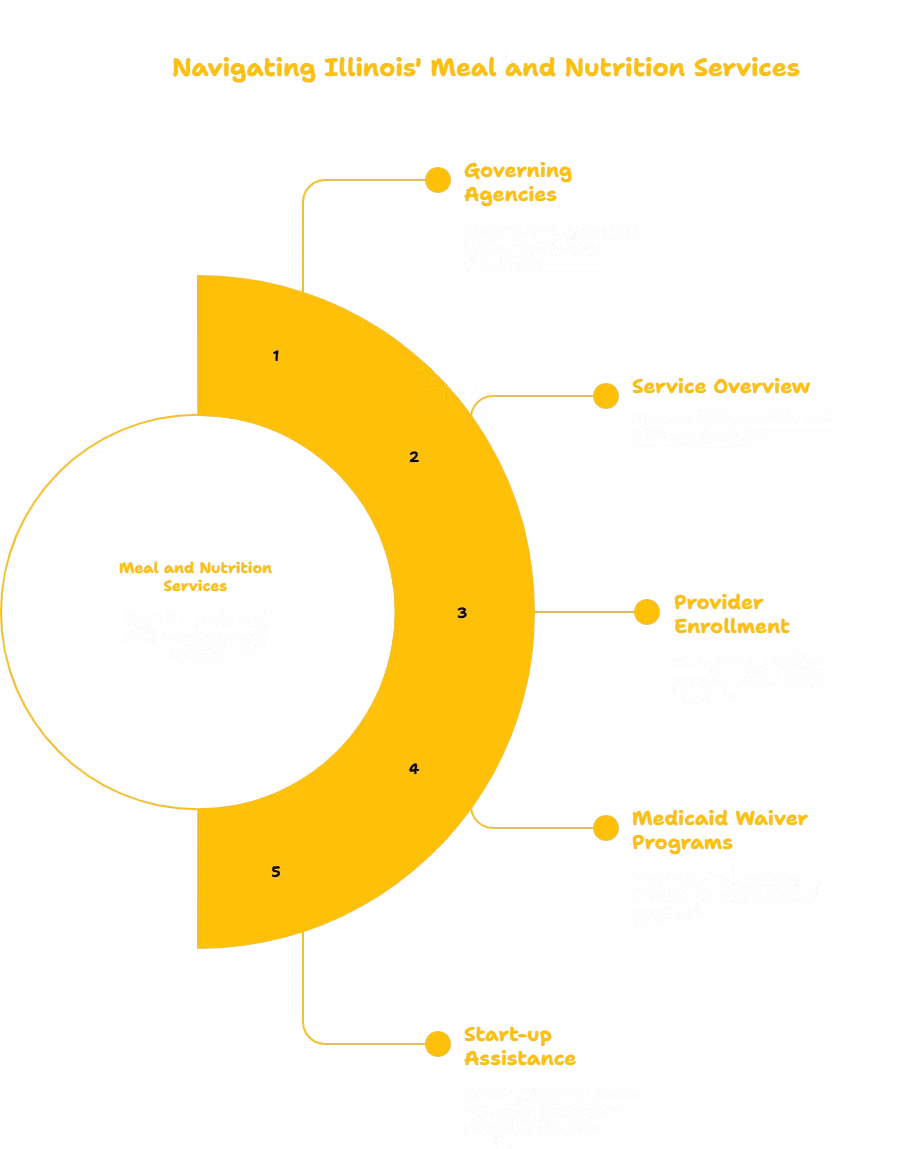
The delivery of nutrition services in Illinois is governed by a multi-layered regulatory framework designed to ensure participant safety and fiscal accountability. The Illinois Department on Aging (IDoA) acts as the primary oversight body for state and federally funded programs, establishing the nutritional standards and quality benchmarks that providers must meet. Their role is to ensure that service delivery effectively supports the well-being of older adults and individuals living with disabilities.
Concurrently, the Illinois Department of Healthcare and Family Services (HFS) manages the financial and enrollment aspects of the system. HFS is responsible for administering the Medicaid Waiver funding that allows for the reimbursement of these services and maintains the integrity of the provider network through the Illinois Medicaid Provider Enrollment (IMPACT) system. Federal guidance is provided by the Centers for Medicare & Medicaid Services (CMS), which oversees the entire Medicaid framework to ensure that state programs adhere to national standards for participant-centered care and safety.
What Scope of Services Can Providers Offer Under Illinois Waivers?
Approved providers are tasked with meeting the individualized needs of participants as outlined in their specific service plans. The service delivery model is broad, encompassing home-delivered meals for those who are homebound, as well as congregate meal settings that foster socialization in community centers. By offering diverse delivery options, providers help mitigate the risks of food insecurity and social isolation that often affect the waiver-eligible population.
In addition to standard food delivery, providers are expected to manage complex dietary requirements. This includes the ability to offer special diet meals—such as renal, cardiac, or diabetic-friendly options—and provide nutrition education or counseling. These supplementary services are essential for helping participants manage chronic conditions through dietary intervention, requiring providers to maintain strict adherence to documented medical needs and professional nutritional standards.
- Home-delivered meals: Essential nourishment brought directly to the participant's residence.
- Congregate meals: Group-based dining intended to promote community engagement.
- Special diet meals: Medically tailored food plans for specific health conditions.
- Nutrition education: Counseling designed to improve health outcomes through sustainable dietary habits.
Steps for Navigating the Provider Enrollment Process
To begin the journey toward becoming an authorized provider, organizations must first establish themselves as legal entities in Illinois and secure necessary identifiers, including an Employer Identification Number (EIN) and a Type 2 National Provider Identifier (NPI). Once the business infrastructure is in place, the organization must navigate the IMPACT system to submit a formal application for Medicaid waiver program enrollment. This process requires precise documentation and an understanding of the specific waivers for which the provider intends to qualify.
Following the submission of the application and supporting documentation—such as Articles of Incorporation, insurance certificates, and food safety credentials—a program readiness review is conducted. IDoA, HFS, or regional Area Agencies on Aging (AAAs) will evaluate the provider's capacity to execute meal preparation, handle dietary specifications, and maintain delivery logistics. Only upon successful completion of this review and subsequent configuration of billing codes is a provider considered active and ready to serve participants.
Essential Requirements for Operational Compliance
Operational success hinges on maintaining rigorous standards for food safety and participant protection. Providers must be fully compliant with Illinois Department of Public Health (IDPH) regulations, which includes holding valid Food Service Sanitation Certifications and undergoing regular kitchen inspections. Because the participants served are often medically fragile, the provider's policy and procedure manual must be comprehensive, covering everything from temperature control protocols during delivery to emergency disaster preparedness.
Furthermore, documentation requirements for audit readiness are extensive. Providers must demonstrate, at a minimum, the ability to verify participant eligibility, track meal delivery verification, and maintain clear records of special diet compliance. Staffing requirements also demand that providers hire qualified personnel, such as registered dietitians for counseling roles and food handlers who have completed background screenings and mandatory training in HIPAA, elder abuse prevention, and emergency response.
- Intake and Authorization: Procedures for verifying eligibility and service plans.
- Logistics and Safety: Protocols for food temperature control, transit, and distribution.
- Quality Assurance: Periodic review of service delivery, grievance handling, and incident reporting.
- Documentation: Organized record-keeping for billing, claims management, and compliance audits.
Frequently Asked Questions
What types of Medicaid waivers in Illinois support meal services?
Meal and nutrition services are integrated into several key waivers, including the Elderly Waiver (Community Care Program), the Persons with Disabilities (PD) Waiver, the Persons with Brain Injury (BI) Waiver, and the Supportive Living Program (SLP).
What is the typical timeline for launching a meal service program?
The timeline involves several distinct phases: 1–2 months for business formation, 2–3 months for hiring and program development, 60–90 days for the IMPACT enrollment and readiness review, and 30–45 days to finalize delivery systems and launch services.
Who is responsible for the oversight of dietary standards?
While the Illinois Department on Aging (IDoA) establishes the primary nutrition standards, providers must ensure their kitchen and delivery staff adhere to IDPH safety regulations, and any specialized counseling must be performed by a registered dietitian licensed in Illinois.
Waiver Consulting Group Support Services
WCG provides targeted assistance for organizations seeking to navigate the complexities of launching a Medicaid-compliant Meal and Nutrition service. Our scope of work includes guiding the initial business formation and food safety compliance, assisting with the IMPACT enrollment process, and developing robust Policy and Procedure Manuals tailored to state requirements. We also support the implementation of quality assurance programs, staff credentialing, and the establishment of strategic partnerships with local Area Agencies on Aging.
Key Takeaway: The success of an Illinois meal and nutrition provider is predicated on strict adherence to state regulatory protocols, ranging from food safety certification to the meticulous management of Medicaid billing and clinical documentation. Organizations that prioritize operational readiness and clear, compliant service delivery are best positioned to fulfill the critical mission of supporting community-based aging and independence.
Last verified: October 2023. Disclaimer: This article is for informational purposes only and does not constitute legal or professional advice. Always consult with the Illinois Department of Healthcare and Family Services (HFS) and the Illinois Department on Aging (IDoA) for the most current rules, regulations, and provider requirements.