MEAL AND NUTRITION SERVICES PROVIDER IN HAWAII
By Fatumata Kaba · 2025-07-16 · 6 min read
SUPPORTING HEALTH, INDEPENDENCE, AND WELL-BEING THROUGH NUTRITIONAL PLANNING AND MEAL DELIVERY
Meal and Nutrition Services in Hawaii represent a critical component of the state’s Home and Community-Based Services (HCBS) waiver infrastructure, designed to provide individuals with disabilities, chronic health conditions, or aging-related needs consistent access to healthy, nutritionally balanced meals. By integrating professional meal preparation, delivery, and dietary counseling into the Medicaid framework, these services empower participants to maintain their health while living independently within their own communities.
For service providers, entering this space requires a rigorous adherence to state and federal standards overseen by the Hawaii Department of Human Services (DHS) Med-QUEST Division and the Department of Health (DOH). This guide outlines the essential regulatory requirements, operational pathways, and administrative steps necessary to establish a compliant and effective Meal and Nutrition Services agency in Hawaii.
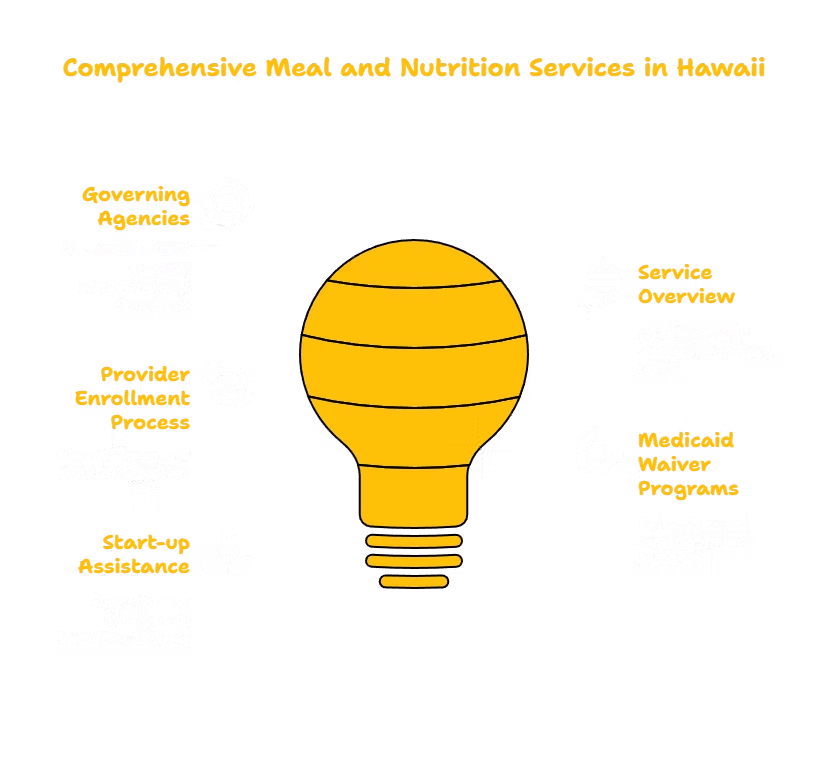
1. Understanding the Regulatory Landscape and Agency Oversight
The delivery of Medicaid-funded nutrition services in Hawaii is governed by a tripartite structure of regulatory oversight. The Hawaii Department of Human Services (DHS) Med-QUEST Division functions as the primary authority for provider enrollment, service authorization, and the complex reimbursement processes associated with Medicaid. Ensuring compliance with Med-QUEST is the foundational step for any organization seeking to operate as an approved waiver provider.
Parallel to Med-QUEST, the Hawaii Department of Health (DOH) Developmental Disabilities Division (DDD) administers specific HCBS waiver meal supports tailored for individuals with intellectual and developmental disabilities (IDD). Furthermore, the Centers for Medicare & Medicaid Services (CMS) provides the overarching federal framework, ensuring that all state-level activities meet the rigorous health and safety standards mandated for HCBS programs. Providers must align their operational practices with the directives of all three entities to maintain continuous program eligibility.
2. Defining Service Scope and Nutritional Standards
Meal and Nutrition Services encompass more than simple food delivery; they are defined by their ability to support specific health outcomes for vulnerable populations. Approved providers are responsible for a comprehensive service array that includes the preparation and delivery of nutritious meals, which may occur in home settings or through authorized congregate meal sites. These services must be intrinsically linked to the participant’s Individualized Service Plan (ISP), which dictates specific dietary, caloric, and medical requirements.
Beyond preparation, providers are often tasked with nutrition education and the development of specialized menus for individuals managing chronic conditions, such as cardiac disease, diabetes, or severe dysphagia requiring modified food textures. Successful delivery also involves continuous monitoring; providers must observe changes in a participant's nutritional status or physical condition and proactively report these concerns to the assigned case manager to ensure the ongoing safety and appropriateness of the service.
- Preparation and delivery of nutritious meals (home-delivered or provided at congregate sites)
- Menu planning based on participants’ medical and dietary needs
- Nutrition education and counseling (where authorized)
- Specialized meals for participants with medical conditions such as diabetes, cardiac disease, or swallowing disorders
- Culturally appropriate meal planning and adaptations
- Monitoring participant nutrition and alerting case managers to concerns
3. Establishing a Compliant Business Infrastructure
Establishing a business capable of meeting Medicaid HCBS requirements begins with formal registration and administrative readiness. Before approaching the state for provider enrollment, an agency must secure its legal status through the Hawaii Department of Commerce and Consumer Affairs (DCCA) and obtain a federal Employer Identification Number (EIN). Furthermore, securing a Type 2 National Provider Identifier (NPI) is a non-negotiable requirement for all organizations seeking to bill Medicaid services.
Operational integrity is further defined by rigorous safety and insurance standards. Providers must maintain adequate general and product liability insurance to mitigate risks associated with food service. If the agency operates a commercial kitchen, it must secure a food establishment permit from the DOH Sanitation Branch. Comprehensive policies covering food handling, emergency backup meal protocols, and disaster preparedness must be fully documented and ready for inspection by state surveyors during the readiness review process.
4. Navigating the Med-QUEST Provider Enrollment Process
The journey to becoming an approved provider involves a systematic progression from initial application to formal readiness verification. Organizations must first submit a provider enrollment application to the Med-QUEST Division, clearly specifying the scope of intended services, such as home-delivered meals, congregate meal provision, or nutritional counseling. This application acts as the formal request to be recognized as a participant in the Medicaid network.
Once the application is submitted, the agency must undergo a program readiness review. DHS and DOH representatives will evaluate the provider’s operational infrastructure, including its food safety compliance, meal delivery logistics, and administrative documentation systems. This phase serves to ensure that the agency possesses the capacity to handle sensitive medical data and maintain compliance with HIPAA standards. Successful completion leads to the configuration of specific billing codes, which are essential for processing claims for reimbursement.
- Submit Provider Enrollment Application for Meal and Nutrition Services through Hawaii’s Med-QUEST Division
- Submit Articles of Incorporation, proof of EIN/NPI, food safety certification, and operational policies
- Participate in a Readiness Review covering food safety and service documentation systems
- Configure billing codes for authorized service categories
5. Developing Essential Documentation and Staffing Systems
A Medicaid-compliant agency is built upon robust documentation and a well-trained workforce. Policies must be established for participant intake, which should include a thorough assessment of dietary needs and preferences. Additionally, the agency must maintain rigorous record-keeping for staff, ensuring that every employee—from meal preparers to delivery drivers—has undergone necessary background screenings and holds the appropriate credentials, such as a food handler’s card or ServSafe certification.
Training protocols must be institutionalized within the agency. Staff should receive ongoing education regarding HIPAA compliance, participant rights, and emergency incident reporting. Because providers serve individuals with complex medical needs, staff must be proficient in recognizing potential adverse reactions and documenting meal delivery outcomes. Establishing a clear, audit-ready paper trail for all services is the most effective defense during periodic program reviews and quality assurance audits.
6. Frequently Asked Questions
What waivers currently authorize Meal and Nutrition Services in Hawaii?
Meal and Nutrition Services are primarily authorized under the Developmental Disabilities/Intellectual Disabilities (DD/ID) Waiver and the Community Care Services (CCS) Program, provided the nutrition support is deemed essential for the participant's health and maintenance of community living.
How long does the typical enrollment process take?
The total timeline can vary, but generally, the process spans several months. Business formation and credentialing usually require 1–2 weeks, followed by 1–2 months for food safety setup, 60–90 days for the Med-QUEST readiness review, and 45–60 days for final billing system configuration.
What is the role of the Meal Services Program Manager?
The Program Manager is responsible for overseeing the entire operation, including menu compliance, staff training, and ensuring that all meals meet the nutritional requirements outlined in the participant's Individualized Service Plan. This role typically requires a background in nutrition, dietetics, or food service management.
Key Takeaway
Launching a successful Meal and Nutrition Services agency in Hawaii requires a strategic approach that balances commercial food service standards with the strict regulatory mandates of the Medicaid program. By focusing on comprehensive documentation, rigorous staff training, and seamless coordination with the Med-QUEST and DOH divisions, providers can ensure long-term sustainability while making a meaningful impact on the health and independence of the individuals they serve.
Last verified: October 2023. Disclaimer: This document is for informational purposes only and does not constitute legal or professional advice. Always consult with the Hawaii Department of Human Services (DHS) and the Department of Health (DOH) for the most current regulatory requirements and enrollment guidelines.