MEAL AND NUTRITION SERVICES PROVIDER IN COLORADO
By Fatumata Kaba · 2025-07-06 · 5 min read
PROMOTING HEALTH, INDEPENDENCE, AND QUALITY OF LIFE THROUGH NUTRITIONAL SUPPORT FOR INDIVIDUALS WITH DISABILITIES AND CHRONIC CONDITIONS
Meal and Nutrition Services in Colorado serve as a critical component of the state’s Home and Community-Based Services (HCBS) waiver programs, ensuring that vulnerable populations receive the essential dietary support required to maintain their health and autonomy. By providing specialized, medically necessary nutrition directly to participants in their homes or community settings, these services effectively prevent malnutrition and support individuals in aging in place or remaining integrated within their communities.
What Are the Primary Regulatory Agencies Governing Colorado Meal Services?
The delivery of nutritional support under Colorado Medicaid is a highly regulated endeavor requiring adherence to both state and federal mandates. The Colorado Department of Health Care Policy and Financing (HCPF) acts as the primary authority, managing Medicaid enrollment, service authorizations, and reimbursement structures. Providers must ensure their operational frameworks align with HCPF policies to maintain compliance and consistent funding.
Beyond HCPF, the Colorado Department of Public Health and Environment (CDPHE) serves a vital role by enforcing food safety standards. Any entity involved in food preparation must secure appropriate licensure from the CDPHE or the relevant local health department to ensure that all meals are prepared, stored, and transported in sanitary conditions. Additionally, the Centers for Medicare & Medicaid Services (CMS) provides the overarching federal framework, ensuring that all state-level programs uphold person-centered care requirements and quality standards for HCBS participants.
How Do Providers Define and Deliver Essential Nutritional Services?
Meal and Nutrition Services are fundamentally designed to be participant-centered, meaning that every meal provided must support the specific medical, dietary, and cultural requirements outlined in the individual’s person-centered plan. Providers must be capable of delivering a diverse range of nutritional support, from standard healthy meals to complex, physician-ordered dietary modifications that address chronic conditions such as diabetes, hypertension, or swallowing disorders requiring pureed textures.
The scope of service includes a variety of delivery models to suit the needs of the participant, ranging from hot, ready-to-eat meals to frozen or shelf-stable options for long-term storage. When authorized under the specific waiver, providers may also offer congregate meal opportunities at community centers, nutritional counseling, or assistance with meal preparation within the home. All menus must adhere to established USDA Dietary Guidelines, ensuring that participants receive balanced nutrition as a standard of care.
- Home-delivered meals (hot, frozen, or shelf-stable)
- Congregate meals at community centers (where authorized)
- Specialized meal plans for dietary conditions (e.g., diabetic, low-sodium, pureed diets)
- Nutritional counseling and education (when authorized)
- Meal preparation assistance within the participant’s home (as authorized)
What Are the Foundational Prerequisites for Provider Enrollment?
Launching a compliant meal service business in Colorado begins with solidifying the organization's legal and operational foundation. Prospective providers must register their business with the Colorado Secretary of State and obtain both a federal Employer Identification Number (EIN) and a Type 2 National Provider Identifier (NPI). These identifiers are essential for all future interactions with the Medicaid system.
Operational readiness is equally critical. If the agency intends to prepare meals, it must secure a Retail Food Establishment License. Regardless of the preparation method, agencies must maintain comprehensive general liability and food service liability insurance. Furthermore, the organization must codify its commitment to safety through rigorous protocols that govern every stage of the food lifecycle, from sourcing and preparation to the final delivery to the participant’s doorstep.
How Is the HCPF Provider Enrollment Process Structured?
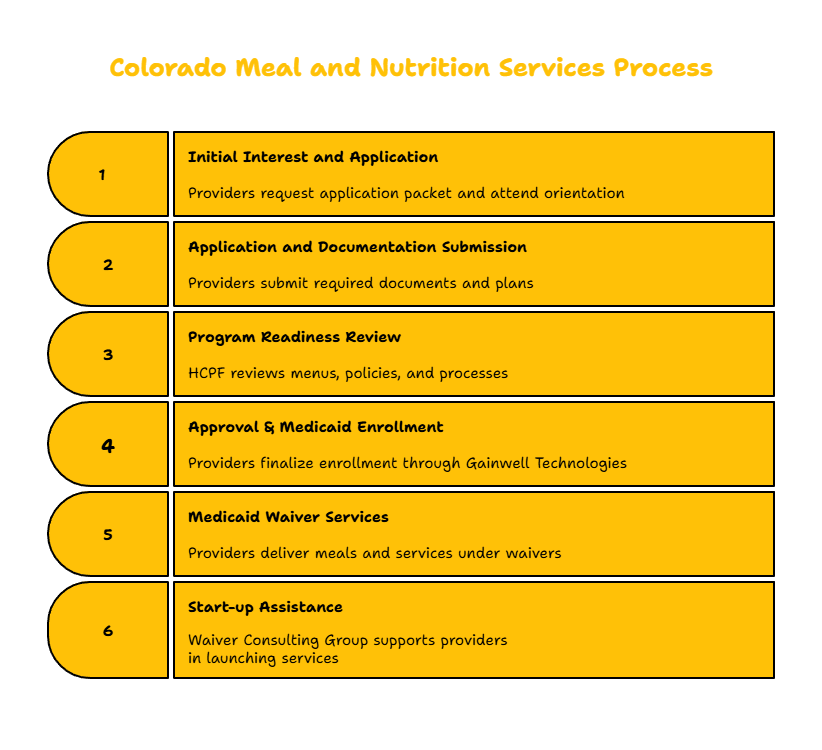
The journey toward becoming an authorized provider involves a structured, multi-phase application process managed through the Colorado Medicaid Provider Enrollment Portal. Initial steps include reviewing the official application packet provided by HCPF and attending mandatory or recommended orientation sessions, which offer vital insights into waiver-specific expectations and billing protocols.
Following initial orientation, the provider must submit a comprehensive application package. This includes all business documentation, insurance proofs, and detailed operational plans such as sample menus, food safety policies, and emergency delivery protocols. Once submitted, HCPF conducts a readiness review. This phase may involve an inspection of any physical kitchen facility and a thorough audit of the agency’s internal intake and dietary compliance systems. Final approval concludes with the configuration of the provider’s account in the Gainwell Technologies portal, where they will manage claims and service authorizations.
What Documentation and Staffing Standards Must Be Maintained?
Maintaining a high level of compliance requires a robust Policy and Procedure Manual. This living document must detail participant intake and assessment procedures, storage and transport logistics, incident reporting, and HIPAA-compliant data management. Agencies are expected to keep meticulous records, including staff training logs, background check results, and evidence of periodic quality assurance reviews.
Staffing requirements are equally stringent. The Program Manager must possess demonstrable experience in food service management, hold current food safety certification, and pass a comprehensive background check. Direct staff, including those responsible for food preparation and delivery, must also hold food handler permits and, ideally, possess CPR/First Aid certification. All personnel must receive ongoing training in HIPAA, participant rights, and emergency contingency planning to ensure the agency remains in good standing with state regulators.
Frequently Asked Questions
Which Medicaid waivers in Colorado allow for Meal and Nutrition Services?
Approved services can be delivered under the Elderly, Blind, and Disabled (EBD) Waiver, the Supported Living Services (SLS) Waiver, the Community Mental Health Supports (CMHS) Waiver, the Brain Injury (BI) Waiver, and the Spinal Cord Injury (SCI) Waiver for the Denver Metro Area.
What is the typical timeline for launching a meal services program?
The process generally takes several months to complete. Business formation and food licensing usually require 2–3 weeks, followed by 60–90 days for the HCPF review process, 30–45 days for staff training, and a final 45–60 days for system enrollment and claims configuration.
Are Registered Dietitian Nutritionists required for all programs?
While an RDN is not mandatory for standard meal delivery, their services are highly recommended and often required if the agency is offering specialized nutritional counseling or complex dietary planning as part of their authorized scope of services.
WAIVER CONSULTING GROUP’S START-UP ASSISTANCE SERVICE
WCG provides comprehensive support for entrepreneurs aiming to launch Medicaid-compliant Meal and Nutrition Services. Our scope of work covers the entire lifecycle of provider establishment, including:
- Business registration and EIN/NPI setup
- Food service licensing support and Medicaid documentation assistance
- Development of Meal and Nutrition Policy & Procedure Manual
- Staff credentialing templates and dietary intake forms
- Medicaid billing setup and claims configuration
- Website, domain, and email setup
- Participant intake and nutritional assessment packets
- Menu planning templates and meal delivery schedules
- Emergency planning and quality assurance tracking tools
- Community networking and healthcare partnership strategies
Key Takeaway: Successful operation of a Colorado Meal and Nutrition service requires a dual focus on rigorous food safety compliance and meticulous adherence to HCPF’s Medicaid billing and waiver-specific service mandates; by prioritizing these two pillars, providers can ensure both the longevity of their business and the health outcomes of their participants.
Last verified: 2024. This content is provided for informational purposes only and does not constitute legal or professional advice. Always consult the official Colorado HCPF website and current Medicaid regulations when making business or compliance decisions.