Integrated Employment Provider in Alabama
By Fatumata Kaba · 2025-06-24 · 5 min read
Integrated Employment Services in Alabama provide essential, community-based support for individuals with intellectual and developmental disabilities (IDD) to secure and maintain competitive, integrated employment. These services, regulated by the Alabama Department of Mental Health (ADMH) and supported by the Medicaid Home and Community-Based Services (HCBS) waiver, empower participants to work alongside peers without disabilities, fostering independence and long-term economic self-sufficiency.
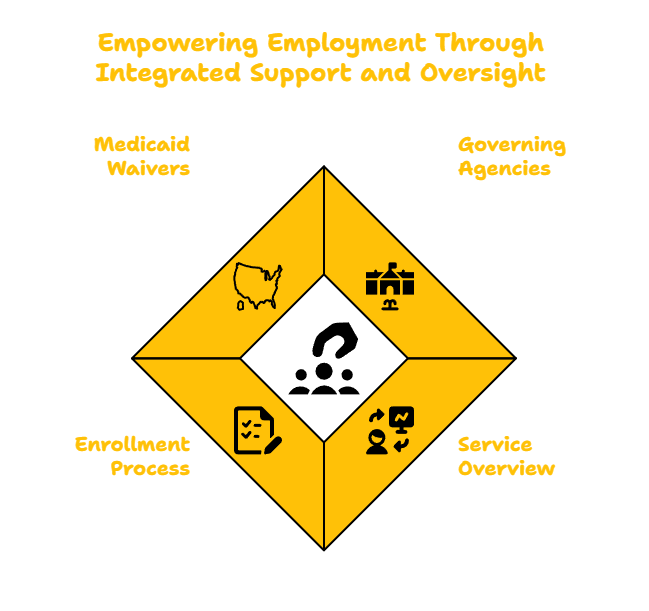
What Are the Roles of Governing Agencies in Alabama’s Employment Ecosystem?
The regulatory framework for employment services in Alabama is a collaborative effort involving both state and federal oversight. The Alabama Department of Mental Health (ADMH) serves as the primary regulatory body responsible for certifying and monitoring agencies that provide HCBS waiver-funded employment services. Their oversight ensures that providers adhere to state-specific quality standards and person-centered service delivery models.
The Alabama Medicaid Agency manages the fiscal side of the program, overseeing provider enrollment and the reimbursement processes that allow agencies to receive federal funds. Furthermore, the Alabama Department of Rehabilitation Services (ADRS) often acts as a critical partner, providing pre-employment transition support and coordinating with ADMH to ensure a seamless bridge between vocational training and long-term job placement. Finally, the Centers for Medicare & Medicaid Services (CMS) provides the overarching federal authority, ensuring all Alabama waiver programs align with national regulations regarding community integration and participant rights.
How Do Providers Deliver Integrated Employment Services?
Integrated Employment Services are individualized, person-centered supports designed to help participants navigate the transition from unemployment or day programs to paid, community-based roles. These services must strictly follow Employment First principles, which posit that competitive integrated employment is the first and preferred outcome for individuals with disabilities.
Providers are responsible for a comprehensive suite of supports that evolve as the participant progresses. These services typically include:
- Job development, which involves identifying community-based employers and matching participant skills to job openings.
- Job coaching and on-site support to ensure the individual succeeds in their specific role.
- Ongoing employment goal planning and skill-building sessions tailored to the individual’s unique needs.
- Self-employment exploration and development for those interested in entrepreneurship.
- Long-term support and retention services to navigate workplace challenges and ensure career stability.
What Are the Prerequisites for Becoming an ADMH Approved Provider?
Becoming an approved provider is a structured process that requires significant administrative preparation. Before applying to the ADMH, an organization must formally establish its business entity by registering with the Alabama Secretary of State and obtaining both an Employer Identification Number (EIN) and a Type 2 National Provider Identifier (NPI). A physical administrative office or a designated service base must be established within the state to qualify for service delivery.
Beyond basic business registration, prospective providers must demonstrate that they can meet rigorous ADMH standards for employment service delivery. This includes developing a robust policy for cross-agency collaboration—specifically with Vocational Rehabilitation (VR)—and establishing internal workflows for staff qualification and training. Agencies must prove they are ready to operate by submitting a detailed service proposal that outlines their staffing plans, service delivery models, and quality assurance strategies.
Navigating the ADMH Provider Enrollment Process
The enrollment timeline follows a sequence of administrative and clinical reviews. Initially, providers must submit a formal application to the ADMH, accompanied by a comprehensive proposal that details the agency’s capacity to serve individuals in the community. This initial phase involves a thorough vetting of policies, procedures, and the organizational framework that will govern service delivery.
Once the initial application is under review, the process moves into the credentialing and readiness phase:
- Background and Credentialing: Every direct support staff member must undergo a rigorous background check process, including fingerprinting, abuse and neglect registry screenings, and drug testing.
- Site and Program Readiness Review: The ADMH will conduct a review of the provider’s operational readiness, including data tracking systems, documentation methods for job coaching, and incident reporting protocols.
- Final Medicaid Enrollment: Upon receiving ADMH approval, the provider must enroll as an HCBS provider with the Alabama Medicaid Agency, specifically requesting the necessary service codes for Individual Employment, Job Coaching, and Career Exploration.
What Documentation Is Required for Ongoing Compliance?
Maintaining compliance requires meticulous record-keeping and a well-organized administrative filing system. Providers must keep current copies of their business formation documents, including Articles of Incorporation or LLC Certificates, alongside their IRS EIN and NPI verification letters. A core requirement is the maintenance of an ADMH-compliant Policy and Procedure Manual, which must be readily accessible for audits.
Essential documentation for ongoing service delivery includes:
- Evidence of staff training and supervision, including competency-based evaluations.
- Individual Support and Career Planning templates that align with the participant’s person-centered plan.
- Job coaching logs that capture real-time service delivery data and progress toward employment outcomes.
- Safety and incident reporting logs, ensuring all health and welfare protections are documented per state requirements.
- Outcome tracking tools that measure the success and sustainability of the employment placements.
Staffing Requirements and Training Standards
The success of integrated employment services relies heavily on the qualifications of the agency’s personnel. The Employment Services Administrator must possess a strong background in vocational rehabilitation or employment services to ensure effective oversight. Similarly, Employment Specialists and Job Coaches are expected to hold at least a high school diploma and demonstrate relevant experience in supported employment.
All staff are mandated to participate in a structured training curriculum, which includes:
- ADMH-mandated orientation and regular in-service training sessions.
- Specific training on the Americans with Disabilities Act (ADA), workplace accommodations, and safety protocols.
- Ongoing soft-skills coaching training to help staff better mentor participants in community-based environments.
- Annual refresher courses and documented performance evaluations to ensure service quality remains high.
Frequently Asked Questions
What waivers are currently used to authorize these services?
In Alabama, Integrated Employment Services are primarily authorized through the ID Waiver (Intellectual Disabilities Waiver) and the State of Alabama Community Waiver Program.
How long does the entire provider launch process take?
The timeline typically spans several months: approximately 0–1 week for business formation, 60–90 days for the ADMH application review, 30–60 days for program readiness, and 60–90 days for final Medicaid enrollment.
Are there specific roles that require specialized training?
Yes, both Employment Services Administrators and Job Coaches must complete ADMH-mandated orientation and specific modules related to workplace accommodations, safety, and individual rights before they begin working directly with participants.
Key Takeaway
Launching as an Integrated Employment Provider in Alabama requires a disciplined commitment to regulatory alignment with both the ADMH and the Alabama Medicaid Agency. By focusing on rigorous staff training, comprehensive policy development, and a steadfast adherence to person-centered, community-based service delivery, organizations can successfully support individuals with disabilities in achieving meaningful, long-term employment. Proper preparation in the administrative phase is the most effective way to navigate the multi-stage approval process and begin serving the community.
Last verified: 2024. The information provided in this article is for informational purposes only and does not constitute legal or professional advice. Requirements for Medicaid HCBS waiver programs are subject to change. Consult directly with the Alabama Department of Mental Health or the Alabama Medicaid Agency for the most current regulatory guidance and documentation requirements.