INDIVIDUAL AND FAMILY SUPPORT SERVICES PROVIDER IN WEST VIRGINIA
By Fatumata Kaba · 2026-04-14 · 5 min read
What Are Individual and Family Support Services in West Virginia?
Individual and Family Support Services are specialized Medicaid waiver interventions designed to bolster the stability of families caring for individuals with complex needs. By providing structured education, counseling, and direct in-home support, these services empower caregivers, parents, and guardians to manage the daily demands of caregiving while reducing the risk of burnout. These programs are vital components of the state's Home and Community-Based Services (HCBS) framework, ensuring that the primary support network of a waiver participant remains sustainable and capable over the long term.
These services are strictly person- and family-centered, meaning every intervention must be explicitly connected to the participant’s Individualized Service Plan (ISP). Whether the focus is on medication management, behavioral support, or emotional counseling, all activities must align with the specific goals identified during the assessment process. By fostering resilience and family capacity, these services help prevent crises and promote the participant’s ability to remain living successfully within their community.
Which Agencies Govern West Virginia Waiver Programs?
Navigating the administrative landscape of West Virginia’s Medicaid system requires a clear understanding of the governing entities responsible for policy, funding, and compliance. The primary agency, the West Virginia Department of Health and Human Resources (WVDHHR), maintains high-level authority over the administration of Medicaid waivers and establishes the framework for provider compliance with federal HCBS rules. Within this structure, the Bureau for Medical Services (BMS) serves as the core authority regarding Medicaid billing, provider enrollment, and the enforcement of waiver-specific policies.
Operational oversight and service authorization are primarily managed by Acentra Health (formerly Kepro). Acentra Health plays a critical role in reviewing and approving service authorizations based on the specific clinical or developmental needs documented in the participant’s ISP. Understanding the distinct roles of these three entities is essential for any provider agency aiming to maintain compliant operations and ensure timely reimbursement for services rendered.
- WVDHHR: Administers Medicaid waivers and ensures HCBS rule compliance.
- Bureau for Medical Services (BMS): Oversees Medicaid billing, provider enrollment, and policy adherence.
- Acentra Health: Responsible for approving service authorizations based on ISP requirements.
How Do Providers Develop Effective Family-Focused Services?
Effective family support services move beyond basic assistance by utilizing evidence-based strategies that improve family functioning and long-term care planning. Providers must ensure that their service delivery promotes self-determination and family empowerment. This involves a comprehensive approach to education—teaching caregivers how to navigate community resources, manage challenging behaviors, and maintain their own mental well-being throughout the caregiving journey.
Documentation is a cornerstone of this service category. Every interaction must be recorded in accordance with Medicaid requirements, verifying that the support provided directly addresses an ISP goal. Whether facilitating peer mentorship groups or providing in-home coaching on daily routines, the provider must demonstrate the clinical or social necessity of the intervention. Maintaining this link between service documentation and the participant’s ISP is the primary standard by which state auditors measure provider performance and efficacy.
What Are the Steps to Become a Medicaid Waiver Provider?
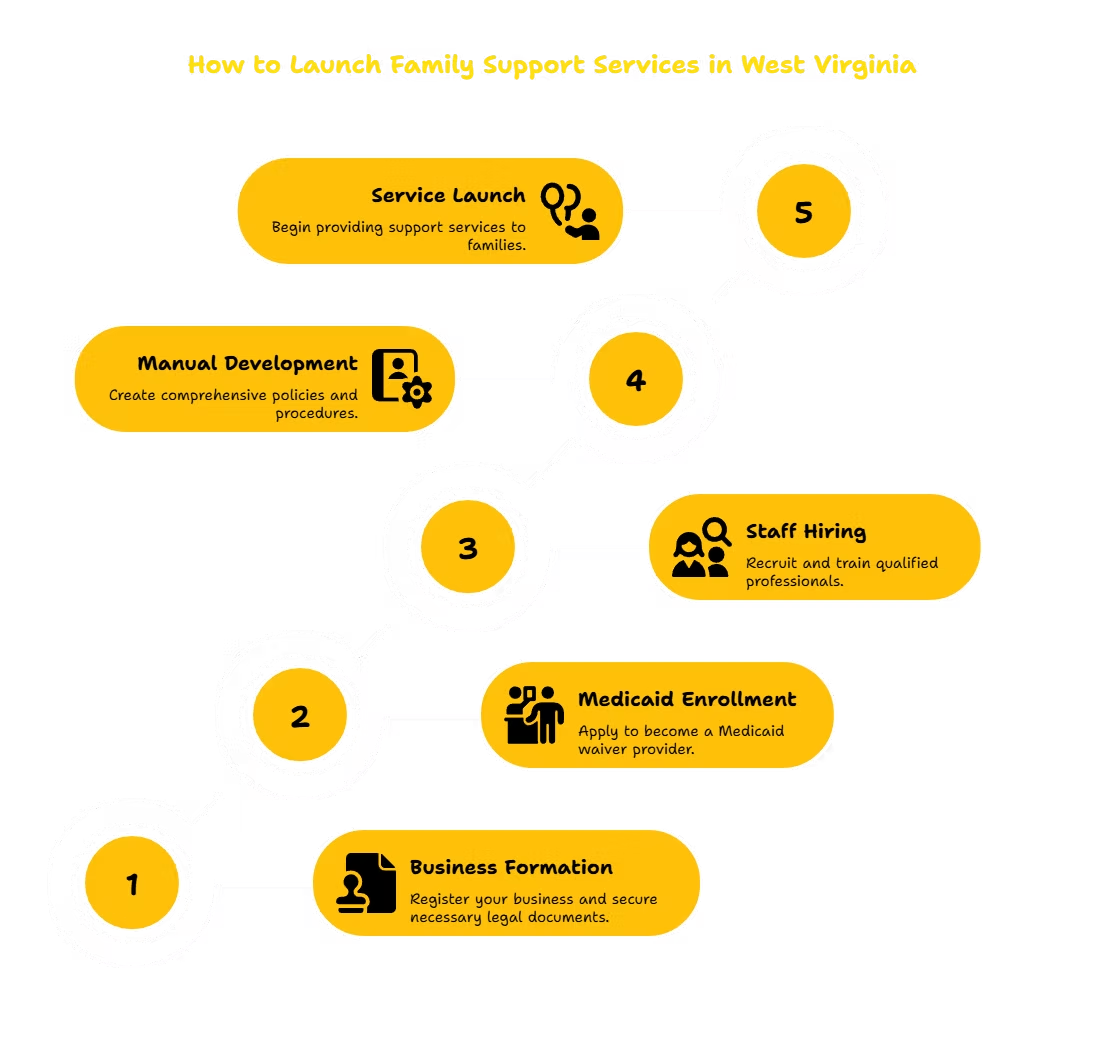
Launching a provider agency in West Virginia requires a systematic approach to business formation, regulatory registration, and Medicaid enrollment. Before clinical services can begin, a provider must establish a legal business entity, secure a Federal Employer Identification Number (EIN), and obtain a Type 2 National Provider Identifier (NPI). These foundational steps provide the administrative infrastructure necessary for billing and state reporting.
Once the business is legally established, the provider must navigate the enrollment process through the Bureau for Medical Services and Gainwell Technologies. This phase involves submitting a comprehensive Policy & Procedure Manual that details exactly how the agency will deliver family support services. Success in this phase relies on the provider's ability to demonstrate that they have hired qualified staff and implemented strict protocols for confidentiality, crisis planning, and service verification.
- Register the business with the West Virginia Secretary of State.
- Obtain an EIN and Type 2 NPI for billing purposes.
- Apply for Medicaid provider enrollment through Gainwell Technologies.
- Submit and receive approval for a Policy & Procedure Manual.
- Pass any necessary site or regulatory compliance reviews.
Which Staffing Standards Apply to Family Support Services?
Because these services involve counseling, training, and crisis management, staffing requirements are rigorous and specific to the role being filled. Professionals responsible for delivering counseling services must possess appropriate clinical licensure, such as an LPC or LCSW. Peer specialists and family trainers must meet distinct experience or certification requirements that prove their capability to provide education and emotional support to families in high-stress situations.
All staff members, regardless of their specific role, must complete mandatory training programs that ensure alignment with state standards. These include HIPAA compliance, trauma-informed care principles, and person-centered planning. Additionally, all employees must clear a WV CARES background check. Ongoing professional development is equally critical, as staff must remain proficient in crisis management, accurate documentation, and cultural competence to remain in compliance with state mandates.
Frequently Asked Questions
What specific waivers cover family support services?
These services are authorized under several West Virginia programs, including the Children with Serious Emotional Disorder Waiver (CSEDW), the Intellectual/Developmental Disabilities (I/DD) Waiver, and the Traumatic Brain Injury Waiver (TBIW). Additionally, some counseling services for minors may be supported through EPSDT (State Plan).
What must be included in a Policy & Procedure Manual for these services?
A compliant manual must include protocols for consent and confidentiality, training outlines, crisis de-escalation plans, billing documentation procedures, and grievance mechanisms. It must also reflect the agency's commitment to trauma-informed care and cultural competence.
How long does the provider enrollment process typically take?
The timeline varies but generally follows this structure: 2–4 weeks for business formation, 4–6 weeks for Medicaid and waiver enrollment, and 30–45 days for manual submission and staff hiring. Services can officially begin once the provider is fully enrolled and a participant has an authorized ISP with a family referral.
Key Takeaway
Successful entry into the West Virginia market as an Individual and Family Support Services provider requires a dual focus on administrative rigor and person-centered care. By adhering strictly to the documentation requirements of the I/DD, TBIW, and CSEDW waivers, and ensuring staff maintain high professional standards, providers can build sustainable agencies that effectively strengthen caregiver capacity and improve long-term outcomes for waiver participants.
Last verified: October 2023. This content is for informational purposes only and does not constitute legal or professional advice. Providers should consult the latest state manuals and guidance from the West Virginia Bureau for Medical Services for current policy requirements.