INDIVIDUAL AND FAMILY SERVICES (IFS) PROVIDER IN WASHINGTON
By Fatumata Kaba · 2026-04-06 · 5 min read
The Individual and Family Services (IFS) Waiver is a critical component of Washington State’s strategy to provide person-centered support for individuals with intellectual and developmental disabilities (ID/DD) living in family homes or independent settings. By becoming an approved IFS provider, agencies play a vital role in delivering flexible, community-based services that empower participants to achieve greater independence while easing the caregiving responsibilities of their families.
Understanding the IFS Waiver and Governance
The IFS Waiver is designed to be highly flexible, offering a menu of services that are customized to the specific needs of the individual as outlined in their Person-Centered Service Plan (PCSP). Because the program is rooted in the philosophy of community integration, it serves as a cornerstone for participants who require targeted supports rather than comprehensive, 24-hour institutionalized care. This program helps bridge the gap between necessary medical and social support and the desire for autonomous living.
The administration of the IFS program involves a tripartite structure of state oversight. The Developmental Disabilities Administration (DDA) is the primary point of contact for service authorization, eligibility determination, and ongoing case management. Simultaneously, the Health Care Authority (HCA) maintains critical oversight regarding Medicaid compliance and the administration of the Apple Health program. The Department of Social and Health Services (DSHS) facilitates the essential infrastructure for provider credentialing and contracting, ensuring that all entities entering the provider network meet state-mandated standards for care and documentation.
What Are the Core Requirements for Provider Approval?
Establishing an IFS provider agency requires a systematic approach to business and clinical compliance. Prospective providers must first formalize their business entity with the Washington Secretary of State and secure necessary administrative identifiers, including an Employer Identification Number (EIN) and a Type 2 National Provider Identifier (NPI). These foundational steps allow the agency to enter the formal enrollment pipeline with the state’s healthcare administration systems.
Beyond basic business formation, agencies must prove their operational readiness by developing a comprehensive IFS Services Policy & Procedure Manual. This document serves as the backbone of your agency, detailing how you will manage intake, maintain HIPAA-compliant records, handle incident reports, and ensure the safety of participants. Once the manual is drafted to meet DDA standards, the agency must complete the ProviderOne Medicaid enrollment, which is the final gateway to becoming eligible for reimbursement under the waiver.
- Register business entity with the Washington Secretary of State.
- Obtain a valid EIN and Type 2 NPI.
- Develop a DDA-compliant Policy & Procedure Manual.
- Complete the ProviderOne Medicaid enrollment process.
- Establish rigorous staff credentialing and background check protocols.
Navigating the Washington Provider Enrollment Process
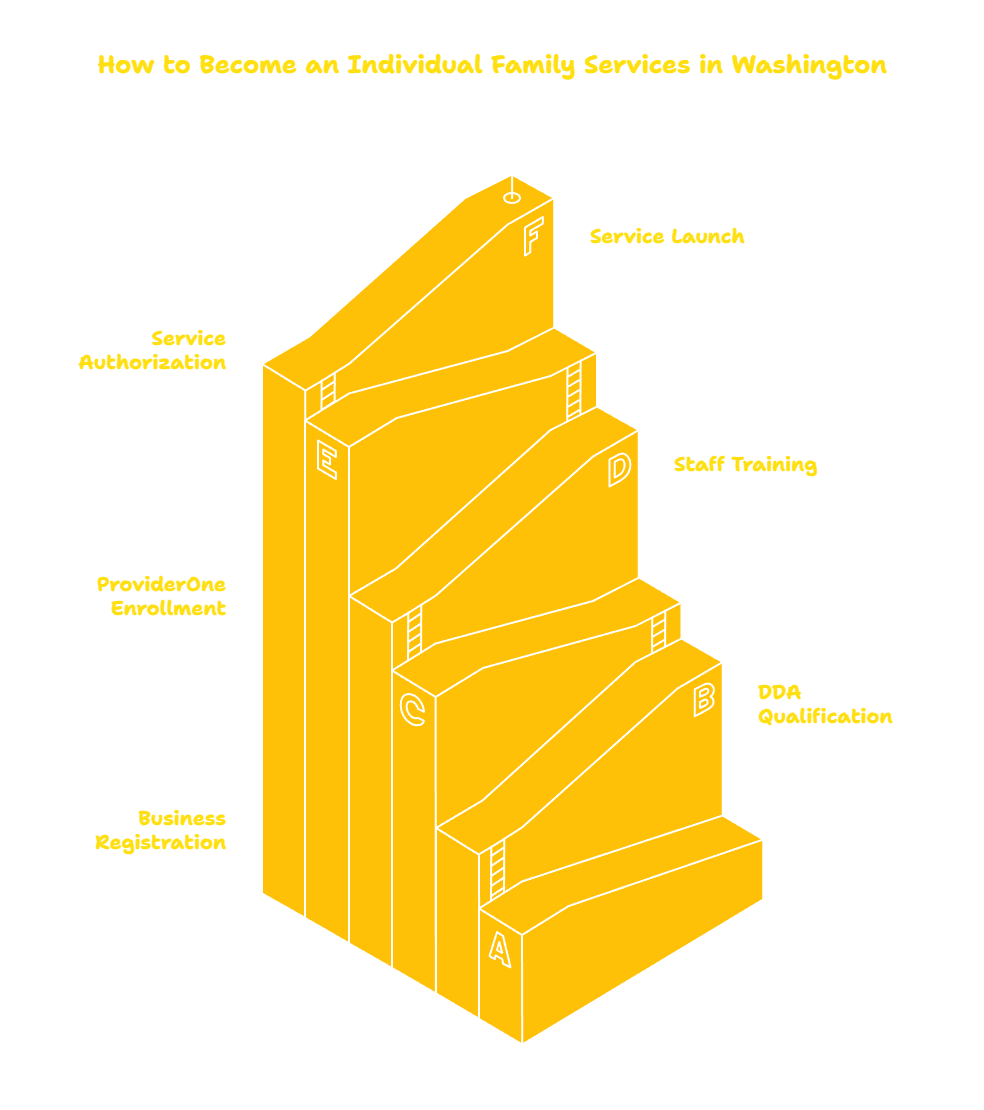
The trajectory from business registration to service launch is a multi-phased journey that requires coordination with state agencies. Initially, providers must seek qualification from the DDA for specific IFS service areas, such as respite care, specialized training, or community engagement. This qualification process ensures the agency possesses the capacity to deliver high-quality, person-centered support to a vulnerable population.
Once qualified, the focus shifts to operational staffing and integration with the DDA case management system. Providing high-quality care requires more than just meeting administrative hurdles; it necessitates building a team that is well-versed in emergency response and the specific needs of the population served. Agencies must work closely with DDA case managers to receive participant referrals, which are then integrated into the individual’s PCSP to ensure that services are both authorized and eligible for budget allocation.
Staffing, Training, and Quality Assurance Standards
Staffing requirements for an IFS provider are stringent to ensure the safety and wellbeing of participants. Every Direct Support Professional (DSP), respite worker, or coach must successfully undergo comprehensive background checks. Training is not a one-time event; all personnel are required to complete mandatory modules covering abuse prevention, person-centered support strategies, and emergency preparedness. Depending on the specific service provided, such as medication assistance, additional specialized training may be necessary.
For administrative oversight, it is highly recommended that an agency designate a Program Coordinator or Supervisor. This role is essential for maintaining quality assurance, supervising staff performance, and acting as the primary liaison with DDA case managers. This supervisor is responsible for the ongoing monitoring of service documentation, ensuring that every session is recorded in compliance with billing regulations and that the agency consistently adheres to participant rights and grievance policies.
- Mandatory reporter and confidentiality training for all staff.
- Health, safety, and emergency response certifications.
- Person-centered support training for all direct care roles.
- Annual continuing education and retraining requirements.
- Detailed documentation protocols for service logs and billing.
Frequently Asked Questions
What types of services are covered under the IFS waiver?
The IFS waiver provides a broad spectrum of services, including respite care, personal care, supported employment, community engagement, behavioral health stabilization, assistive technology, home and vehicle modifications, and specialized medical equipment, among others.
What are the primary eligibility requirements for a participant?
Participants must be DDA-eligible, aged 3 or older, reside in a family home or independently, meet Medicaid financial and functional criteria, and not be concurrently enrolled in other DDA waivers like Basic Plus, Core, or CIIBS.
How is the annual budget determined for an individual?
Individualized budgets are determined based on the person’s assessed support needs, falling into specific levels (Level 1–4). These budgets are limited by the specific service caps defined within the IFS waiver regulations.
Key Takeaways for Prospective Providers
Launching a successful IFS provider agency in Washington requires a delicate balance of administrative rigor and a deep commitment to person-centered care. Success depends on following the established regulatory pathway—from initial business registration and DDA qualification to the meticulous documentation of staff training and participant progress. By prioritizing compliance and quality assurance in your policies and procedures, you position your agency to effectively support individuals with developmental disabilities in achieving their personal goals within their own communities.
Waiver Consulting Group provides professional startup assistance for those seeking to become authorized IFS providers in Washington. Our expertise includes DDA and Medicaid provider enrollment support, the development of comprehensive Policy & Procedure Manuals, and the creation of standardized billing and intake templates designed to align with current DDA requirements. We empower providers to focus on service delivery by managing the complexities of state compliance.
Last verified: October 2023. Disclaimer: This article is for informational purposes only and does not constitute legal or professional advice. Requirements for Medicaid waivers and DDA programs are subject to change. Always consult directly with the Washington State Department of Social and Health Services (DSHS) and the Health Care Authority (HCA) for the most current regulatory guidance and official program documentation.