INDEPENDENT LIVING SKILLS TRAINING SERVICES PROVIDER IN KANSAS
By Fatumata Kaba · 2025-07-24 · 5 min read
EMPOWERING INDIVIDUALS TO LIVE WITH CONFIDENCE AND SELF-SUFFICIENCY IN THEIR HOMES AND COMMUNITIES
Independent Living Skills Training (ILST) services in Kansas represent a vital component of the state’s Home and Community-Based Services (HCBS) framework, designed to empower individuals with disabilities to achieve greater autonomy. By providing structured training in essential life skills, these programs enable participants to reside safely and independently within their own homes and communities, reducing the necessity for more restrictive institutional care settings.
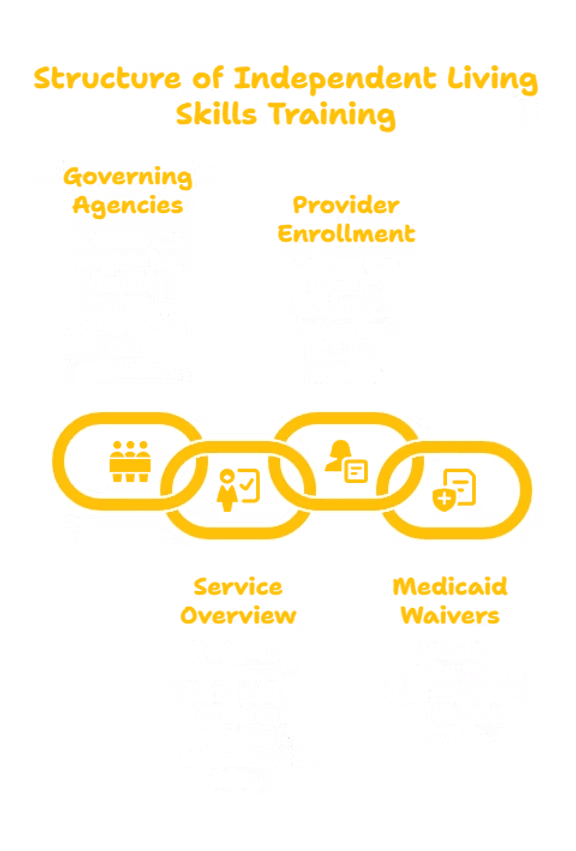
Who are the Governing Agencies Overseeing Kansas ILST Programs?
The delivery of Independent Living Skills Training is governed by a multi-layered regulatory structure that ensures service quality, fiscal integrity, and adherence to federal standards. At the state level, the Kansas Department for Aging and Disability Services (KDADS) acts as the primary authority, defining service expectations, establishing provider requirements, and overseeing the administration of HCBS waiver programs. Their role is critical in certifying that providers meet the person-centered planning standards required for state participation.
Complementing KDADS, the Kansas Department of Health and Environment (KDHE)—Division of Health Care Finance—manages the financial and enrollment aspects of the program under KanCare, the state's managed Medicaid system. Furthermore, the three Managed Care Organizations (MCOs)—Sunflower Health Plan, UnitedHealthcare Community Plan, and Aetna Better Health of Kansas—serve as the direct link for authorization and reimbursement. At the federal level, the Centers for Medicare & Medicaid Services (CMS) provides oversight to ensure that all Kansas waiver programs remain compliant with HCBS 1915(c) standards.
What Specific Life Skills Does the ILST Program Address?
Independent Living Skills Training is highly individualized, with curricula tailored specifically to the goals outlined in the participant’s Individualized Service Plan (ISP). The objective is to transition from dependency to self-management in daily life. Providers must focus on measurable outcomes that allow the participant to demonstrate mastery of practical tasks within their natural living environment.
Approved providers deliver targeted training and support in the following core competency areas:
- Meal planning, preparation, and nutritional awareness
- Household cleaning, organization, and maintenance
- Budgeting, money management, and financial literacy
- Medication management, health tracking, and scheduling
- Personal hygiene, grooming routines, and health management
- Transportation utilization and independent community navigation
- Communication, self-advocacy, and interpersonal social skills
- Safety awareness, risk mitigation, and emergency preparedness
What Are the Essential Prerequisites for Provider Approval?
Launching an Independent Living Skills Training agency requires a rigorous commitment to administrative and clinical standards. Before applying to become a Medicaid provider, an organization must formalize its business structure by registering with the Kansas Secretary of State. Following business formation, the agency must secure a federal Employer Identification Number (EIN) from the IRS and obtain a Type 2 National Provider Identifier (NPI) for billing purposes.
Beyond basic business registration, prospective providers must cultivate a comprehensive internal infrastructure. This includes obtaining robust general liability and professional insurance policies, which are mandatory for protecting both the agency and the participants. Successful applicants must also develop extensive internal policies focused on participant safety, HIPAA compliance, rigorous documentation standards, and evidence-based progress tracking. Staff members must be thoroughly vetted, background checked, and equipped with the training required to implement person-centered care models effectively.
How Do Agencies Navigate the Enrollment and Credentialing Process?
The transition from a business entity to an active Medicaid service provider involves three distinct phases of enrollment. First, agencies must secure certification through KDADS. This involves submitting an application to offer Independent Living Skills Training under the applicable waivers (IDD, PD, BI, or FE). During this phase, the applicant must successfully pass a readiness review, which includes a comprehensive assessment of staff documentation, policy manuals, and operational readiness.
Once KDADS certification is granted, the agency must enroll with the Kansas Medical Assistance Program (KMAP) to secure a Medicaid provider ID. This is followed by the final, critical step: MCO credentialing. Each of the three KanCare MCOs maintains its own credentialing process. Providers must execute contracts with Sunflower, Aetna, and UnitedHealthcare to receive service authorizations and submit claims for reimbursement. Building relationships with these MCOs is essential, as they oversee the day-to-day authorization of services and monitor the implementation of participant ISPs.
What Documentation Is Required for Ongoing Compliance?
Maintaining a compliant Independent Living Skills Training program requires constant vigilance regarding record-keeping. Auditors from KDADS and the MCOs will frequently review internal files to ensure that services billed are the services delivered. A strong documentation foundation begins with an organized Policy & Procedure Manual that covers intake procedures, goal development frameworks, emergency protocols, and grievance resolution pathways.
Agencies must ensure the following documentation is maintained and audit-ready at all times:
- Legal documentation: Articles of Incorporation, business licenses, and tax confirmations
- Financial and Operational records: Proof of insurance, NPI confirmations, and billing audit logs
- Clinical records: ISP goal tracking sheets, daily service notes, and periodic progress reports
- Personnel files: Staff credentialing logs, background check clearance records, and annual training certificates
- Client records: Signed participant rights agreements, HIPAA compliance forms, and incident reports
Frequently Asked Questions
Which Medicaid waivers authorize Independent Living Skills Training in Kansas?
ILST is authorized under the Intellectual/Developmental Disability (IDD) Waiver, the Physical Disability (PD) Waiver, the Brain Injury (BI) Waiver, and the Frail Elderly (FE) Waiver. It may also be provided under the Autism Waiver if specifically included in the participant's ISP.
What are the primary staffing requirements for an ILST agency?
Staffing consists of an Independent Living Program Supervisor—who should have experience in disability services or human services—and Independent Living Trainers. Trainers must possess at least a high school diploma or GED, experience in skill-based support, and clearance following a background check.
What is the typical timeline for launching a new ILST program?
The launch process is sequential: Business formation and policy development take approximately 1–2 months; staff hiring and KDADS certification take 2–3 months; Medicaid and MCO credentialing take 60–90 days; and final system setup and launch takes 30–45 days.
Key Takeaway
Successfully establishing an Independent Living Skills Training program in Kansas requires a strategic approach that balances state-mandated clinical requirements with sound administrative business practices. By maintaining rigorous documentation, fostering strong relationships with KanCare MCOs, and prioritizing person-centered training strategies, providers can ensure sustainable operations that meaningfully improve the quality of life for the individuals they serve.
Last verified: 2024. The information provided in this article is for educational purposes and does not constitute legal or financial advice. Readers should consult directly with KDADS and their respective MCO representatives to ensure compliance with the most current state regulations and policy updates.