IN-HOME SUPPORT SERVICES PROVIDER IN FLORIDA
By Fatumata Kaba · 2025-07-11 · 5 min read
In-Home Support Services in Florida empower individuals with developmental disabilities to live safely, maintain independence, and engage meaningfully within their communities. Authorized under the Medicaid iBudget Florida Waiver, these services provide essential, person-centered support designed to assist with daily living, foster skill development, and ensure a higher quality of life for participants within their own homes.
What Are In-Home Support Services and Who Do They Serve?
In-Home Support Services are a critical component of the Home and Community-Based Services (HCBS) framework in Florida. These services are specifically designed for individuals enrolled in the iBudget Florida Waiver program, which caters to those with intellectual and developmental disabilities. By focusing on the unique needs of each individual as outlined in their individualized support plan, these services provide the structure and assistance necessary to prevent institutionalization and promote autonomy.
Providers delivering these services focus on both direct assistance and skill-building. The primary goal is to empower the participant to perform tasks independently whenever possible while providing the necessary safeguards to maintain health and safety. This involves a collaborative approach between the participant, their family, and the direct support staff to create an environment where personal goals are prioritized and achieved.
- Assistance with Activities of Daily Living (ADLs) such as bathing, dressing, grooming, toileting, eating, and mobility.
- Assistance with Instrumental Activities of Daily Living (IADLs) such as meal preparation, light housekeeping, laundry, shopping, and medication reminders.
- Support for community activities including accompanying individuals to medical appointments, work, or social outings.
- Implementation of skill-building activities to increase self-sufficiency and daily living capabilities.
- Protective oversight, safety monitoring, and health and wellness promotion within non-nursing scopes.
Which Governing Agencies Oversee These Services?
Operating as an In-Home Support Services provider requires adherence to rigorous standards set by state and federal entities. The Agency for Persons with Disabilities (APD) serves as the primary governing body for the iBudget Florida Waiver, responsible for determining service eligibility, overseeing the delivery of support, and ensuring that providers meet quality standards for individuals with developmental disabilities.
The Agency for Health Care Administration (AHCA) manages the financial and enrollment aspects of the program, including Medicaid provider enrollment, the authorization of services, and the reimbursement process for claims. Furthermore, the federal Centers for Medicare & Medicaid Services (CMS) provides overarching regulatory guidance, ensuring that all Florida-based HCBS programs remain compliant with federal mandates and Medicaid standards.
What Are the Essential Requirements for Provider Approval?
Becoming an approved provider is a multi-step journey that begins with formalizing the business entity. Founders must register the organization with the Florida Division of Corporations (Sunbiz) and obtain a federal Employer Identification Number (EIN) from the IRS. Additionally, obtaining a Type 2 National Provider Identifier (NPI) is a prerequisite for any business entity seeking to bill for Medicaid services in Florida.
Beyond administrative setup, providers must demonstrate operational readiness. This involves maintaining comprehensive liability insurance and ensuring that all direct care staff undergo mandatory Level 2 background screenings. Documentation is the backbone of compliance; therefore, providers must develop robust policy and procedure manuals that address participant rights, incident reporting, emergency preparedness, and privacy standards under HIPAA.
- Formal business registration with the Florida Division of Corporations (Sunbiz).
- Obtaining a federal EIN and a Type 2 NPI.
- Completion of the APD Qualified Provider Application process.
- Maintaining adequate liability insurance coverage.
- Strict compliance with Level 2 background screening requirements for all personnel.
- Development of person-centered planning and documentation systems.
How Do You Navigate the Provider Enrollment Process?
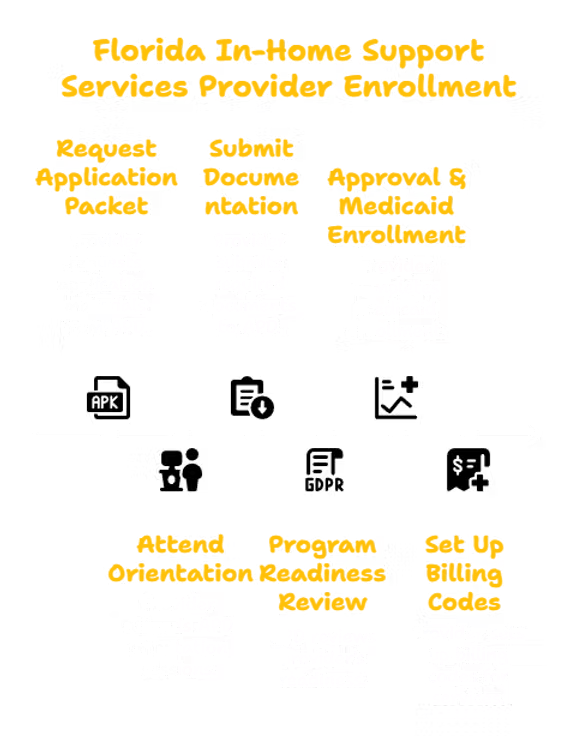
The enrollment timeline follows a structured progression, starting with an expression of interest to the APD. Prospective providers should attend APD provider orientation sessions to gain a clearer understanding of state expectations and program-specific nuances. Following orientation, the provider must compile and submit a rigorous application packet, which includes the agency’s policies, organizational staffing structures, and proof of operational readiness.
Once the application is submitted, the APD will conduct a program readiness review. This phase evaluates the provider's ability to protect participants, the qualifications of the proposed staff, and the efficiency of the internal tracking procedures for services rendered. Upon successful review and approval by the APD, the provider must finalize their entry into the system through the Florida Medicaid Provider Enrollment Portal to authorize the billing of services under the iBudget waiver.
What Is the Typical Timeline for Launching an Agency?
The launch of an In-Home Support Services agency is a long-term commitment that typically spans several months. The initial phase, which includes business formation and basic administrative setup, usually takes between 1 to 2 weeks. The most intensive phase, the APD Qualified Provider Application and readiness review, can last between 60 and 90 days as agencies refine their internal systems and align them with state expectations.
Following approval, the provider enters a phase of staffing and documentation finalization, which lasts approximately 30 to 45 days. This period is dedicated to hiring qualified personnel, ensuring all staff receive the required core competency and safety trainings, and establishing final participant intake protocols. Finally, Medicaid enrollment and the configuration of billing systems require an additional 45 to 60 days to ensure that all financial interactions with the state are accurate and compliant.
Frequently Asked Questions
What qualifications are required for direct support staff?
Direct support staff or In-Home Support Aides should ideally possess a high school diploma or GED. It is strongly recommended that they hold CPR and First Aid certifications. All staff are required to pass a Level 2 background screening and must complete mandatory trainings, including APD Core Competency, HIPAA confidentiality, emergency procedures, and Medicaid service documentation protocols.
What must be included in the Policy and Procedure Manual?
The manual must cover participant intake and support planning, specific procedures for providing ADL and IADL assistance, and methodologies for community integration. It must also contain rigorous policies regarding incident reporting, emergency preparedness, HIPAA compliance, client rights, staff credentialing, and detailed systems for Medicaid billing and documentation retention.
Can a provider bill for services before completing all enrollment steps?
No. Services provided to iBudget Waiver participants can only be billed after the provider has received formal approval from the APD and completed the subsequent Medicaid enrollment through the Florida Medicaid Provider Enrollment Portal. Attempting to provide or bill for services outside of these authorized channels may lead to compliance violations and the denial of claims.
Key Takeaway
Establishing an In-Home Support Services agency in Florida is a rigorous process that requires strict adherence to APD, AHCA, and CMS regulations. By prioritizing high-quality, person-centered care and maintaining meticulous documentation of service delivery and staff training, providers can successfully support individuals with developmental disabilities while operating a sustainable and compliant Medicaid-enrolled business.
Last verified: 10/24/2024. This content is for informational purposes only and does not constitute legal or professional consulting advice. Please refer to official state documents and governing agency websites for the most current regulatory requirements.