IN-HOME SUPPORT SERVICES PROVIDER IN ALASKA
By Fatumata Kaba · 2025-07-03 · 5 min read
DELIVERING PERSONALIZED ASSISTANCE IN THE COMFORT AND SAFETY OF THE HOME ENVIRONMENT
In-Home Support Services in Alaska serve as a foundational pillar for individuals with disabilities, chronic conditions, or functional limitations who require assistance with activities of daily living to maintain independence. These services are authorized under Alaska’s Home and Community-Based Services (HCBS) Medicaid Waiver programs, providing a person-centered alternative to institutional care by ensuring necessary supports are delivered directly within the individual’s residence.
What Are the Governing Agencies for In-Home Support Services?
The regulatory landscape for in-home care in Alaska involves a multi-tiered structure that ensures federal compliance, state-level oversight, and operational integrity. Providers must align their service models with the directives issued by these three primary entities to maintain active billing status and program participation.
The Alaska Department of Health’s Division of Senior and Disabilities Services (SDS) serves as the primary state authority. SDS is responsible for authorizing in-home service providers, enforcing quality and care standards, and conducting ongoing monitoring of service delivery to ensure recipients receive high-quality, compliant care. Complementing this, Alaska Medicaid, also under the Department of Health, manages the technical aspects of provider enrollment, claims reimbursement, and ensuring all billing practices remain within HCBS waiver compliance.
At the federal level, the Centers for Medicare & Medicaid Services (CMS) provides the overarching regulatory framework. CMS establishes the mandate for person-centered care requirements and ensures that Alaska’s waiver programs uphold the federal standards for home and community-based settings. Understanding the hierarchy of these agencies is critical for new agencies to successfully navigate the lifecycle of a provider.
What Scope of Services Can Providers Deliver?
In-Home Support Services are designed to address both Activities of Daily Living (ADLs) and Instrumental Activities of Daily Living (IADLs). The objective is to provide a comprehensive support system that replaces the need for institutionalization, allowing participants to remain safely and comfortably in their own homes while engaging with their local communities.
Approved providers must deliver services that strictly adhere to the individual’s person-centered plan. This plan acts as the blueprint for care, ensuring that services are tailored to the recipient's unique needs and preferences. Core service areas typically include the following:
- Personal care, such as bathing, dressing, grooming, and toileting.
- Mobility, transfer assistance, and support with adaptive equipment.
- Meal preparation, feeding support, and nutritional assistance.
- Light housekeeping, laundry, and general household organization.
- Medication reminders and non-clinical assistance with health routines.
- Companionship, social engagement, and support for daily routines.
- Transportation coordination and assistance with community activities.
What Are the Licensing and Provider Approval Requirements?
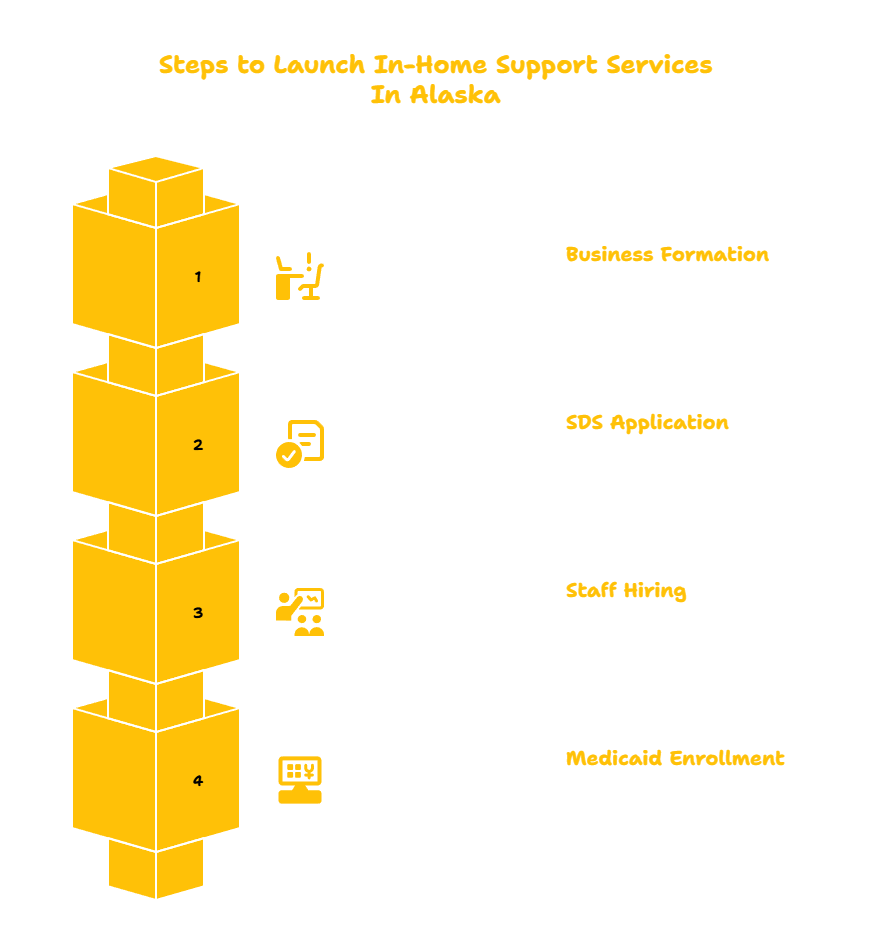
Launching a service agency requires rigorous preparation and adherence to both corporate and programmatic prerequisites. Before engaging in clinical care, an entity must establish a formal business foundation that meets Alaska’s statutory requirements for professional service providers. This includes registration with the Alaska Division of Corporations, Business and Professional Licensing and obtaining a federal EIN and a Type 2 NPI for billing purposes.
Operational readiness involves maintaining a physical business office or service base located within Alaska. This physical footprint is essential for housing administrative records, conducting staff supervision, and managing the documentation requirements set forth by SDS. Providers are also required to implement a robust scheduling and documentation system to maintain evidence of service delivery, which is audited periodically to ensure compliance.
How Does the SDS Provider Enrollment Process Function?
The transition from a business entity to an authorized Medicaid provider involves a structured application process. Initially, prospective providers should contact SDS to request the application materials and are strongly encouraged to attend official provider orientations. These sessions provide essential insights into the expectations of the Division and clarify the nuances of the waiver programs.
Once the application is submitted, the process moves into the development of a comprehensive service plan. This submission must detail the agency's methodology for care delivery, supervision protocols, staff training curriculums, and emergency response strategies. SDS will then conduct a readiness review, which evaluates the agency's policy manuals, background check procedures, and the overall capacity to provide person-centered care that aligns with state regulations.
Following the successful completion of the readiness review, the final phase involves formal Medicaid enrollment through the Alaska MMIS. During this stage, providers activate their billing codes for the specific waiver programs they intend to serve. This involves signing provider agreements, configuring electronic claims access, and ensuring that all systems are prepared for the transition from authorization to reimbursement.
What Documentation and Staffing Standards Must Be Met?
Maintaining a compliant agency requires strict adherence to administrative documentation and personnel standards. An agency must maintain a comprehensive Policy and Procedure Manual that covers essential areas such as intake, ADL assistance protocols, health-related risk management, client rights, informed consent, and HIPAA compliance. These policies must be accessible to staff and consistently reviewed during audits.
Staffing requirements are equally stringent. The Program Administrator or In-Home Services Manager must possess verifiable experience in personal care services and Medicaid compliance. Direct Support Professionals (DSPs) must meet minimum education standards, typically a high school diploma or GED, and must pass mandatory background checks. Required staff training encompasses:
- SDS-specific in-home services and waiver program protocols.
- Client rights, confidentiality, and ethics.
- Abuse prevention, cultural competency, and privacy regulations.
- Annual refresher courses on emergency response and safety.
Frequently Asked Questions
Which Medicaid waivers currently authorize In-Home Support Services?
The primary Alaska Medicaid waivers include the Alaskans Living Independently (ALI) Waiver, the Adults with Physical and Developmental Disabilities (APDD) Waiver, the Individuals with Intellectual and Developmental Disabilities (IDD) Waiver, and the Children with Complex Medical Conditions (CCMC) Waiver.
What is the typical timeline for an agency to launch?
While timelines vary based on individual readiness, business formation takes roughly 1–2 weeks, followed by a 60–90 day window for SDS application and documentation. Staff hiring and compliance readiness typically spans 30–45 days, with Medicaid enrollment and MMIS configuration taking an additional 45–60 days.
What are the primary contacts for provider inquiries?
Providers should contact the Alaska Department of Health – Division of Senior and Disabilities Services at [email protected] or (907) 269-3666 for regulatory questions, and visit the Conduent MMIS website at medicaidalaska.com for enrollment and billing inquiries.
Key Takeaway
Successfully navigating the Alaska HCBS waiver system requires a disciplined approach to both regulatory compliance and operational readiness. By prioritizing the development of robust policy manuals, stringent staff training, and a clear understanding of the roles of the Division of Senior and Disabilities Services, new providers can establish a foundation that effectively supports the health and independence of their participants while maintaining long-term sustainability in the Medicaid landscape.
Last verified: August 2024. This information is provided for educational purposes and is not a substitute for official guidance from the Alaska Department of Health or the Centers for Medicare & Medicaid Services. Requirements may be subject to updates in state policy.