How to Start Medicaid 1915 Waiver Services for Developmental Disabilities
By Fatumata Kaba · 2026-06-16 · 5 min read
Starting Medicaid 1915(c) waiver services for individuals with intellectual and developmental disabilities (IDD) requires a strategic combination of clinical service modeling, rigorous regulatory compliance, and robust financial planning. To successfully enter this market, provider agencies must navigate state-specific enrollment portals, adhere to federal home and community-based services (HCBS) settings rules, and ensure that operational infrastructure is fully established before the first service is rendered.
Choosing a Sustainable Service Model
The foundation of any successful Medicaid provider agency begins with the service model, which dictates the scope of your operations, your target participant demographic, and your long-term scalability. Most agencies focus on foundational services such as community habilitation, at-home respite, or facility-based adult day services. Because federal and state policies increasingly prioritize person-centered, inclusive environments, models that emphasize community integration typically face fewer regulatory hurdles and align better with current Medicaid long-term care goals.
When selecting your model, it is vital to evaluate the specific demand within your target region. Consider whether your agency is better equipped to manage high-touch, one-on-one direct support or if a group-based facility model aligns with your existing real estate or staffing capabilities. Regardless of the choice, the model must be flexible enough to allow for the individualized care plans mandated by Medicaid waiver authorities.
Defining Your Operational Scope
Beyond the core service offering, providers must define the geographic and demographic boundaries of their operation. Are you targeting a specific county, or do you intend to operate statewide? The scope you choose determines the complexity of your credentialing process, as many states utilize decentralized systems where different regional offices manage different aspects of provider enrollment.
Defining this scope early prevents "scope creep," which can lead to administrative bottlenecks. By focusing on a specific service niche—such as supported employment or personal care assistance—you can streamline your staff training, internal quality assurance procedures, and documentation workflows, ensuring that your agency becomes known for excellence in a particular area of support.
Building a Compliant Clinical and Administrative Team
Staffing a Medicaid waiver agency requires a clear division between direct care delivery and administrative oversight. You will generally need a supervisor with a bachelor's degree or equivalent experience to oversee the development and implementation of individual service plans, ensuring that all care provided is documented in accordance with state guidelines. This role is the backbone of your audit readiness.
Your team structure should also include a licensed nurse, depending on the state and the medical complexity of the participants you support, to provide protective oversight. Finally, your direct support professionals (DSPs) are the face of your agency. Building a team requires meticulous attention to:
- Rigorous background checks to ensure compliance with state and federal safety requirements.
- Mandatory pre-service training modules covering participant rights, incident reporting, and HIPAA compliance.
- Ongoing professional development to ensure that staff are meeting the ever-evolving standards for HCBS delivery.
Navigating State-by-State Regulatory Landscapes
There is no "one size fits all" approach to Medicaid waiver enrollment. Requirements vary significantly by state; some jurisdictions require a full, state-specific licensure process, while others rely on a combination of Medicaid provider enrollment and state-run background check systems. Understanding these nuances is critical to avoiding delays in your "go-live" date.
Providers must be prepared for varying rates, billing cycles, and documentation requirements. Some states may require an site survey or a physical inspection of your operational office space before approval is granted. It is essential to consult the state’s Medicaid agency website or the designated waiver administrative department to confirm the specific prerequisites for the services you intend to provide.
Planning for Financial Sustainability
One of the most significant challenges for new waiver providers is the "reimbursement gap." Approval of client hours and the authorization of services can take weeks or even months. Furthermore, once services are provided, the Medicaid billing cycle involves submission, clearinghouse processing, and eventual payment, which may not align with your payroll obligations.
New agencies must plan for substantial operating capital to cover payroll, insurance, and overhead costs during this initial period. Relying solely on anticipated Medicaid revenue to cover your startup costs is a common pitfall. A robust financial plan will include a cash flow buffer, ensuring that your staff and operational requirements remain fully funded while the agency navigates the administrative transition to being an active, billing-ready provider.
Frequently Asked Questions
How long does the provider enrollment process typically take?
The timeline varies significantly by state and current regulatory backlog. It can take anywhere from a few months to over a year, depending on state-specific licensure requirements, background check processing times, and the volume of applications pending before the state Medicaid office.
What is the most common reason for application rejection?
The most frequent reasons for rejection include incomplete documentation, failure to meet minimum staff qualification requirements, or an inability to demonstrate sufficient financial or operational stability. Meticulous attention to detail in your initial application packet is the best way to avoid these delays.
Can I provide services while my application is still pending?
No. In the Medicaid waiver system, you generally cannot bill for services until you have received your official provider ID and authorization. Providing services prior to official approval is a significant risk and may result in the agency being disqualified from the program entirely.
Key Takeaway
Success in the Medicaid waiver space is contingent upon a disciplined, phased approach: prioritize selecting a viable service model, assemble a team focused on compliance and clinical oversight, and secure enough capital to bridge the inevitable gap between service initiation and the first successful Medicaid reimbursement.
Start Any Program. In Any State.®
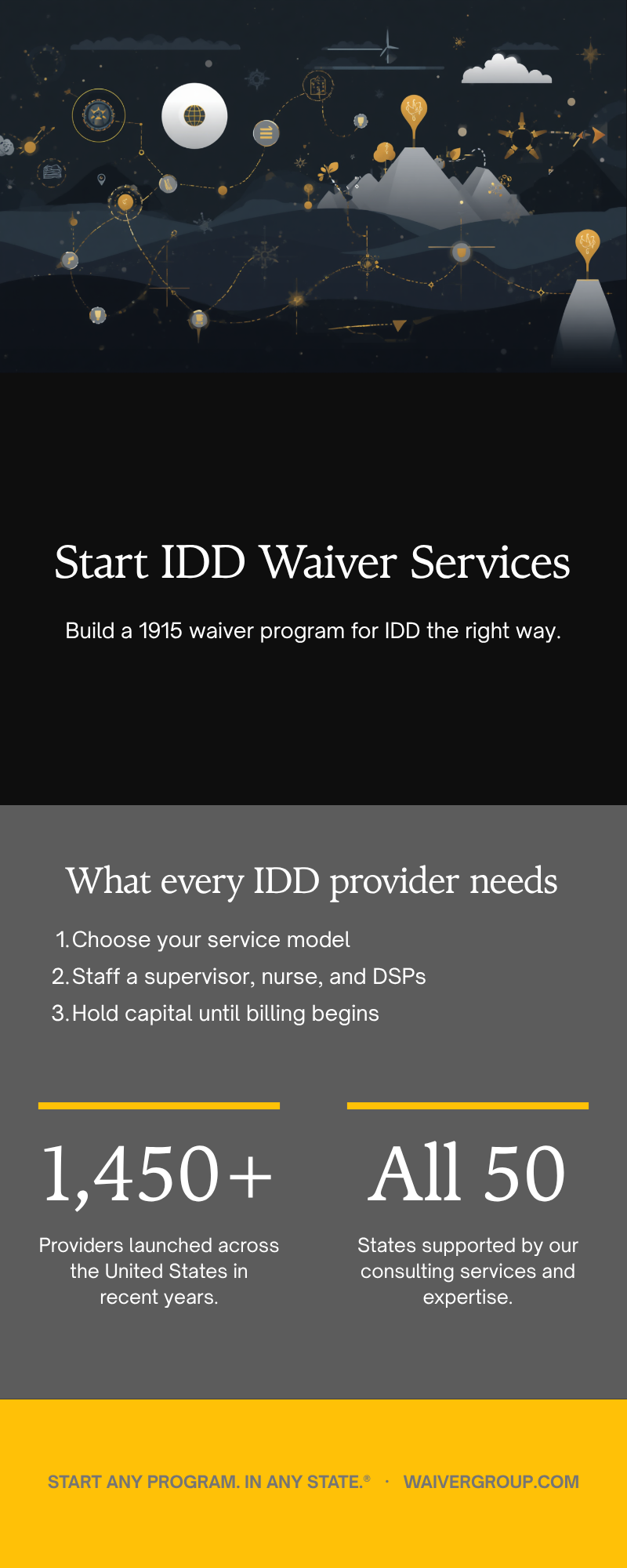
We've helped launch more than 1,450 providers across all 50 states over 20-plus years, and we position you to build your program with fewer delays. Book a video consultation at waivergroup.com/videoappointment, call 302.888.9172, or email [email protected].
Last verified: May 2024. This information is intended for educational purposes only and does not constitute legal or financial advice. Regulations governing Medicaid 1915(c) waivers are subject to frequent change at both the federal and state levels; always verify current requirements with your specific state Medicaid agency before initiating the provider enrollment process.