HOUSING STABILIZATION SERVICES PROVIDER IN ALABAMA
By Fatumata Kaba · 2025-06-30 · 5 min read
Supporting individuals with intellectual and developmental disabilities (IDD) in achieving and maintaining safe, stable living arrangements is the cornerstone of Housing Stabilization Services in Alabama. These services are specifically designed to assist eligible individuals in locating, transitioning into, and sustaining independent housing within their communities, thereby reducing the risk of homelessness and preventing unnecessary institutionalization.
Authorized under Alabama’s Home and Community-Based Services (HCBS) Medicaid Waivers, these services represent a critical intervention strategy. They are implemented in strict accordance with the Alabama Department of Mental Health (ADMH) requirements to ensure that every participant receives high-quality, person-centered support that facilitates long-term residential success.
What Are the Governing Frameworks and Agencies Involved?
The regulatory landscape for Housing Stabilization Services involves a tiered structure of oversight. The Alabama Department of Mental Health (ADMH) serves as the primary regulatory body responsible for approving providers, monitoring service quality, and ensuring that all operations align with the specific goals of the HCBS waivers. They maintain the standards for clinical and operational excellence required to serve the IDD population.
Parallel to ADMH, the Alabama Medicaid Agency manages the fiscal and administrative aspects of the program. This includes the enrollment of providers into the Medicaid system and the reimbursement process for authorized services. At the federal level, the Centers for Medicare & Medicaid Services (CMS) provides the overarching regulatory framework, ensuring that Alabama’s waiver programs remain in compliance with federal mandates concerning housing-related supports and community integration.
How Do Providers Deliver Housing Stabilization Services?
Housing Stabilization Services are multifaceted, focusing on the entire lifecycle of a participant's housing journey. Approved providers are tasked with assisting individuals in the identification of suitable housing options, navigating the complex application and leasing process, and providing ongoing, individualized support to ensure the arrangement remains stable over time. These services must always be integrated into the individual’s person-centered plan.
Effective service delivery involves a proactive approach to tenancy. Providers assist with financial literacy, such as budgeting for rent and utilities, while also educating participants on their rights and responsibilities under their lease agreements. By developing comprehensive housing support plans and crisis intervention protocols, providers can address potential housing barriers before they escalate into evictions or homelessness.
- Housing search and identification assistance
- Support with rental applications, lease negotiations, and landlord coordination
- Budgeting and financial education for rent and utilities
- Development of housing support plans and crisis plans
- Assistance with tenancy rights education
- Ongoing monitoring to support lease compliance and housing retention
What Are the Licensing and Provider Approval Requirements?
To become an approved provider in Alabama, an organization must satisfy several foundational requirements before seeking formal ADMH approval. Business entities must be registered with the Alabama Secretary of State and possess a valid Federal Employer Identification Number (EIN) from the IRS, along with an NPI (Type 2) for the organization.
Operational readiness is a major component of the approval process. Providers must maintain a functional office space or provide documented evidence of how they will manage mobile and community-based service delivery. Furthermore, organizations must demonstrate a clear proficiency in navigating local housing programs and building effective relationships with landlords. Employing staff with direct experience in case management or housing navigation is essential for regulatory compliance.
What is the Step-by-Step ADMH Enrollment Process?
The path to becoming a provider begins with a formal request to ADMH for the Housing Stabilization Services Provider Application Packet. The application itself requires a detailed housing support model that outlines exactly how the provider will handle assessments, the housing search, transition supports, and ongoing stabilization procedures. These policies must be robust enough to address lease compliance, crisis management, and routine landlord communication.
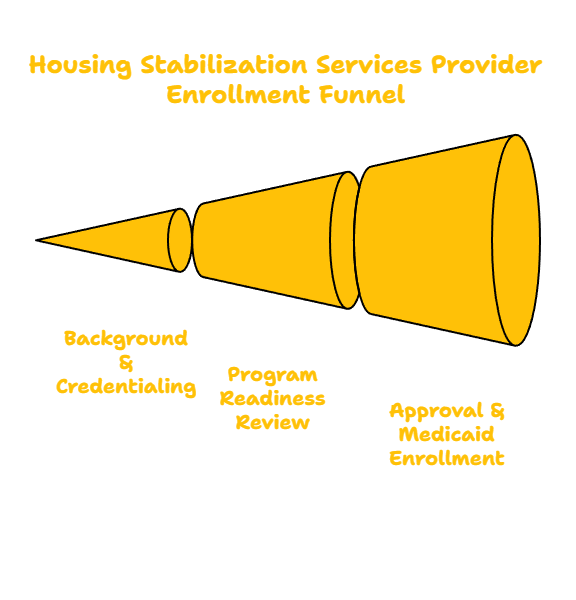
Once the application is submitted, the agency undergoes a rigorous review process. This includes verifying that all staff have undergone appropriate background checks and meet the necessary credentialing standards for social services or housing coordination. The Program Readiness Review is the final hurdle, where ADMH evaluates the provider’s documentation tools, internal privacy policies, and emergency response protocols. Upon successful review, the provider completes the final step of enrolling with Alabama Medicaid to activate their billing capabilities.
What Documentation and Staffing Standards Are Required?
Maintaining high standards of documentation is non-negotiable for Medicaid compliance. Providers must maintain a comprehensive Policy & Procedure Manual that covers every aspect of service delivery, from consumer rights and informed consent to eviction prevention protocols and staff training logs. This manual serves as the primary resource for both staff and state auditors when evaluating the effectiveness of the housing services provided.
Staffing requirements emphasize both experience and ongoing professional development. A Housing Stabilization Coordinator must possess a background in case management or housing navigation to ensure they can effectively interpret tenancy laws and leverage community resources. Meanwhile, Housing Support Specialists are expected to have a high school diploma and experience working with vulnerable populations. All staff must participate in mandatory training on HCBS waiver requirements, ethics, and documentation standards to remain in good standing with ADMH.
Frequently Asked Questions
Which Medicaid waivers currently authorize these services?
Housing Stabilization Services are authorized under the ID Waiver (Intellectual Disabilities Waiver), the LAH Waiver (Living at Home Waiver), and the State of Alabama Community Waiver Program.
How long should a new provider expect the launch timeline to take?
The total timeline varies, but generally follows this path: 0–1 week for business formation, 60–90 days for ADMH application review, 30–60 days for program readiness, and 60–90 days for final Medicaid enrollment.
What is the primary role of the Alabama Department of Mental Health in this process?
The ADMH acts as the lead regulatory body, responsible for approving providers, defining service quality standards, and ensuring that all housing support operations are aligned with the goals of the state’s HCBS waivers.
Key Takeaway
Launching a Housing Stabilization Services agency in Alabama requires a meticulous approach to administrative compliance, staff training, and operational readiness. By aligning business systems with the strict regulatory standards set forth by ADMH and Alabama Medicaid, providers can deliver vital, high-quality support that enables individuals with intellectual and developmental disabilities to thrive in independent, community-based housing.
Last verified: October 2023. This information is intended for educational purposes and does not constitute legal or financial advice. Prospective providers should consult directly with the Alabama Department of Mental Health and the Alabama Medicaid Agency for the most current regulatory updates and application requirements.