HOMEMAKER SERVICES PROVIDER IN WISCONSIN
By Fatumata Kaba · 2026-04-14 · 5 min read
Supporting Daily Living and Safe Home Environments for Individuals with Disabilities, Chronic Conditions, or Age-Related Needs.
Homemaker Services in Wisconsin provide critical, non-medical assistance for individuals struggling to maintain a sanitary and functional living environment due to physical, cognitive, or developmental limitations. By facilitating essential household tasks, these services empower participants to remain safely in their own homes, effectively preventing institutionalization and promoting community integration within the framework of Wisconsin’s Medicaid Home and Community-Based Services (HCBS) waivers.
What Are the Governing Agencies and Regulatory Frameworks?
The provision of Homemaker Services in Wisconsin is overseen by the Wisconsin Department of Health Services (DHS), which establishes the foundational policy, eligibility criteria, and operational standards for HCBS waivers. As the state’s Medicaid agency, DHS ensures that services are delivered in a manner that upholds participant rights and person-centered planning principles.
Operational execution and fiscal oversight are managed through ForwardHealth, which serves as the central hub for Medicaid provider enrollment, the processing of prior authorizations, and the management of claims. Additionally, IRIS Consultant Agencies and Managed Care Organizations (MCOs) play a pivotal role in the day-to-day coordination of care. These entities are responsible for authorizing Homemaker Services based on rigorous functional assessments and the specific goals outlined in a participant’s Individualized Service Plan (ISP) or Plan of Care.
What Is the Scope of Covered Homemaker Services?
Homemaker Services are strictly non-medical in nature, focusing exclusively on the maintenance of a safe, sanitary, and functional home environment. These services are intended to supplement, rather than replace, the natural support systems available to a participant. While they do not include hands-on personal care, they are often integrated into a broader care plan that may include other Medicaid-funded services.
Covered activities must directly benefit the waiver participant and are typically authorized based on documented need. Common tasks covered under this service category include:
- Dusting, vacuuming, and general cleaning of living areas
- Dishwashing and maintaining kitchen sanitation
- Laundry, including washing, drying, and linen changes
- Meal preparation assistance and help with grocery lists
- Trash removal and basic household organization
- Non-medical oversight and routine check-ins to ensure home safety
How Do Providers Navigate Licensing and Enrollment Requirements?
Launching a Homemaker Services agency in Wisconsin requires meticulous adherence to administrative requirements. While the state generally does not mandate a specific license for homemaker-only agencies—unless the provider also offers skilled services or personal care—all entities must formally enroll with the state to be eligible for reimbursement.
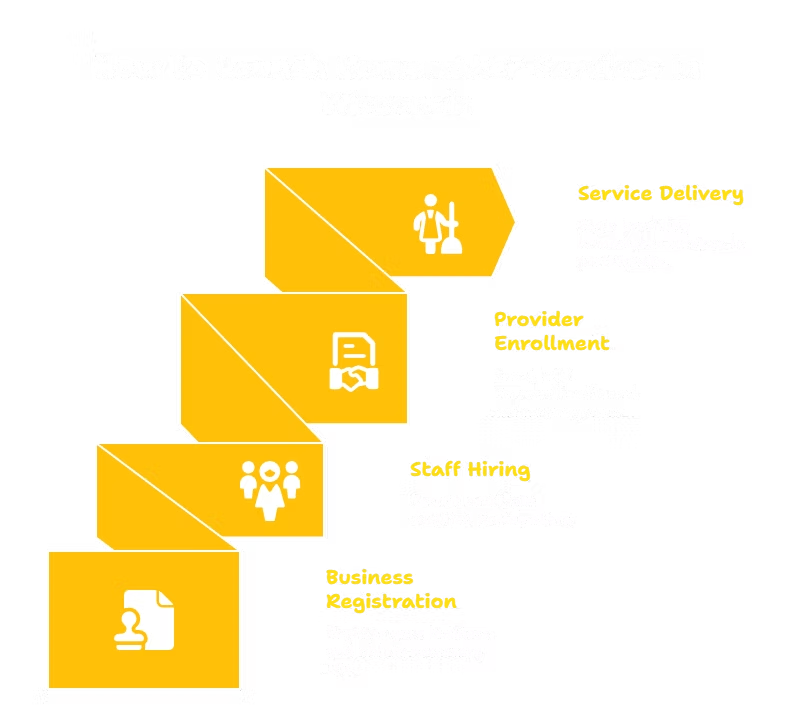
Prospective providers must first register their business with the Wisconsin Department of Financial Institutions (DFI) and secure a Federal EIN. Once the business entity is established, the provider must apply for status with ForwardHealth. This process involves submitting a comprehensive Policy & Procedure Manual, demonstrating staff qualifications, and establishing robust documentation templates. Upon successful enrollment with ForwardHealth, providers must also coordinate with specific IRIS Fiscal Employer Agents or MCOs to begin accepting referrals and delivering services within the waiver systems.
What Are the Essential Documentation and Staffing Protocols?
Compliance hinges on the quality and consistency of agency documentation. A primary requirement is the maintenance of a Policy & Procedure Manual that covers the full lifecycle of service delivery, from initial participant intake to incident reporting. Agencies must ensure that they have formal service agreements, participant rights documentation, and daily shift logs that clearly track the tasks performed and the time spent in the home.
Staffing requirements are equally rigorous. While a high school diploma or GED is preferred, the critical component is the training and vetting of direct support staff. Providers must perform criminal background checks on all employees and ensure that staff receive thorough orientation on waiver services, infection control, HIPAA, and abuse prevention. Ongoing supervision and annual performance reviews are mandatory to ensure that the services delivered align with the safety standards established by DHS.
Which Wisconsin Waiver Programs Cover Homemaker Services?
Homemaker services are a foundational component of several key Wisconsin long-term care programs. Understanding the nuances of each program is essential for providers to align their service delivery with the specific needs of the population they serve.
- IRIS (Include, Respect, I Self-Direct): This waiver allows for participant-directed homemaker supports. The service is managed within the participant’s approved individual budget.
- Family Care and Family Care Partnership: In these programs, MCOs authorize Homemaker Services based on an assessment of the participant’s functional limitations and the necessity of the task to maintain the home environment.
- Children’s Long-Term Support (CLTS) Waiver: This program includes light housekeeping support specifically designed to maintain safe and sanitary home settings for children living with disabilities.
Frequently Asked Questions
Do homemaker services include personal care tasks like bathing or dressing?
No. Homemaker Services are strictly non-medical and focus on household tasks such as cleaning, laundry, and meal preparation. They do not cover hands-on personal care or clinical medical assistance.
Are there specific requirements for the staff performing these services?
Yes. Staff must pass a criminal background check, possess relevant experience in domestic tasks, and be trained in safety, confidentiality, and abuse prevention. Annual reviews and ongoing supervision are required to maintain quality standards.
Can I provide homemaker services to anyone who asks for help?
No. Services must be authorized within a participant’s Individualized Service Plan (ISP) or Plan of Care. You must be an enrolled provider with ForwardHealth and receive specific service authorizations from an MCO or IRIS Consultant Agency.
Key Takeaways for Prospective Providers
Successfully operating a Homemaker Services agency in Wisconsin requires a disciplined approach to administrative compliance and documentation. By aligning your business practices with the requirements of the Department of Health Services (DHS), maintaining clear records through the ForwardHealth portal, and ensuring that all staff are properly vetted and trained, you create a sustainable foundation for delivering essential support to the disability and aging communities. Success in this sector is built upon the ability to provide reliable, person-centered care that consistently meets the stringent regulatory standards required for Medicaid reimbursement.
Last verified: 2024. This content is provided for informational purposes only and does not constitute legal or professional advice. Always consult the official Wisconsin Department of Health Services (DHS) and ForwardHealth websites for the most current regulatory updates, statutes, and program requirements.