HOMEMAKER SERVICES PROVIDER IN SOUTH DAKOTA
By Fatumata Kaba · 2025-10-15 · 5 min read
SUPPORTING INDEPENDENCE AND SAFETY THROUGH NON-MEDICAL HOUSEHOLD ASSISTANCE FOR INDIVIDUALS WITH DISABILITIES AND AGE-RELATED LIMITATIONS
Homemaker services in South Dakota provide essential non-medical support that empowers individuals with disabilities, chronic illnesses, or age-related limitations to maintain their independence within their own homes. By delivering critical assistance with routine household activities, these providers play a vital role in preventing premature institutionalization and ensuring participants can continue living safely in their preferred community settings.
What Are Homemaker Services and Who Do They Serve in South Dakota?
Homemaker services are defined as non-medical assistance focused on the maintenance of a clean, safe, and habitable living environment for Medicaid waiver participants. These services are specifically designed for individuals who lack the functional capacity to perform essential household tasks independently. By outsourcing these chores to trained professionals, participants can dedicate their limited energy to health management and community participation.
The scope of these services is strictly non-medical, meaning providers do not perform nursing tasks or clinical treatments. Instead, the focus remains on the instrumental activities of daily living that directly contribute to home safety. When provided through programs like the CHOICES Waiver, Family Support 360, or the Long-Term Services and Supports (LTSS) Waiver, these services provide a structured, reliable support system that enhances the quality of life for vulnerable populations across the state.
- Light housekeeping, including vacuuming, sweeping, dusting, and cleaning kitchen and bathroom surfaces.
- Comprehensive laundry assistance, encompassing washing, drying, folding, and organizing clothes.
- Meal preparation support, centered on dietary needs and nutritional planning.
- Bed making and essential linen changes to maintain hygiene.
- Grocery shopping and errand running, when explicitly authorized in the participant’s care plan.
- Rigorous documentation, including service logs, timesheets, and essential communication with case managers.
What Agencies Govern the Delivery of Homemaker Services?
The oversight of homemaker services in South Dakota is divided between the Department of Human Services (DHS) and the Department of Social Services (DSS), depending on the specific population being served. Understanding these regulatory bodies is the first step for any provider looking to enter the Medicaid space, as compliance must meet the specific standards set by each division.
The South Dakota Department of Human Services (DHS) – Division of Developmental Disabilities (DDD) is responsible for approving and monitoring homemaker service providers operating under the CHOICES and Family Support 360 Waivers. These waivers are specifically geared toward children and adults with intellectual or developmental disabilities. Simultaneously, the Department of Social Services (DSS) – Division of Long-Term Services and Supports (LTSS) governs the providers serving older adults and individuals with physical disabilities under the state’s aging-related HCBS waivers.
At the federal level, the Centers for Medicare & Medicaid Services (CMS) provides the overarching regulatory framework. CMS establishes the guidelines that ensure these state-managed programs remain compliant with federal funding requirements, emphasizing participant health, safety, and the equitable delivery of services across all Medicaid-funded HCBS programs.
How Do Agencies Become Certified and Enroll as Providers?
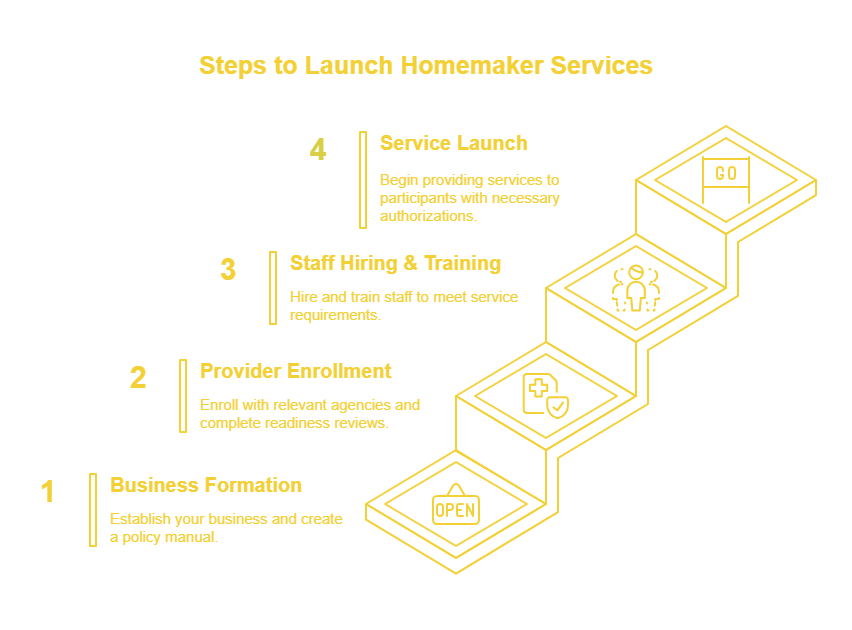
The transition from a business entity to a Medicaid-authorized provider requires a methodical approach to administrative and operational readiness. Before a provider can bill for services, they must establish a formal business structure, which includes registration with the South Dakota Secretary of State and the acquisition of a federal Employer Identification Number (EIN) and a Type 2 National Provider Identifier (NPI).
Once the business is legally established, the provider must enroll with the appropriate division based on their target population—either DHS-DDD or DSS-LTSS. This process is not merely a registration; it is a thorough vetting of the organization’s capacity to deliver care. Providers must demonstrate their ability to manage staff, protect participant privacy, and maintain accurate billing records. Developing a comprehensive Homemaker Services Policy & Procedure Manual is a mandatory prerequisite for approval, as this document serves as the foundation for all internal agency operations and regulatory audits.
What Are the Essential Requirements for Staffing and Documentation?
Quality of care is inextricably linked to the quality of the workforce. Because homemaker staff enter private homes and provide essential support to vulnerable individuals, providers must implement rigorous screening and training protocols. At a minimum, staff should undergo thorough background checks and possess basic training in home management and safety. While not always mandatory, certifications in CPR and First Aid are highly recommended to ensure staff can respond appropriately to unexpected emergencies.
Documentation is the primary mechanism through which the state monitors service delivery and compliance. Providers must train their staff to maintain meticulous records, including timesheets, service logs, and incident reports. Policies must clearly outline how the agency handles participant confidentiality, rights, and emergency backups. Without robust, organized documentation, providers face significant risks during state audits and billing reconciliations.
Frequently Asked Questions
Can homemaker staff perform medical tasks for the participant?
No. Homemaker services are strictly limited to non-medical support. Tasks such as medication administration, wound care, or clinical monitoring are prohibited. Providers must ensure their staff understand the boundaries between household assistance and professional medical care.
What is the typical timeline for launching a homemaker service agency?
The process generally spans four to seven months. Initial business formation and manual creation take one to two months, followed by two to three months for provider enrollment and readiness reviews. Staff hiring and training occur in the final one to two months, leading to a service launch upon the receipt of participant referrals.
How do providers receive client referrals?
Referrals are typically facilitated through waiver case managers or service coordinators assigned to the Medicaid participant. Once an individual is determined eligible for an HCBS waiver and their plan includes homemaker services, the case manager will coordinate with authorized providers to begin service delivery.
Key Takeaway
Establishing a successful homemaker services agency in South Dakota requires a steadfast commitment to regulatory compliance, operational structure, and professional staff development. By navigating the specific requirements of the DHS-DDD and DSS-LTSS with precision, providers can secure their place in the Medicaid HCBS system and fulfill a critical need for participants seeking to age in place or live independently with a disability.
Last verified: 2024. This information is provided for educational purposes only and does not constitute legal or professional advice. Always consult with the relevant South Dakota state agencies and current Medicaid manuals before making business decisions.