HOMEMAKER SERVICES PROVIDER IN OHIO
By Fatumata Kaba · 2025-09-17 · 6 min read
SUPPORTING DAILY LIVING THROUGH RELIABLE, IN-HOME HOUSEHOLD ASSISTANCE
Homemaker Services in Ohio provide essential non-medical support for individuals with disabilities, chronic illnesses, or age-related limitations, enabling them to maintain their independence within their own homes. By assisting with routine household tasks that clients are unable to perform independently, these providers play a critical role in promoting quality of life and reducing the necessity for institutional placement through Ohio’s robust Home and Community-Based Services (HCBS) waiver system.
Understanding the Governing Framework and Regulatory Oversight
The delivery of Homemaker Services in Ohio is governed by a multi-tiered regulatory structure that ensures service quality, participant safety, and federal compliance. The Ohio Department of Medicaid (ODM) serves as the primary authority, overseeing Medicaid reimbursement processes and setting the standard for quality assurance across all HCBS waiver programs.
In addition to ODM, specific departments manage the day-to-day administration based on the population being served. The Ohio Department of Aging (ODA) oversees homemaker supports for older adults through the PASSPORT Waiver, while the Ohio Department of Developmental Disabilities (DODD) is responsible for the certification of providers serving individuals under DD-specific waivers. All programs must align with Centers for Medicare & Medicaid Services (CMS) regulations to ensure that care remains person-centered and compliant with federal mandates.
Defining the Scope of Homemaker Services
Homemaker Services are strictly non-medical in nature, focused on household tasks necessary to maintain a healthy, sanitary, and safe home environment. Providers are tasked with supporting the participant's daily needs through structured assistance, allowing individuals to focus on their health and community engagement rather than the stresses of home maintenance.
Approved providers generally deliver the following support services:
- Housekeeping: Performing essential cleaning of floors, kitchens, bathrooms, and primary living spaces.
- Laundry Services: Managing the washing, drying, folding, and proper storage of clothing and linens.
- Meal Preparation: Assisting with cooking or meal assembly to ensure dietary and nutritional needs are met.
- Bed Making and Linen Changes: Ensuring a clean, hygienic, and safe sleeping environment for the participant.
- Light Organizing: Assisting with tidying personal items and organizing essential household goods or incoming mail.
- Trash Disposal: Managing consistent waste removal and maintaining household sanitation standards.
- Errand Support: Grocery shopping, prescription pickups, or mailing services, provided these are within the authorized scope.
- Companionship: Providing incidental friendly presence and basic wellbeing check-ins during authorized service hours.
- Documentation: Maintaining rigorous daily logs of activities, time spent, and the current condition of the home.
Navigating Licensing and Provider Approval Requirements
Transitioning into a Medicaid-certified provider requires a methodical approach to business formation and administrative readiness. Before entering the Medicaid ecosystem, an agency must be properly registered with the Ohio Secretary of State and secure a federal Employer Identification Number (EIN). Furthermore, obtaining a Type 2 National Provider Identifier (NPI) is a mandatory step for all organizations billing for HCBS services.
Beyond legal registration, prospective providers must demonstrate operational viability through comprehensive insurance coverage and the development of robust internal policies. Liability insurance, including general and professional coverage, is a non-negotiable prerequisite. Agencies are required to formalize their internal standards regarding infection control, staff safety protocols, and detailed documentation workflows to ensure they meet the rigorous standards of state certification.
The Sequential Process for Medicaid Provider Enrollment
The path to becoming an active provider involves a defined sequence of applications and reviews. Whether applying through the Ohio Medicaid Provider Enrollment portal or the DODD Provider Certification Wizard, the process begins with the submission of all corporate documentation, including business licenses and proof of insurance. Providing a clear and professional policy manual that outlines staff credentialing and service delivery is essential for a smooth application review.
Following the initial submission, state agencies conduct a readiness review. This evaluation assesses the provider’s ability to uphold safety protocols, manage staff documentation, and deliver services within the authorized scope. Upon successful verification of all requirements, the provider is assigned a Medicaid provider number, officially authorizing them to bill for services provided to eligible waiver participants.
Establishing Operational Documentation and Staffing Standards
A high-functioning Homemaker Service agency relies on a strong administrative foundation. Every provider must maintain a comprehensive Policy & Procedure Manual that covers client rights, HIPAA compliance, emergency response, and quality assurance. This manual acts as the primary document for audits and ensures that all staff understand their legal and ethical obligations when entering a participant's home.
Staffing requirements are equally specific. The Homemaker Program Administrator must possess demonstrable experience in home care or human services administration, ensuring they understand the complexities of waiver operations. Direct care aides require appropriate training in housekeeping and infection control, as well as mandatory background check clearances. Ongoing education—including annual performance reviews, HIPAA updates, and documentation training—is required to maintain compliance with state regulations.
Medicaid Waiver Programs and Launch Timelines
Homemaker Services are integrated into several key Ohio Medicaid Waiver programs. These include the PASSPORT Waiver managed by the ODA, the Ohio Home Care Waiver managed by the ODM, and the DODD-administered Individual Options (IO), SELF, and Level One waivers. MyCare Ohio also includes these services for dual-eligible individuals. Understanding which waiver a client is enrolled in is essential for proper billing and service authorization.
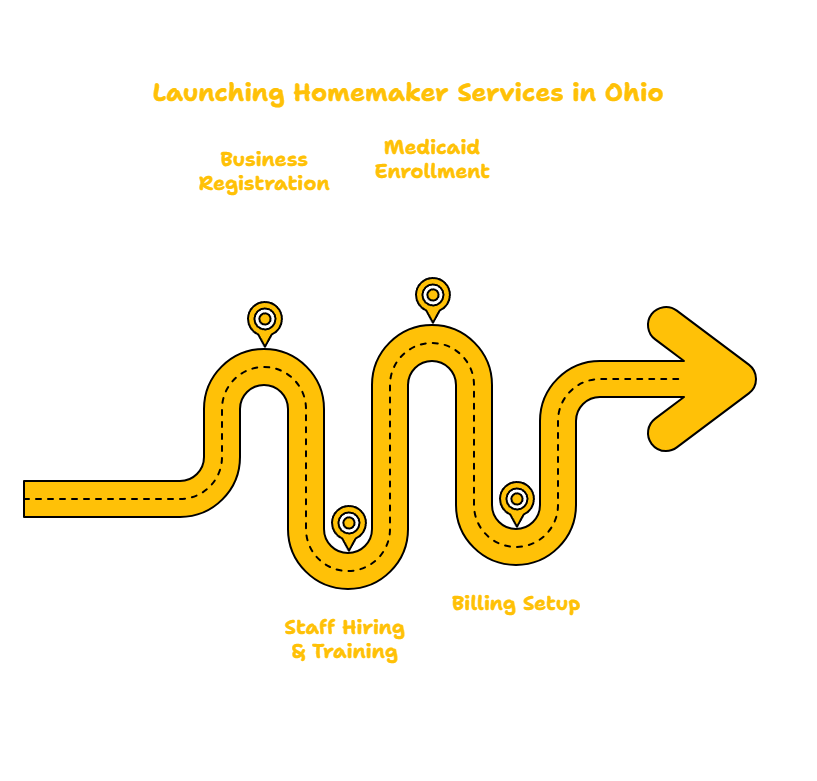
The timeline to launch is typically spread across several months. Initial business registration and policy setup generally take one to two months. The recruitment and training of qualified staff follows, typically requiring two to three months. Medicaid enrollment and final certification may take an additional 60 to 90 days, followed by a final 30 to 45-day window to finalize billing setups and initiate service delivery.
Frequently Asked Questions
What is the difference between Homemaker Services and Personal Care?
Homemaker Services focus strictly on household tasks such as cleaning, meal prep, and laundry. Personal Care services, conversely, involve hands-on assistance with activities of daily living, such as bathing, dressing, and grooming.
How does a provider ensure compliance during a state audit?
Providers ensure audit-readiness by maintaining meticulous, daily documentation of all services rendered. This includes time logs, progress notes, and signed proof-of-service documentation, all stored securely in accordance with HIPAA regulations.
Can an individual be authorized for services across multiple waivers?
Participants are generally enrolled in one specific waiver program at a time. The scope and frequency of Homemaker Services will be dictated by the specific care plan developed for that participant under their respective waiver.
WAIVER CONSULTING GROUP’S START-UP ASSISTANCE SERVICE
WCG supports new providers in launching Medicaid-compliant Homemaker Services in Ohio by offering professional guidance through the entire establishment phase. Our services include assistance with business formation, Medicaid/DODD enrollment navigation, the development of comprehensive policy and procedure manuals, and the creation of staff training templates. We also provide guidance on Medicaid billing setup, audit-readiness protocols, and the development of quality assurance systems, ensuring providers are equipped to serve their participants effectively while maintaining strict regulatory compliance.
Key Takeaway: Establishing a successful Homemaker Services agency in Ohio requires a disciplined focus on regulatory compliance, detailed administrative documentation, and a clear understanding of the specific requirements set forth by ODM, ODA, and DODD. By prioritizing these foundational elements, providers can ensure sustainable growth and high-quality care delivery.
Last verified: May 2024. This information is provided for general informational purposes only and does not constitute legal or professional advice. Always consult the latest rules and regulations published by the Ohio Department of Medicaid, the Ohio Department of Aging, and the Ohio Department of Developmental Disabilities for the most current requirements.