HOMEMAKER SERVICES PROVIDER IN NEW HAMPSHIRE
By Fatumata Kaba · 2025-07-27 · 5 min read
SUPPORTING INDEPENDENT LIVING THROUGH ESSENTIAL HOUSEHOLD ASSISTANCE
Homemaker Services in New Hampshire represent a vital component of the state’s long-term care infrastructure, providing non-medical assistance that allows individuals with disabilities, chronic illnesses, or age-related conditions to remain in their own homes. By delivering essential household support and environmental maintenance, these services promote independence and reduce the need for institutionalization for Medicaid participants authorized under New Hampshire Home and Community-Based Services (HCBS) waiver programs.
What Are the Regulatory Frameworks Governing Homemaker Services?
The delivery of Homemaker Services in New Hampshire is overseen by a structured hierarchy of federal and state agencies. The New Hampshire Department of Health and Human Services (DHHS) serves as the primary administrative body, responsible for managing Medicaid waiver funding, overseeing the provider enrollment process, and directing reimbursement protocols. Within the DHHS, the Bureau of Elderly and Adult Services (BEAS) acts as the functional lead, ensuring that service delivery meets established quality standards and regulatory compliance requirements.
At the federal level, the Centers for Medicare & Medicaid Services (CMS) provides necessary oversight to ensure that New Hampshire’s waiver programs adhere to national standards for participant protection, person-centered planning, and HCBS quality benchmarks. Providers must maintain a deep understanding of these governing bodies, as compliance with both state-specific directives and federal CMS guidelines is required to maintain active enrollment and billing eligibility.
What Scope of Services Can Providers Offer to Participants?
Homemaker Services are strictly non-medical in nature, focusing on the maintenance of a clean, safe, and functional living environment for the participant. While the specific tasks are governed by the participant’s Individualized Service Plan (ISP), providers generally assist with the foundational activities required to manage a household effectively.
- Housekeeping: Performing light cleaning, dusting, vacuuming, and general trash removal.
- Laundry and Linen Care: Washing, drying, folding clothes, and changing bed linens.
- Meal Preparation: Planning and cooking meals that align with the participant’s specific dietary needs.
- Grocery Shopping: Purchasing household essentials, groceries, and personal items.
- Home Safety Checks: Proactively identifying and reporting potential household hazards.
- Organization: Maintaining a clutter-free, accessible, and organized living space.
- Companionship: Providing meaningful social interaction while performing designated household tasks.
- Errands: Assisting with essential tasks such as light shopping and pharmacy visits.
How Do Providers Navigate the Licensing and Enrollment Process?
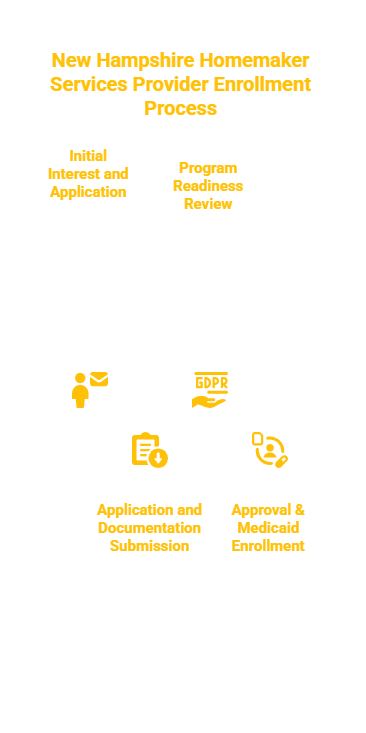
Becoming an authorized Medicaid Homemaker provider in New Hampshire requires a multi-stage approach to business formation and regulatory compliance. Initially, the business entity must be properly registered with the New Hampshire Secretary of State. Providers must also obtain a federal Employer Identification Number (EIN) from the IRS and secure a Type 2 National Provider Identifier (NPI) for organizational billing purposes.
Once the legal foundation is established, the provider must navigate the New Hampshire Medicaid Provider Enrollment Portal. This phase includes submitting detailed documentation regarding the agency’s structure, liability insurance, and internal policies. Following the application, the DHHS and BEAS conduct a program readiness review to assess the agency’s capacity to uphold safety protocols, staff qualification requirements, and service delivery procedures. Only upon the successful completion of this review and subsequent approval are providers authorized to bill for services.
What Documentation Is Required for Ongoing Compliance?
A successful provider agency must maintain a comprehensive Policy and Procedure Manual that demonstrates operational integrity. This manual acts as the backbone of the organization during audits and quality assurance reviews. Key documentation must include robust processes for participant intake, thorough service planning, and clear protocols for all housekeeping and maintenance activities.
- Business Licensing: Current articles of incorporation or state business permits.
- Administrative Records: Confirmed EIN, NPI, and proof of comprehensive general and professional liability insurance.
- Personnel Files: Complete records of staff credentialing, background checks, and documented training modules.
- Service Tracking: Standardized methods for tracking service delivery against the ISP and complying with Medicaid billing requirements.
- Operational Policies: Documented procedures for HIPAA compliance, participant rights, grievance handling, infection control, and emergency response.
What Are the Staffing and Training Requirements?
The quality of Homemaker Services is directly dependent on the competence of the direct support workforce and the leadership of the program director. The Homemaker Program Director is expected to hold a bachelor’s degree in a relevant field such as healthcare administration or human services, with a preference for candidates who possess significant supervisory experience in community-based support settings.
Direct support staff—including Homemakers, Personal Care Aides, and Direct Support Workers—must meet baseline qualifications, including a high school diploma or GED, clear background checks, and valid CPR/First Aid certification. All staff members must engage in a structured training program covering light caregiving techniques, safety and infection control, and strict adherence to HIPAA and client rights standards. Ongoing competency evaluations are required to ensure that the staff continues to meet the needs of the participant population effectively.
Frequently Asked Questions
Which Medicaid Waivers include Homemaker Services?
Homemaker Services are authorized under several New Hampshire waivers, including the Choices for Independence (CFI) Waiver, the Developmental Disabilities (DD) Waiver, the Acquired Brain Disorder (ABD) Waiver, the In-Home Support (IHS) Waiver for Children, and the broader Home and Community-Based Services (HCBS) Waiver.
What is the typical timeline for launching a service?
The launch process is divided into several phases: 1–2 months for business formation, 2–3 months for staffing and credentialing, 60–90 days for Medicaid enrollment and readiness review, and 30–45 days for billing system setup.
Are providers required to maintain specific liability insurance?
Yes, all providers must maintain both general and professional liability insurance as a prerequisite for enrollment and ongoing participation in New Hampshire Medicaid waiver programs.
Key Takeaway
Establishing a Homemaker Services agency in New Hampshire requires meticulous attention to state-specific regulations, the successful integration of rigorous staff training protocols, and a commitment to high-quality service delivery as defined by the DHHS and BEAS. By aligning business operations with the requirements of the CFI, DD, ABD, and other HCBS waivers, providers can deliver essential, life-enhancing services that support the dignity and independence of Medicaid participants throughout the state.
Last verified: October 2023. Disclaimer: This information is for educational purposes only and does not constitute legal or professional advice. Always refer to the New Hampshire Department of Health and Human Services (DHHS) and current state statutes for the most recent updates and specific compliance requirements for your agency.