HOMEMAKER SERVICES PROVIDER IN MONTANA
By Fatumata Kaba · 2025-08-06 · 6 min read
SUPPORTING INDEPENDENT LIVING BY ASSISTING WITH HOUSEHOLD TASKS AND DAILY ROUTINES
Homemaker services in Montana provide essential support for individuals who require assistance with household tasks to maintain a clean, safe, and healthy living environment. By facilitating activities such as meal preparation, laundry, and routine housekeeping, these services enable elderly individuals, persons with disabilities, and those recovering from illness to remain in their homes rather than transitioning to institutional care settings.
Administered under Montana’s Home and Community-Based Services (HCBS) waivers, these programs are vital components of the state's long-term care strategy. For agency founders and administrators, establishing a homemaker services provider business requires a comprehensive understanding of regulatory compliance, Medicaid provider enrollment, and person-centered service delivery models.
What Are the Governing Agencies and Regulatory Frameworks in Montana?
The provision of homemaker services in Montana operates under a structured regulatory hierarchy designed to ensure high standards of care and fiscal accountability. The primary state oversight body is the Montana Department of Public Health and Human Services (DPHHS), which administers the Medicaid program and the specific HCBS waiver programs that authorize these services. DPHHS is responsible for setting provider standards, managing the enrollment process, and ensuring that services align with state Medicaid requirements.
The Montana Department of Labor and Industry (DLI) plays a critical role in overseeing the business operations side of healthcare and support services, including licensing and compliance audits. Additionally, at the federal level, the Centers for Medicare & Medicaid Services (CMS) provides oversight for the state’s waiver programs. CMS ensures that Montana adheres to federal regulations regarding beneficiary safety, service quality, and the appropriate expenditure of Medicaid funds.
- Montana Department of Public Health and Human Services (DPHHS): Administers Medicaid and HCBS Waiver programs.
- Montana Department of Labor and Industry (DLI): Oversees licensing and compliance for healthcare and support services.
- Centers for Medicare & Medicaid Services (CMS): Provides federal oversight and ensures waiver compliance.
How Are Homemaker Services Defined and Delivered?
Homemaker services are fundamentally focused on assisting individuals with basic household tasks to ensure a safe and well-maintained living space. These services are not intended to be clinical or therapeutic but are essential for preventing the decline of a client's health by ensuring they live in a clean, organized, and sanitary environment. Each service delivery is guided by an Individual Service Plan (ISP) or a Person-Centered Plan (PCP), which outlines the specific needs and goals of the beneficiary.
Staff members providing these services help manage the logistics of daily life, which may be overwhelming for individuals with physical or cognitive limitations. By outsourcing these tasks to a qualified provider, the individual can focus on their recovery or manage their chronic conditions more effectively. Providers are responsible for ensuring that all tasks performed remain within the scope of the approved waiver services.
- Light housekeeping, including vacuuming, dusting, and mopping.
- Laundry services, including washing, drying, folding, and changing linens.
- Meal preparation and basic cooking assistance to ensure nutritional needs are met.
- Grocery shopping and assistance with essential errands.
- Organizing personal spaces to maintain a safe, clutter-free environment.
- Assistance with planning and budgeting for essential household needs.
What Are the Licensing and Provider Approval Requirements?
Entering the HCBS market requires strict adherence to administrative and operational prerequisites. Business owners must begin by legally registering their business entity with the Montana Secretary of State. Once the business is established, obtaining a Federal Employer Identification Number (EIN) from the IRS and a National Provider Identifier (NPI - Type 2) is mandatory. These identifiers are essential for all future Medicaid billing and correspondence.
Following business formation, the provider must obtain the necessary Homemaker Services License from the DLI and formally enroll as a Medicaid provider through the DPHHS. Throughout this process, agencies must maintain comprehensive liability insurance and detailed documentation of staff qualifications. Failure to maintain these records can lead to significant delays in approval or disqualification from the provider network.
- Register business with the Montana Secretary of State.
- Obtain EIN from the IRS and NPI (Type 2).
- Enroll as a Medicaid provider with the Montana Department of Public Health and Human Services.
- Obtain a Homemaker Services License from the Montana Department of Labor and Industry.
- Maintain liability insurance and documentation of staff qualifications.
What Is the Step-by-Step Medicaid Provider Enrollment Process?
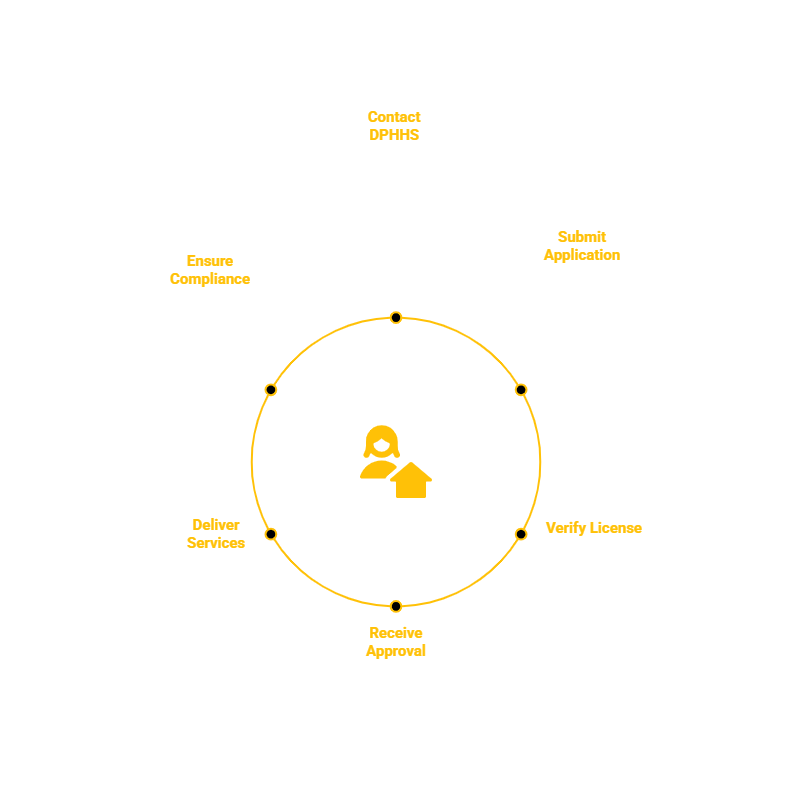
The enrollment process is a sequential journey that begins with a pre-application phase. Agency owners should first contact the DPHHS to obtain current guidance on specific requirements for the desired HCBS waiver programs. This initial consultation helps in understanding the expectations of the state and prepares the agency for the documentation intensity of the subsequent phases.
Once the business is legally formed and the necessary insurance is secured, the provider must submit the formal application. This involves providing detailed service descriptions and organizational structure information. The DPHHS will then verify that all licensing requirements from the DLI have been satisfied. Upon successful review and validation of all submitted documents, the provider will be assigned a Medicaid provider number, signaling the formal authorization to begin delivering services to waiver participants.
What Policies and Staffing Standards Must an Agency Maintain?
A successful homemaker agency is built upon robust policies and procedures that ensure consistency and safety. Agencies must maintain a detailed policy and procedure manual that covers client intake protocols, rigorous cleaning and hygiene standards, and emergency response procedures. Equally important is the documentation of services; providers are required to maintain accurate logs of tasks performed and records of client feedback to ensure accountability.
Staffing requirements are designed to protect the vulnerable populations served. The Homemaker Program Manager should possess demonstrated experience in home support or social services management. Direct support aides must hold at least a high school diploma or equivalent and must pass thorough background checks and TB clearances. Training is non-negotiable; all staff must receive education in safety, infection control, client communication, and emergency response.
Frequently Asked Questions
What waivers include homemaker services?
Homemaker services are available through several programs in Montana, including the Big Sky Waiver (BSW), Community First Choice/Personal Assistance Services (CFC/PAS), and certain Medicaid Home Health Services, depending on the client's specific eligibility and care needs.
How long does the provider enrollment process take?
While timelines can vary based on the completeness of the application, the Medicaid provider enrollment process typically takes between 60 and 90 days. Other phases, such as business formation and facility setup, typically precede this window and add an additional 4 to 8 weeks to the overall launch timeline.
What documentation is required for the policy manual?
Agencies must document their internal standards for client intake and assessment, safety and hygiene procedures, cleaning guidelines, service documentation and logging, staff training and supervision, and emergency response plans to comply with state oversight requirements.
Key takeaway: Launching a homemaker services agency in Montana requires a rigorous commitment to both administrative compliance and the high standards of care mandated by the DPHHS. Success depends on maintaining clear documentation, ensuring all staff are properly credentialed and trained, and staying strictly aligned with the requirements of the Big Sky Waiver and other supporting HCBS programs.
Last verified: October 2023. Disclaimer: This article is for informational purposes only and does not constitute legal or professional advice. Always consult directly with the Montana Department of Public Health and Human Services (DPHHS) and relevant regulatory bodies for the most current rules, statutes, and application requirements specific to your agency's situation.