HOMEMAKER SERVICES PROVIDER IN MINNESOTA
By Fatumata Kaba · 2025-07-27 · 5 min read
Supporting Independent Living Through Minnesota Homemaker Services
Homemaker Services in Minnesota are essential, non-medical supports designed to help individuals maintain a clean, safe, and functional living environment, thereby preventing premature institutionalization. Provided under Minnesota’s Home and Community-Based Services (HCBS) Waivers, these services allow seniors and individuals with disabilities to age in place by assisting with the fundamental household tasks that might otherwise become overwhelming.
As a provider, operating a Homemaker Service agency requires navigating a complex regulatory landscape overseen by the Minnesota Department of Human Services (DHS), the Minnesota Department of Health (MDH), and federal oversight by the Centers for Medicare & Medicaid Services (CMS). Agencies must demonstrate a commitment to person-centered care, strictly adhering to the requirements outlined in their Individual Service Plans (ISP) or Person-Centered Plans (PCP) to ensure that the unique needs of every client are addressed effectively and compliantly.
What Are the Core Responsibilities and Scope of Homemaker Services?
The primary goal of a Homemaker Service provider is to ensure that a client’s home environment remains stable, hygienic, and conducive to their overall health. Services are not clinical; instead, they focus on the activities of daily living related to the home. By ensuring the physical environment is maintained, providers significantly reduce the risk of accidents and help clients manage chronic conditions by promoting a sanitary living space.
Services are strictly tailored to the individual’s needs as documented in their official service plan. Typical activities authorized for providers include:
- Light housekeeping, such as dusting, vacuuming, and floor care.
- Laundry services, including washing, drying, folding, and changing linens.
- Meal preparation, which encompasses basic cooking assistance and dietary planning.
- Grocery shopping and managing necessary household errands.
- Organization of personal living spaces to minimize clutter and improve accessibility.
- Assistance with planning and budgeting for essential household needs.
Navigating Licensing and Medicaid Provider Enrollment
Establishing a Homemaker Service agency requires a multi-step compliance process involving both state and federal regulatory bodies. Before an agency can bill for Medicaid services, it must be legally recognized as a business entity and fulfill all state-specific licensing requirements. A crucial initial step is obtaining a Comprehensive Home Care Provider License from the Minnesota Department of Health, which sets the standards for operational excellence and client safety.
The enrollment journey involves a rigorous sequence of administrative tasks designed to ensure the provider is capable of meeting state expectations. Providers must follow these foundational steps:
- Register the business with the Minnesota Secretary of State.
- Obtain a federal Employer Identification Number (EIN) and a National Provider Identifier (NPI) Type 2.
- Complete the formal enrollment process as a Medicaid provider with the Minnesota Department of Human Services.
- Secure comprehensive liability insurance to protect both the agency and the clients served.
Operational Requirements and Documentation Standards
Maintaining a successful Homemaker agency is largely a matter of robust documentation and organizational protocol. Regulatory agencies require that every provider maintains a comprehensive policy and procedure manual. This manual serves as the operational backbone of the business, ensuring that staff are following standardized, high-quality processes for everything from intake to service delivery.
Documentation must be meticulous, as it serves as the primary evidence of compliance during state audits. Required records include, but are not limited to:
- Detailed client intake and assessment protocols that document the specific needs of the individual.
- Clearly defined safety, hygiene, and infection control procedures.
- Logbooks that track specific cleaning tasks and household maintenance performed during each visit.
- Records documenting client feedback and service satisfaction.
- Comprehensive files on staff training, supervision, and ongoing professional development.
Staffing, Training, and Program Management
The quality of service delivery rests on the competency of the staff. Agencies must employ a qualified Homemaker Program Manager who possesses sufficient experience in home support services or social services management to oversee the program’s daily operations. This leader is responsible for ensuring that all frontline staff meet the state’s qualification standards, including the verification of high school diplomas or equivalent education.
Frontline Homemakers or Household Support Aides must undergo rigorous vetting and training before they are permitted to work with clients. Every staff member must pass a state-mandated background check and obtain TB clearance. Furthermore, mandatory training programs must cover essential domains such as:
- Household management techniques and task planning.
- Emergency response protocols and proactive risk management.
- Infection control and safety practices within the home.
- Effective communication techniques and proper service documentation habits.
Understanding the Waiver Landscape and Launch Timeline
Homemaker Services in Minnesota are delivered through specific HCBS waiver programs, each targeting different demographics. Providers must be aware that their billing and service delivery must align with the specific requirements of the 1915(c) HCBS Waiver for the Elderly and Disabled, the Community Access for Disability Inclusion (CADI) Waiver, or the Brain Injury (BI) Waiver. Each program has unique nuances that providers must integrate into their service plans.
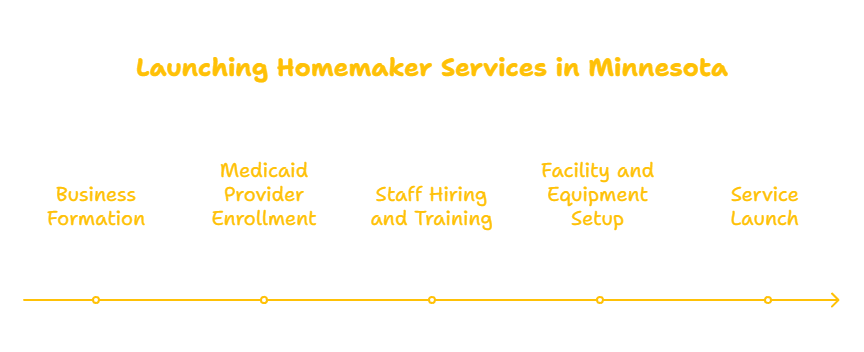
Entrepreneurs should approach the launch of a new agency with a realistic timeline for compliance and operational readiness. The process typically breaks down into the following developmental phases:
- Business Formation: 1–2 weeks for registration and structural setup.
- Medicaid Provider Enrollment: 60–90 days for state processing and NPI/Medicaid number assignment.
- Staff Hiring and Training: 30–45 days to build a qualified, compliant workforce.
- Facility and Equipment Setup: 2–4 weeks to prepare operational systems and digital infrastructure.
Frequently Asked Questions
What is the role of the Minnesota Department of Health in this process?
The Minnesota Department of Health (MDH) is responsible for licensing and regulating home care agencies. You must obtain a Comprehensive Home Care Provider License from them to legally operate and provide homemaker services in the state.
Can an agency provide homemaker services without being enrolled with DHS?
No. To receive Medicaid reimbursement through HCBS waivers, an agency must be formally enrolled as a Medicaid provider with the Minnesota Department of Human Services (DHS). This enrollment ensures your agency meets federal and state standards for service delivery.
What are the primary differences between the waivers mentioned?
While the services provided are similar, the waivers serve different populations. For example, the CADI waiver serves people with disabilities who require services to live in the community, while the BI waiver is specifically for individuals with brain injuries. Providers must ensure their documentation and service plans align with the specific program under which the client is enrolled.
Key Takeaway: Successful operation as a Homemaker Services provider in Minnesota hinges on strict adherence to DHS and MDH regulatory requirements, consistent documentation of client care, and a commitment to maintaining a safe, independent living environment for those served through HCBS waiver programs.
Last verified: October 2023. This information is provided for educational purposes and does not constitute legal or professional advice. Requirements for Medicaid provider enrollment and licensure in Minnesota are subject to change; always consult directly with the Minnesota Department of Human Services and the Minnesota Department of Health for the most current regulations and application procedures.