HOMEMAKER SERVICES PROVIDER IN KANSAS
By Fatumata Kaba · 2025-07-24 · 5 min read
SUPPORTING DAILY INDEPENDENCE THROUGH PERSONALIZED NON-MEDICAL ASSISTANCE IN THE HOME
Homemaker Services in Kansas are essential non-medical supports designed to assist individuals with household tasks they cannot perform due to age, disability, or chronic health conditions. Under the Kansas Medicaid program, known as KanCare, these services are authorized through specific Home and Community-Based Services (HCBS) waivers to help participants maintain a safe, independent living environment and prevent premature institutionalization.
What Are the Governing Agencies and Regulatory Frameworks?
The delivery of Homemaker Services in Kansas is overseen by a structured network of state and federal entities. The Kansas Department of Health and Environment (KDHE), specifically the Division of Health Care Finance, serves as the primary administrator for Medicaid funding, provider enrollment, and reimbursement processes. Working in tandem, the Kansas Department for Aging and Disability Services (KDADS) is responsible for defining the service scope, setting provider requirements, and establishing participant eligibility criteria within the various HCBS waiver programs.
At the federal level, the Centers for Medicare & Medicaid Services (CMS) mandates strict adherence to federal guidelines regarding home-based care. Additionally, the day-to-day management of these services falls under the jurisdiction of the Managed Care Organizations (MCOs) operating under KanCare. These MCOs are responsible for reviewing individual service requests, authorizing the specific units of care, overseeing provider credentialing, and managing the billing and claims lifecycle.
How Do Homemaker Services Support Participant Independence?
Homemaker Services provide routine, non-medical support that ensures a participant’s home environment remains functional and safe. These services are strictly non-skilled and are intended to assist with the activities of daily living that would otherwise be difficult for a participant to manage alone. Authorized providers are expected to tailor their assistance to the specific needs outlined in the participant’s Individualized Service Plan (ISP).
Services typically include, but are not limited to, the following tasks:
- Light housekeeping duties, such as sweeping, vacuuming, laundry, dusting, and washing dishes.
- Meal preparation, including kitchen clean-up and proper food storage.
- Assistance with organizing the home and shopping for necessary groceries or household supplies.
- Bed-making and routine changing of linens.
- Escort or direct support with essential community errands.
- Monitoring the household for safety risks and identifying urgent needs.
- Maintaining clear communication and coordination with the participant’s care managers or primary family caregivers.
What Are the Prerequisites for Provider Enrollment in Kansas?
Establishing a business as a qualified Homemaker Services provider requires strict adherence to both business and clinical regulatory standards. Before an agency can begin billing for services, it must legally register with the Kansas Secretary of State and obtain an IRS Employer Identification Number (EIN) and a Type 2 National Provider Identifier (NPI). These foundational steps ensure that the entity is recognized by the state for tax and health care billing purposes.
Beyond basic business registration, a provider must maintain robust insurance coverage, including general liability and workers’ compensation, to mitigate operational risks. A critical component of the readiness process is the development of a comprehensive Homemaker Services Policy & Procedure Manual. This document must clearly define the agency's adherence to KDADS HCBS provider standards, participant rights protocols, HIPAA compliance, and internal service documentation procedures.
What Is the Step-by-Step Process for Becoming an Authorized Provider?
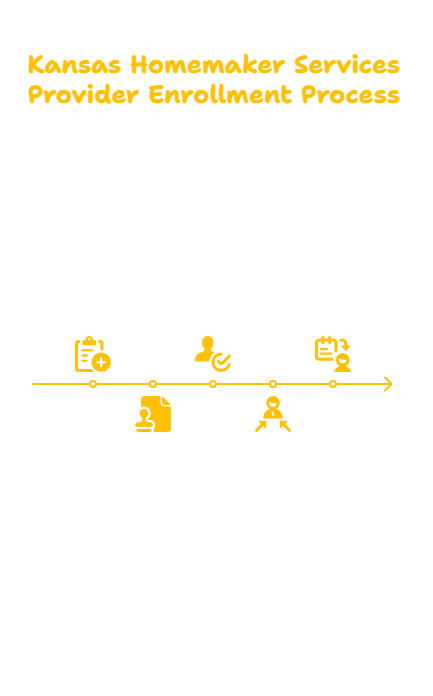
The enrollment journey is segmented into three distinct phases: Medicaid registration, credentialing, and operational authorization. First, a provider must enroll through the Kansas Medical Assistance Program (KMAP). This portal is the central gateway for all Medicaid providers in the state. Once enrolled, the agency must complete the credentialing process with each of the KanCare MCOs to ensure the provider is recognized within their specific networks.
The second phase involves the submission of extensive documentation. This includes proof of business standing, verified insurance certificates, and the agency’s internal policy manuals. Once credentials and policies are approved, the provider moves to the final stage: service delivery. This includes receiving formal service authorizations from MCOs based on the participant's ISP, assigning appropriately trained staff to the participant, and accurately documenting services using the correct HCPCS billing codes.
What Are the Essential Staffing and Training Mandates?
The quality of Homemaker Services relies on the competency of the staff. Personnel serving as Homemaker or Home Support Aides must hold at least a high school diploma or equivalent. It is preferred that candidates have documented experience in home care, and they must undergo rigorous background screenings prior to their start date. Agencies are responsible for ensuring that all staff have the temperament and skill set required to work within a participant-centered care model.
Mandatory training for all staff members must cover several core pillars:
- Orientation regarding the specific HCBS waiver rules and Medicaid regulations.
- In-depth training on HIPAA, privacy, and confidentiality.
- Principles of person-centered service delivery and respecting participant autonomy.
- Infection control and established home safety procedures.
- Annual continuing education requirements to keep staff updated on service standards and safety protocols.
Frequently Asked Questions
Which Kansas HCBS waivers cover Homemaker Services?
Homemaker Services are authorized under several HCBS waivers, including the Intellectual/Developmental Disability (IDD) Waiver, the Frail Elderly (FE) Waiver, the Physical Disability (PD) Waiver, the Brain Injury (BI) Waiver, and the Technology Assisted (TA) Waiver, provided the service is included in the participant's ISP.
Can a provider deliver homemaker services in any setting?
Services are generally delivered in the participant's residence or in supported living arrangements. The specific location of care must be consistent with the individual's authorized care plan and the regulations governing the specific waiver program under which they are served.
What is the typical timeline for launching a service provider agency?
The startup phase for business formation and policy development generally takes one to two months. Subsequent KMAP enrollment and MCO credentialing typically require two to three months, followed by approximately one month for staff hiring and training. Final authorization and the commencement of services generally occur within 30 to 60 days following the completion of administrative requirements.
Key Takeaway
Successfully navigating the Kansas Homemaker Services landscape requires a disciplined approach to documentation, regulatory compliance, and MCO relationship management. By maintaining rigorous internal policies and ensuring that staff are thoroughly trained in Medicaid-compliant service delivery, provider agencies can build a sustainable operation that fulfills the critical needs of the HCBS population while meeting state and federal standards.
Waiver Consulting Group provides professional assistance to HCBS providers and entrepreneurs, helping them establish Medicaid-compliant operations. Support services include guidance on business registration, Medicaid and MCO enrollment, the development of comprehensive Policy & Procedure Manuals, staff training modules, and the establishment of robust documentation and billing systems. Our resources are designed to help agencies maintain compliance and focus on delivering essential care.
Last verified: 2024. Disclaimer: This article is for informational purposes only and does not constitute legal or professional regulatory advice. Regulations are subject to change; providers should always consult the official Kansas Department of Health and Environment (KDHE) and Kansas Department for Aging and Disability Services (KDADS) websites for the most current program guidelines and policy updates.