HOMEMAKER SERVICES PROVIDER IN INDIANA
By Watchen Roberts · 2025-08-13 · 5 min read
Homemaker Services in Indiana are essential non-medical support programs authorized under Medicaid Home and Community-Based Services (HCBS) waivers designed to assist individuals in maintaining a clean, safe, and healthy home environment. These services are specifically intended for participants who, due to age-related challenges, chronic illness, or disabilities, require professional assistance with routine household activities to prevent institutionalization and foster independent living within their communities.
Operating a Homemaker Services agency in Indiana requires strict adherence to oversight from the Indiana Family and Social Services Administration (FSSA), including both the Division of Aging and the Division of Disability and Rehabilitative Services (DDRS). By facilitating tasks such as laundry, light housekeeping, and meal preparation, providers play a vital role in the long-term care infrastructure, ensuring that waiver participants remain safe and supported in their preferred residential settings.
Understanding the Governing Structure and Regulatory Landscape
The regulatory framework for Homemaker Services in Indiana is multi-tiered, involving federal guidance and state-level administration. The FSSA serves as the primary governing body, managing waiver program administration, the enrollment of providers, service authorization, and the ongoing quality monitoring of care delivery. Their oversight ensures that services remain consistent with the participant's Individualized Support Plan (ISP) and state quality standards.
Additionally, the Indiana Office of Medicaid Policy and Planning (OMPP) manages the financial and operational components, including Medicaid funding, reimbursement cycles, and the integrity of the billing process. On a federal level, the Centers for Medicare & Medicaid Services (CMS) provides overarching regulatory guidance. Providers must ensure that their operations strictly align with the CMS HCBS Settings Rule, which emphasizes person-centered planning and the integration of participants into the broader community.
- Indiana FSSA: Oversees program administration, service authorization, and quality monitoring.
- Indiana OMPP: Manages Medicaid billing, reimbursement, and provider enrollment processes.
- CMS: Establishes federal benchmarks for HCBS settings and participant-centered care standards.
Defining the Scope of Homemaker Services
Homemaker Services are strictly non-medical in nature and are intended to support the routine tasks that keep a home sanitary and safe. These services are not meant to replace personal care or skilled nursing; rather, they are focused on maintaining the living environment. Approved providers perform duties as documented in the participant’s ISP, ensuring that every hour of service is directly tied to the goal of promoting independent living.
Daily tasks typically authorized under these programs include light housekeeping such as dusting, sweeping, mopping, and vacuuming. Providers may also assist with laundry duties, including washing, drying, folding, and putting away clothing. Meal preparation is another core service, provided the meals are prepared in accordance with the participant’s specific dietary needs. In some instances, when specifically authorized, providers may assist with grocery shopping and essential errands related to maintaining the household.
Navigating the Provider Enrollment and Licensing Requirements
Before an agency can begin billing for services, it must navigate a rigorous credentialing and enrollment process. This begins with formal business registration through the Indiana Secretary of State. Providers must obtain an Employer Identification Number (EIN) from the IRS and a Type 2 National Provider Identifier (NPI), which are prerequisites for interacting with the Medicaid system. Once these foundational steps are complete, the agency must enroll through the Indiana Medicaid Provider Enrollment Portal.
Beyond technical registration, operational readiness is critical. Providers are required to maintain comprehensive general liability and professional liability insurance to protect against operational risks. Developing robust internal policies is a major component of the approval process; agencies must draft detailed procedures covering emergency response, participant rights, incident reporting, and specific protocols for the delivery of homemaking tasks. Failure to demonstrate readiness during the program review phase can delay the launch of services significantly.
Implementing Staffing and Training Protocols
The quality of Homemaker Services relies on the competency of the direct support staff. An agency must appoint a qualified Program Manager or Supervisor who possesses relevant experience in human services, residential support, or non-medical care. This individual is responsible for overseeing the performance of Homemaker Aides and ensuring that all service documentation is accurate, complete, and audit-ready.
All direct support workers must meet high standards for conduct and proficiency. This includes passing comprehensive background screenings and completing mandatory training in infection control, home safety, and household management. Furthermore, staff must be educated on HIPAA compliance, participant confidentiality, and the prevention of abuse or neglect. Agencies are expected to conduct annual competency evaluations and facilitate continuing education to ensure staff remain updated on best practices for supporting vulnerable populations.
- Program Manager: Oversees service delivery, staff supervision, and compliance.
- Homemaker Aides: Execute daily tasks and provide consistent, non-medical support.
- Mandatory Training: Must cover HIPAA, abuse prevention, emergency protocols, and participant rights.
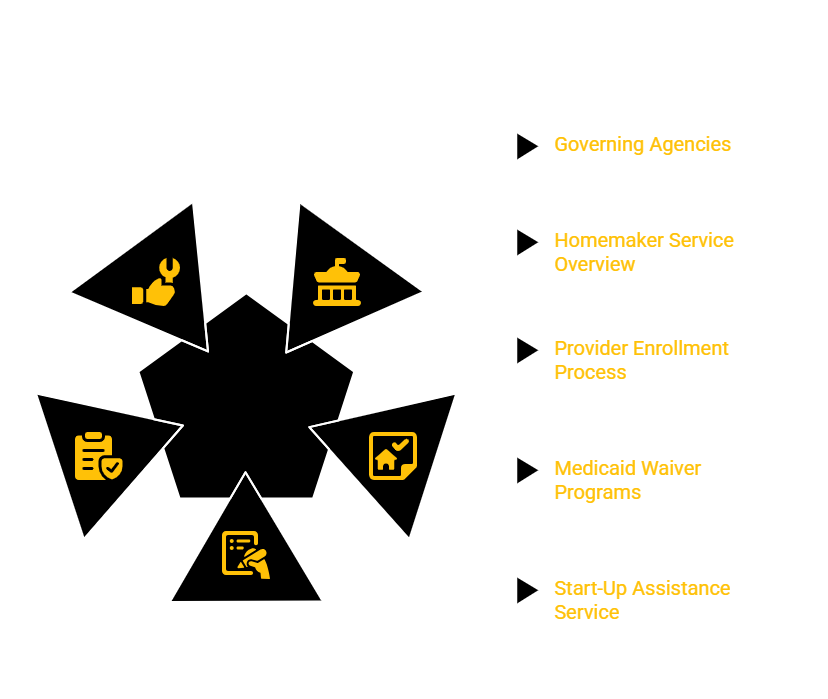
Frequently Asked Questions
Which Medicaid waivers currently authorize Homemaker Services in Indiana?
Homemaker Services are authorized under the Aged and Disabled (A&D) Waiver, the Community Integration and Habilitation (CIH) Waiver, the Traumatic Brain Injury (TBI) Waiver, and in limited instances, the Family Supports Waiver (FSW).
What is the typical timeline for launching a new Homemaker Services agency?
The total timeline generally spans 6 to 10 months. Business formation and policy development typically take 1–2 months, followed by 2–3 months for staffing. The Medicaid enrollment and readiness review phase generally takes 60–90 days, with an additional 30–45 days required for billing setup.
What documentation is essential for audit readiness?
Agencies must maintain meticulous records, including proof of insurance, NPI/EIN verification, staff background checks, training records, and detailed logs of all tasks performed per the participant’s ISP. All billing documentation must align with authorized units of service.
Key Takeaway
Launching a Homemaker Services provider in Indiana is a complex process that demands rigorous attention to regulatory compliance, detailed policy documentation, and a focus on high-quality participant support. By maintaining alignment with FSSA guidelines and ensuring that staff are thoroughly trained in non-medical household management, providers can successfully contribute to the health and independence of Indiana’s waiver population. Success depends on the ability to integrate professional administrative systems with a commitment to maintaining safe, sanitary living environments for those in need.
Last verified: October 2023. This content is provided for informational purposes only and does not constitute legal or professional advice. Prospective providers should consult official Indiana FSSA documentation and current Medicaid manuals for the most recent updates to state requirements.