HOMEMAKER SERVICES PROVIDER IN ILLINOIS
By Fatumata Kaba · 2025-07-19 · 5 min read
SUPPORTING INDEPENDENT LIVING THROUGH ASSISTANCE WITH DAILY HOUSEHOLD TASKS AND PERSONAL CARE
Homemaker services in Illinois are specialized home-based supports designed to assist older adults and individuals with disabilities in maintaining a safe, independent, and healthy living environment. By providing essential help with daily household tasks and non-medical personal care, these services play a critical role in the state's Home and Community-Based Services (HCBS) ecosystem, effectively preventing unnecessary institutionalization and supporting aging in place.
Understanding the Governance of Illinois Homemaker Services
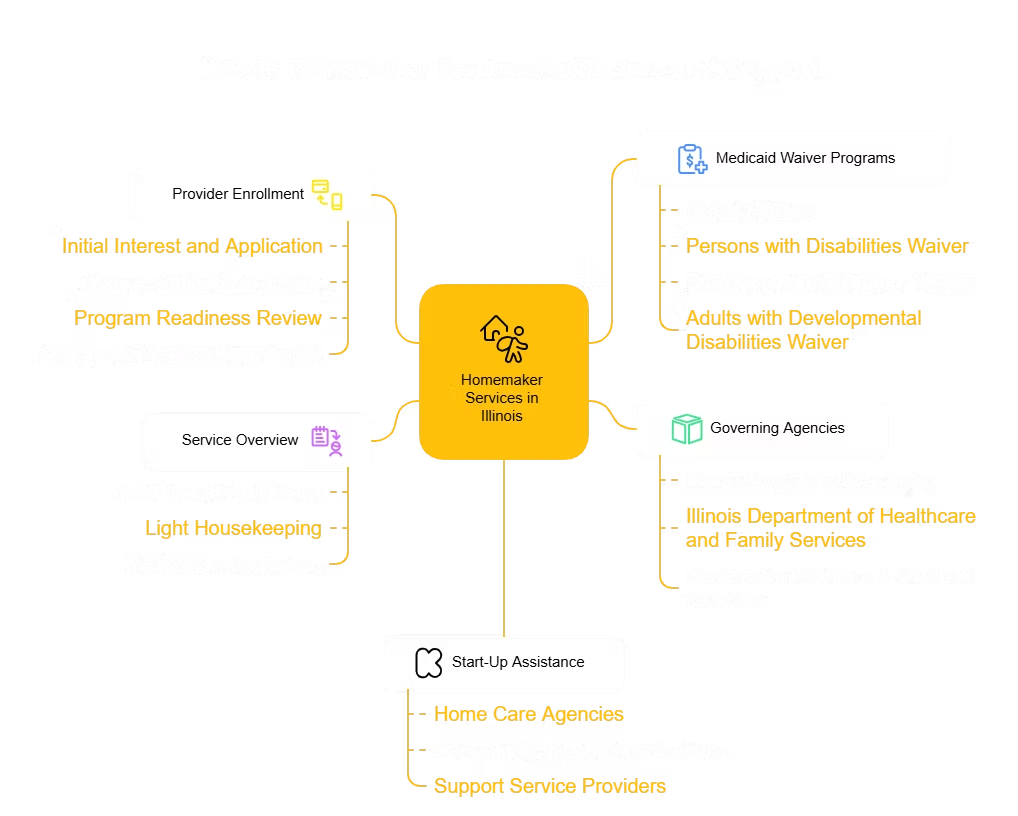
The regulatory landscape for Homemaker Services in Illinois involves a multi-agency framework that ensures compliance with state and federal standards. Oversight is primarily driven by the Illinois Department on Aging (IDoA), which manages the Community Care Program (CCP). The IDoA is responsible for provider certification, quality monitoring, and the strict enforcement of participant rights, ensuring that every agency delivers care in accordance with state expectations.
In addition to the IDoA, the Illinois Department of Healthcare and Family Services (HFS) manages the financial backbone of these services. HFS oversees Medicaid waiver funding, provider enrollment through the IMPACT system, and the complexities of reimbursement procedures. At the federal level, the Centers for Medicare & Medicaid Services (CMS) provides the necessary oversight to ensure that all Medicaid-funded services adhere to national HCBS quality, safety, and person-centered planning requirements.
Defining the Scope of Homemaker Service Delivery
Homemaker Services are centered on providing assistance with non-medical personal care and activities that a participant cannot manage independently. These services are not intended to replace the participant's own capabilities but rather to supplement them, allowing individuals to remain in their homes with dignity and safety. Approved providers must ensure that all delivered care aligns strictly with the participant’s individualized Service Plan or Care Plan.
Providers are authorized to deliver a specific set of support services, which typically include the following:
- Assistance with Activities of Daily Living (ADLs) including bathing, grooming, toileting, dressing, and mobility assistance.
- Light housekeeping tasks, such as dusting, vacuuming, laundry, and meal preparation.
- Grocery shopping and essential errands.
- Non-administrative medication reminders.
- General well-being monitoring and immediate reporting of concerns to supervisors.
- Assistance with scheduling and coordinating medical or service appointments.
- Support for wellness and exercise routines as recommended by qualified healthcare providers.
Navigating Licensing and Provider Approval Requirements
Launching a Homemaker Services agency requires meticulous preparation and adherence to strict prerequisites. Before an entity can begin serving participants, it must be legally established and recognized within the state. This includes registering the business with the Illinois Secretary of State and obtaining a federal Employer Identification Number (EIN) and a Type 2 National Provider Identifier (NPI).
Once the legal foundation is established, the agency must navigate the formal enrollment process. This involves registering as a Medicaid Waiver and/or CCP provider via the Illinois Medicaid Provider Enrollment Portal (IMPACT system) and securing the necessary IDoA Homemaker Services Provider Certification. Beyond these administrative milestones, agencies must carry comprehensive general liability and worker’s compensation insurance and establish robust internal policies that govern incident reporting, participant protection, and rigorous documentation standards.
The Provider Enrollment and Readiness Review Process
The transition from a business entity to an active Medicaid provider follows a structured, multi-phase pathway. The process begins with the submission of the Provider Enrollment Application through the IMPACT system, identifying the specific waivers or CCP categories under which the agency intends to operate. Following the initial application, the agency must submit a comprehensive packet of documentation, including Articles of Incorporation, proof of insurance, staff training logs, and detailed operational policies.
A critical stage in this journey is the Program Readiness Review conducted by the IDoA and HFS. During this review, state officials evaluate the provider’s operational model, including their staffing compliance, documentation methodology, and internal systems for protecting participant rights. Only upon the successful completion of this review and the subsequent formal approval is a provider authorized to deliver and bill for Homemaker Services using the designated Medicaid billing codes.
Staffing, Training, and Operational Documentation
The quality of care provided by a Homemaker agency is directly tied to the competency and vetting of its staff. The Program Director or Supervisor role typically requires a Bachelor’s degree in human services or a related field, alongside professional experience in managing non-medical support programs. Homemakers and Home Care Aides must possess a high school diploma or GED, complete state-approved training, and pass mandatory background and health screenings.
Operational success relies on maintaining an exhaustive Policy & Procedure Manual. This document serves as the agency's blueprint for compliance and must cover every facet of the business, from intake and service authorization to HIPAA compliance and emergency response protocols. Providers must also maintain documentation for staff credentialing, annual competency assessments, and continuing education, ensuring that every employee is trained in infection control, mandatory reporting of abuse, and participant safety.
Frequently Asked Questions
What Medicaid waiver programs cover Homemaker Services?
Homemaker Services are currently available under several Illinois Medicaid waiver programs, including the Elderly Waiver (Community Care Program), the Persons with Disabilities (PD) Waiver, the Persons with Brain Injury (BI) Waiver, and the Adults with Developmental Disabilities Waiver for specific non-medical support needs.
What is the typical timeline to launch a Homemaker agency?
The launch process is generally phased over several months. Business formation and compliance preparation usually take 1–2 months, followed by 2–3 months for staff hiring and policy development. The IMPACT enrollment and IDoA readiness review phase typically takes 60–90 days, with final billing setup requiring an additional 30–45 days.
What is the primary role of the IMPACT system?
The IMPACT (Illinois Medicaid Provider Enrollment) system is the centralized portal for all provider enrollment and management in Illinois. It is used to submit applications for Medicaid Waiver and CCP participation and serves as the official record for provider credentials and program enrollment status.
Key Takeaway
Successful entry into the Illinois Homemaker Services market requires a disciplined approach to regulatory compliance, rigorous attention to staff training, and the establishment of robust internal documentation systems. By aligning business operations with the specific requirements of the IDoA and HFS, provider agencies can effectively contribute to the critical goal of supporting the health, safety, and independence of Illinois residents in their own homes.
Last verified: October 2023. Disclaimer: This information is for educational purposes only and does not constitute legal or professional advice. Always consult with the Illinois Department on Aging and the Department of Healthcare and Family Services for the most current regulations and official requirements.