HOMEMAKER SERVICES PROVIDER IN FLORIDA
By Fatumata Kaba · 2025-07-09 · 7 min read
SUPPORTING DAILY LIVING THROUGH HOUSEHOLD ASSISTANCE FOR INDIVIDUALS WITH DISABILITIES, CHRONIC CONDITIONS, OR AGE-RELATED NEEDS
Homemaker Services in Florida are essential components of the Medicaid Home and Community-Based Services (HCBS) waiver system, providing non-medical support to individuals who require assistance with household tasks to maintain a safe, sanitary, and independent living environment. For provider agencies, entering this space requires strict adherence to state licensing regulations, federal compliance standards, and a robust understanding of the specific operational requirements mandated by the Agency for Health Care Administration (AHCA) and the Agency for Persons with Disabilities (APD).
Understanding the Role of Homemaker Services in Florida Medicaid
Homemaker Services provide vital household support that enables individuals with disabilities, chronic conditions, or age-related limitations to remain in their own homes rather than transitioning into institutional settings. These services are distinctly non-medical in nature; they focus on the maintenance of the living environment rather than the provision of hands-on personal care, such as bathing, grooming, or dressing. By alleviating the burden of daily chores, these services empower participants to maintain their independence and participate more fully in their local communities.
The scope of these services is defined by the participant's individualized service plan, ensuring that the assistance provided is both necessary and consistent with the participant's specific goals. Typical activities authorized under these programs include light housekeeping, such as sweeping, vacuuming, and dusting, as well as essential tasks like laundry, linen changing, meal preparation, and grocery shopping. Furthermore, providers are expected to assist with organizing the home environment and performing basic sanitation tasks to ensure that the living space remains healthy and free from hazards.
Navigating the Regulatory Landscape and Oversight Agencies
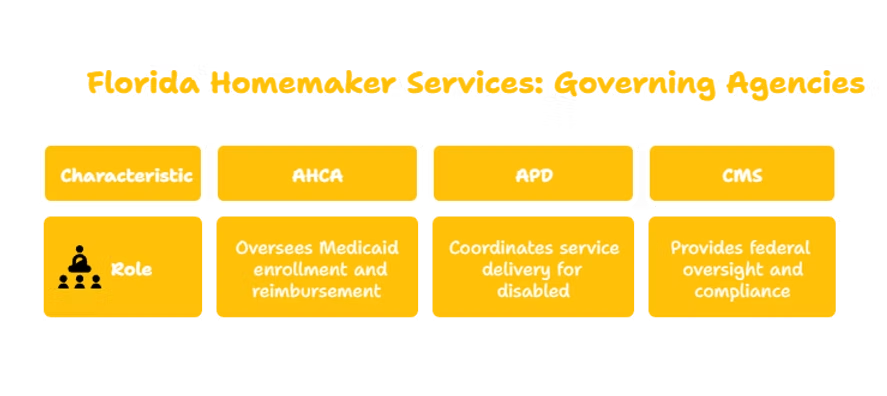
The delivery of Homemaker Services in Florida is subject to rigorous oversight by several regulatory bodies to ensure quality of care and program integrity. The primary regulatory authority is the Florida Agency for Health Care Administration (AHCA), which manages Medicaid enrollment, service authorization, and the reimbursement processes that allow providers to receive payment for their services. Additionally, the Florida Agency for Persons with Disabilities (APD) plays a critical role in coordinating the delivery of these services for individuals with developmental disabilities who are enrolled in the iBudget Florida Waiver.
At the federal level, the Centers for Medicare & Medicaid Services (CMS) provides the overarching regulatory framework for all HCBS waiver programs. CMS ensures that Florida’s service delivery models meet federal compliance standards, particularly regarding person-centered planning and the protection of participant rights. Providers must operate within these guidelines, maintaining detailed records and adhering to state-specific regulations to ensure that they remain in good standing with both state and federal authorities throughout their participation in the Medicaid program.
Essential Requirements for Licensing and Provider Enrollment
Before an agency can begin billing for Medicaid services, it must satisfy a comprehensive list of prerequisites. The process begins with formal business registration through the Florida Division of Corporations (Sunbiz) and the acquisition of an Employer Identification Number (EIN) from the IRS, along with a Type 2 National Provider Identifier (NPI). These foundational steps are necessary to establish the business as a legal entity capable of entering into agreements with state health agencies.
A critical milestone for any provider is obtaining the mandatory Homemaker and Companion Services License from AHCA. Unless the agency qualifies for very limited exemptions, this license is a prerequisite for operations. The application process requires the submission of a detailed business plan, proof of general liability insurance, and an organizational chart. Furthermore, all agency owners and direct service staff must undergo mandatory background screenings, as the safety and security of vulnerable participants are of paramount importance to the state of Florida.
Developing Comprehensive Policies and Operational Documentation
Compliance is an ongoing obligation that requires well-documented internal policies. An agency must maintain a comprehensive Policy & Procedure Manual that covers all aspects of service delivery. This includes standardized protocols for participant intake and assessment, service planning, and the monitoring of participant satisfaction. Additionally, providers must have clear systems for incident reporting, emergency preparedness, and the maintenance of home safety standards to protect both the participant and the staff member during service hours.
Effective documentation is the backbone of Medicaid reimbursement. Providers must implement systems that track tasks performed during each visit, ensuring that the records align with the authorized service plan. Administrative documentation must also include rigorous records of staff credentialing, ongoing training, and HIPAA-compliant data storage. By maintaining robust systems for documentation, incident reporting, and grievance resolution, an agency demonstrates its commitment to quality care and operational transparency.
- Client intake and service planning protocols.
- Detailed documentation of daily tasks and participant feedback.
- Emergency response procedures and incident reporting logs.
- Confidentiality and HIPAA privacy management.
- Comprehensive staff credentialing and background check records.
- Systematic tracking of Medicaid authorizations and billing.
Staffing, Training, and Service Delivery Standards
The success of a Homemaker Services agency rests heavily on the quality and preparation of its personnel. A Homemaker Services Supervisor or Program Manager should possess prior experience in managing supportive services or healthcare operations. Meanwhile, direct service workers should ideally hold a high school diploma or GED and possess current CPR/First Aid certification. Most importantly, every individual providing services must successfully clear the state-mandated background screening processes before engaging with participants.
Once hired, staff must undergo rigorous training to ensure they can meet the diverse needs of the participants. This includes mandatory modules on participant rights, abuse prevention, and the maintenance of confidentiality. Furthermore, staff require specialized training in infection control, basic emergency response, and the proper documentation of home visits. Annual continuing education ensures that workers remain updated on the latest standards for home safety, service compliance, and the specific requirements of the Medicaid waiver programs under which they provide care.
Understanding the Waiver Programs and Launch Timeline
Homemaker Services are specifically authorized under two major Florida Medicaid programs: the iBudget Florida Waiver, which serves individuals with intellectual and developmental disabilities, and the Statewide Medicaid Managed Care (SMMC) Long-Term Care (LTC) Program, which supports elderly and disabled adults. Understanding the distinction between these programs is essential, as the service authorization and billing configurations can vary significantly depending on the participant's specific waiver enrollment.
Launching a provider agency is a multi-phased endeavor that requires patience and meticulous planning. From the initial business formation and license application to the final Medicaid enrollment, the process typically spans several months. The licensure phase often requires 60–90 days, while the Medicaid enrollment and billing setup can take an additional 45–60 days. By strictly adhering to the established sequences of licensing, staffing, and documentation, providers can effectively navigate the transition from startup to active service provider.
Frequently Asked Questions
What is the difference between Homemaker Services and Personal Care Assistance?
Homemaker Services are strictly limited to household tasks such as cleaning, cooking, and shopping to maintain a sanitary living environment. Personal Care Assistance (PCA) involves hands-on support with activities of daily living, including bathing, dressing, and grooming, which are not permitted under a standard Homemaker license.
Are all Homemaker agencies required to have an AHCA license?
Yes, unless an agency meets specific, limited exemptions under Florida law, it must hold a Homemaker and Companion Services License issued by the Agency for Health Care Administration (AHCA) to legally provide services to participants in state-funded programs.
What is the role of the Florida Medicaid Provider Enrollment Portal?
The portal is the centralized system where approved and licensed agencies apply to become authorized Medicaid providers. Once enrolled, providers use the portal to manage their participation, select appropriate billing codes, and submit claims for the services they have delivered to eligible waiver participants.
WAIVER CONSULTING GROUP’S START-UP ASSISTANCE SERVICE — FLORIDA HOMEMAKER SERVICES PROVIDER
WCG helps agencies and entrepreneurs launch Medicaid-compliant Homemaker Services under Florida’s Medicaid and HCBS waiver programs. Our scope of work includes business registration and EIN/NPI setup, AHCA licensing support, development of comprehensive policy and procedure manuals, staff credentialing templates, and Medicaid billing configuration. We also provide guidance on participant intake systems, home safety protocols, quality assurance, and community outreach strategies to ensure your agency is prepared for success in the competitive Florida healthcare market.
Key Takeaway: Successful operation as a Florida Homemaker Services provider is predicated on maintaining a high standard of regulatory compliance, prioritizing thorough documentation, and ensuring all staff are properly trained in both the mechanical tasks of homemaking and the specific rights of the vulnerable populations they serve.
Last verified: October 2023. Disclaimer: This article is for informational purposes only and does not constitute legal or professional advice. Requirements for Florida Medicaid programs are subject to change. Always consult the official Florida Agency for Health Care Administration (AHCA) and relevant waiver program handbooks for the most current regulations and policy updates.