HOMEMAKER SERVICES PROVIDER IN DELAWARE
By Fatumata Kaba · 2025-07-07 · 6 min read
Supporting independent living through routine household tasks for individuals with disabilities and chronic needs, Homemaker Services in Delaware provides essential household support to individuals who are elderly, have disabilities, or are medically fragile. By maintaining a safe, clean, and functional home environment, these services—offered through the Delaware Lifespan Waiver and other Home and Community-Based Services (HCBS) programs under the Division of Services for Aging and Adults with Physical Disabilities (DSAAPD)—enable participants to remain in their own homes and communities rather than in institutional settings.
Navigating the Governance of Delaware Homemaker Services
Operating a Homemaker Services agency in Delaware requires a deep understanding of the multi-tiered regulatory framework governing Home and Community-Based Services (HCBS). At the federal level, the Centers for Medicare & Medicaid Services (CMS) provides the overarching oversight for Medicaid HCBS programs, ensuring that states adhere to federal standards for quality, safety, and fiscal integrity. This federal guidance filters down to the state level, where specific divisions manage the day-to-day operations and provider requirements for the waiver programs.
Within Delaware, the primary governing agencies include the Division of Developmental Disabilities Services (DDDS) and the Division of Services for Aging and Adults with Physical Disabilities (DSAAPD). The DDDS is responsible for authorizing homemaker services through the Lifespan Waiver and monitoring provider performance to ensure compliance with individualized support plans. Simultaneously, DSAAPD manages programs for older adults and individuals with physical disabilities. The Division of Medicaid and Medical Assistance (DMMA) serves as the backbone of this structure, administering the Medicaid reimbursement processes and ensuring that state policies remain in alignment with federal Medicaid regulations.
Understanding the Scope of Non-Medical Homemaker Services
Homemaker Services are strictly non-medical in nature, focusing on the routine household tasks that are essential for maintaining a sanitary and safe living environment. These services are specifically designed for individuals who cannot complete these tasks independently and lack access to a primary caregiver who can assist them. Because the intent is to promote autonomy, providers must ensure their staff remains within the scope of non-medical support, avoiding any activities that would constitute clinical or nursing care.
Approved providers deliver a standardized set of tasks that directly impact the client’s home environment. These services are not meant to be deep cleaning or heavy labor but rather consistent maintenance to prevent health risks and hazards. Essential tasks include the following:
- Light housekeeping, including vacuuming, dusting, sweeping, and mopping.
- Kitchen sanitation, encompassing dishwashing and routine meal cleanup.
- Laundry services, including washing, drying, folding, and linen changes.
- Bathroom sanitation and routine trash removal.
- Bed making and general home organization.
- Diligent documentation of service delivery, time spent, and observations regarding the client's home environment or well-being.
Establishing Your Agency: Licensing and Provider Approval
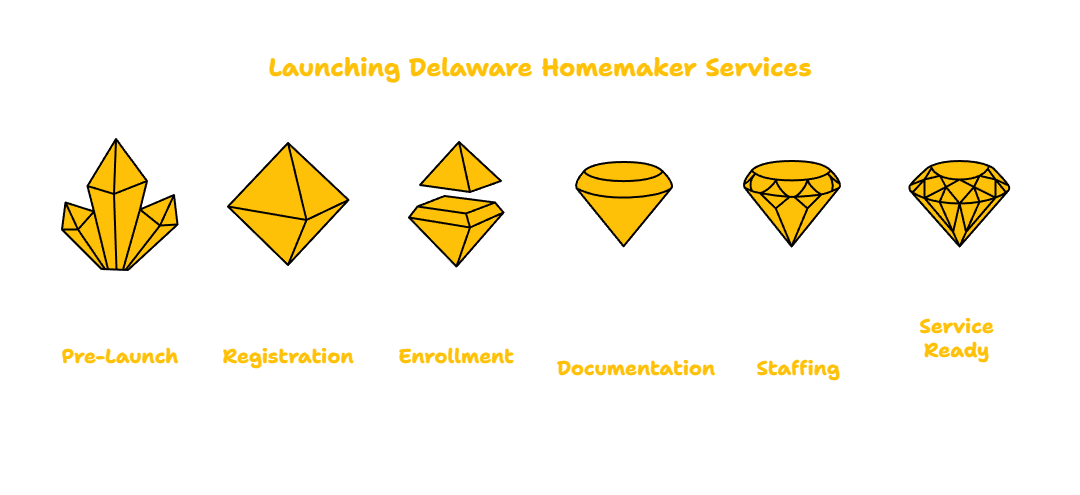
The path to becoming an approved Homemaker Services provider is a formal process that begins with establishing a legally recognized business entity. Prospective providers must first register their business with the Delaware Division of Corporations. Once the business entity is established, obtaining an Employer Identification Number (EIN) from the IRS and a Type 2 National Provider Identifier (NPI) is essential for administrative and billing purposes. These are the foundational credentials required for any entity seeking to participate in Delaware’s healthcare marketplace.
Beyond basic business registration, agencies must demonstrate their capacity to deliver services safely and effectively. This involves enrolling through the Delaware Medical Assistance Portal (DMAP) for general Medicaid provider status and, if applicable, the specific DDDS Lifespan Waiver application. Prospective providers must be prepared to carry sufficient liability insurance, implement robust HIPAA-compliant recordkeeping systems, and demonstrate strict adherence to DDDS or DSAAPD policy requirements regarding non-medical service delivery.
Implementing Required Documentation and Operational Policies
Successful provider agencies distinguish themselves through organized, comprehensive documentation. A formal policy and procedure manual is not merely a suggestion; it is a critical component of the audit process. This manual must explicitly outline how the agency handles client intake, staff scheduling, and task verification to ensure that every hour of service is accounted for correctly. Agencies must also have clear, written protocols regarding HIPAA compliance, client confidentiality, and the secure management of sensitive personal information.
In addition to standard operational policies, agencies must maintain detailed internal systems for monitoring quality and safety. This includes having structured cleaning and safety checklists for staff to use in the home, clear emergency contact procedures, and a formal process for incident reporting and grievance responses. Documentation must also include service verification logs, which serve as the primary audit trail for billing support and demonstrate to state agencies that the services authorized in a client's Individualized Support Plan (ISP) were actually performed.
Staffing, Training, and Professional Readiness
The quality of a Homemaker Services agency is ultimately defined by the competency of its staff. Whether hiring homemakers or scheduling coordinators, agencies must ensure all employees undergo rigorous background checks and health screenings, such as TB testing. While a high school diploma or equivalent is recommended for frontline staff, the most vital requirements are specific training in non-medical support, empathy in client interaction, and the ability to maintain professional boundaries in a home setting.
Training curricula for all staff members should be comprehensive and address the unique risks of working in residential settings. Mandatory training modules typically include:
- HIPAA compliance and the protection of client privacy.
- Abuse prevention and the legal obligations of mandatory reporting.
- Infection control and proper sanitation practices to prevent the spread of illness.
- The safe and appropriate use of household cleaning products to protect both the client and the worker.
- Protocols for incident documentation and a thorough understanding of client rights and advocacy.
Frequently Asked Questions
What is the primary difference between Homemaker Services and Personal Care Services?
Homemaker Services focus exclusively on the maintenance of the home environment through non-medical household tasks. In contrast, Personal Care Services typically involve direct, "hands-on" assistance with Activities of Daily Living (ADLs), such as bathing, grooming, dressing, and mobility assistance.
How long does the provider enrollment process usually take?
While timelines can vary based on the completeness of your application and current state capacity, the Medicaid or DDDS enrollment phase generally takes between 30 and 60 days. It is advised to ensure all business registration and NPI requirements are completed prior to submitting these applications.
Do I need separate certifications for the Lifespan Waiver versus DSAAPD programs?
Yes, while the core business requirements remain similar, the enrollment process and specific service delivery contracts may differ between DDDS and DSAAPD. Prospective providers should coordinate directly with the relevant agency to ensure they meet the specific contracting and provider requirements for each program they intend to serve.
Key Takeaway
Launching a successful Homemaker Services agency in Delaware requires a blend of rigorous administrative preparation, strict adherence to state policy, and a commitment to staff training. By aligning your business structure with the requirements of the DDDS, DSAAPD, and DMAP, and by maintaining precise documentation and incident reporting systems, your agency can reliably provide the non-medical support that is vital for the health, safety, and independence of Delaware’s most vulnerable populations.
Last verified: 2024. The information provided in this article is for educational purposes only and does not constitute legal or professional advice. Always consult with the Delaware Division of Developmental Disabilities Services (DDDS) and the Division of Services for Aging and Adults with Physical Disabilities (DSAAPD) for the most current regulatory requirements and enrollment guidelines.