HOMEMAKER SERVICES PROVIDER IN CALIFORNIA
By Fatumata Kaba · 2025-07-06 · 6 min read
SUPPORTING DAILY LIVING INDEPENDENCE THROUGH NON-MEDICAL IN-HOME ASSISTANCE FOR INDIVIDUALS WITH DISABILITIES
Homemaker Services in California are specialized non-medical supports designed to assist individuals with developmental disabilities, chronic health conditions, or age-related needs in maintaining a sanitary, safe, and stable home environment. By providing essential assistance with household maintenance and meal preparation, these services enable participants to live more independently within their own homes, reducing the need for institutional care and aligning with the principles of person-centered support.
What Are the Governing Agencies and Regulatory Oversight for Homemaker Services?
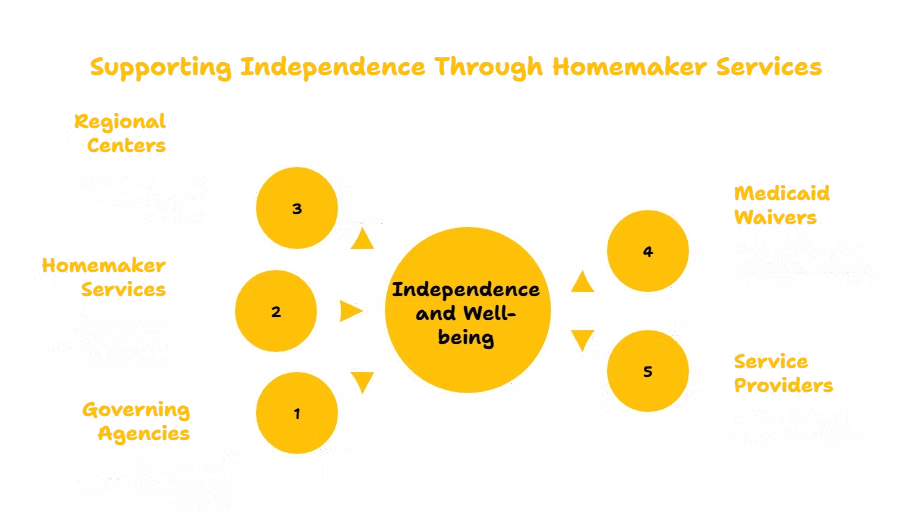
The delivery of Homemaker Services in California is governed by a multi-layered regulatory framework. At the state level, the California Department of Developmental Services (DDS) holds the primary mandate for overseeing the delivery of these services, primarily through the 21 private, non-profit Regional Centers located throughout the state. Regional Centers act as the direct point of contact for service authorization, vendorization, and ongoing quality assurance monitoring.
Beyond the DDS, the California Department of Health Care Services (DHCS) maintains oversight of Medi-Cal programs, which often fund the underlying waiver supports that make these services accessible. On a federal level, the Centers for Medicare & Medicaid Services (CMS) provide essential oversight for all waiver-based programs, ensuring that states adhere to federal standards regarding participant safety, choice, and service quality. Understanding these hierarchies is essential for any provider seeking to maintain long-term compliance.
What Scope of Work is Included in Homemaker Services?
Homemaker Services are strictly non-medical in nature and focus on the functional, environmental needs of the client as outlined in their Individual Program Plan (IPP) or Person-Centered Plan (PCP). These services are designed to supplement the individual's existing abilities, ensuring that the living environment remains conducive to health and well-being. Providers must ensure that all staff understand the boundaries of the service, as medical care or intensive personal assistance typically fall under different service categories.
Approved tasks that a provider may perform include:
- Light housekeeping, including vacuuming, mopping, dusting, and general tidying of living areas.
- Kitchen sanitation, such as dishwashing, cleaning countertops, and disposing of trash.
- Laundry management, including washing, drying, folding, and changing linens.
- Grocery shopping and assistance with putting away food items.
- Meal preparation and post-meal cleanup.
- Documentation of service delivery and regular reporting on the condition of the home.
What Are the Licensing and Provider Approval Requirements?
To operate as a formal Homemaker Services provider, an organization must navigate both general business registration and specific human service mandates. Initially, the business must be legally established with the California Secretary of State and obtain the necessary federal identifiers, including an Employer Identification Number (EIN) and a Type 2 National Provider Identifier (NPI). This foundational step ensures the organization is recognized by state and federal tax and health authorities.
Once the business entity is established, the provider must obtain authorization to bill for services. This is typically achieved by enrolling as a vendor with a local Regional Center under a specific Service Code, such as 520. Alternatively, providers may join the Self-Determination Program (SDP) by affiliating with a Financial Management Services (FMS) entity. Throughout this process, the agency must maintain appropriate liability insurance, implement rigorous worker screening protocols, and develop clear internal policies for entering private homes safely and professionally.
How Do You Navigate the Regional Center Vendorization Process?
The vendorization process is a structured sequence intended to ensure that providers are prepared to meet the needs of the developmental disability community. The process begins by contacting the local Regional Center that covers your primary service area to request a specific vendor application packet. This packet outlines the localized requirements, which can vary slightly between the 21 Regional Centers, so it is vital to adhere strictly to the guidelines provided by your specific regional office.
Following the submission of the application, the provider must present a comprehensive service description. This document must clearly articulate staff qualifications, training protocols, standardized task lists, and detailed policies regarding safety and privacy. Once the documentation has been reviewed and the agency has passed any necessary site visits or procedural audits, the Regional Center will issue a vendor number. Only after this number is issued can the agency begin accepting referrals directly from service coordinators.
What Documentation and Staffing Standards Must Be Met?
A high standard of documentation is the cornerstone of a successful Homemaker Services agency. Providers are required to maintain an organized administrative file that includes, at minimum, articles of incorporation, an IRS EIN letter, NPI confirmation, and valid certificates of insurance. Furthermore, a robust policy and procedure manual must be established, covering critical areas such as infection control, emergency contact procedures, grievance policies, and client confidentiality. These manuals serve as the agency’s blueprint for maintaining compliance during future audits.
Staffing requirements are equally stringent to ensure the safety of the clients served. Every staff member should possess, at a minimum, a high school diploma or equivalent, a clear background check (Live Scan), and proof of a negative TB test. Initial and ongoing training for staff must focus on home safety, professional boundaries, disability awareness, and abuse prevention. By maintaining high training standards, providers ensure that their personnel are not only skilled in cleaning and household support but are also capable of interacting respectfully and safely with individuals who may have complex support needs.
Frequently Asked Questions
Can Homemaker Services include medical or personal care tasks?
No, Homemaker Services are strictly limited to non-medical household maintenance. Tasks that involve direct physical care or medical administration require separate authorization and are generally categorized under different service codes or waiver programs.
How long does the startup and vendorization process take?
The timeline for launching is multi-phased. Business formation generally takes 1–2 weeks, while Regional Center vendorization or SDP onboarding is a more intensive process that typically takes between 30 and 90 days. Staff recruitment and training generally add another 2–4 weeks to the timeline.
Where can I find support for navigating these requirements?
Resources for potential providers can be found through the California Department of Developmental Services (DDS) website, which provides information on Regional Center lookup and the Self-Determination Program. Additionally, professional consulting services are available to assist with the setup of business documentation, policy manuals, and audit-ready systems.
Key Takeaway
Launching a Homemaker Services agency in California requires careful attention to both business administrative requirements and the specialized standards set by the Department of Developmental Services. Success is built upon a foundation of clear, documented policies, thorough staff training, and strong coordination with Regional Centers or FMS entities to ensure that services remain focused on the independence and safety of the individuals supported.
WAIVER CONSULTING GROUP'S START-UP ASSISTANCE SERVICE — CALIFORNIA HOMEMAKER SERVICES PROVIDER. We help new and existing providers launch fully compliant Homemaker Services under California’s Regional Center system and Self-Determination Program. Scope of Work: Business registration (LLC, EIN, NPI); Regional Center vendorization or SDP enrollment with FMS; Policy & procedure manual for in-home support and safety; Templates for task checklists, daily logs, and client feedback; Website, domain, and email setup; Staff credentialing trackers and supervision logs; Client intake packet, consent forms, and grievance tools; Incident reporting systems and audit preparation tools; Referral networking with support coordinators and disability organizations.
Last verified: October 2023. Disclaimer: This information is for educational purposes only and does not constitute legal or professional advice. Always verify current state regulations and Regional Center requirements directly with the appropriate governing agencies before launching or modifying your service operations.