HOMEMAKER SERVICES PROVIDER IN ARKANSAS
By Fatumata Kaba · 2025-07-04 · 5 min read
Homemaker Services in Arkansas provide essential, non-medical support designed to assist individuals with disabilities in maintaining a safe, sanitary, and functional home environment. By delivering routine household assistance, these services empower participants under the Community and Employment Supports (CES) Waiver to preserve their independence and avoid unnecessary institutionalization.
For entrepreneurs and healthcare agencies looking to enter the Home and Community-Based Services (HCBS) market, establishing a Homemaker Services program requires rigorous adherence to state and federal standards. Success in this sector depends on navigating the regulatory framework established by the Arkansas Department of Human Services (DHS) and the Division of Developmental Disabilities Services (DDS).
Navigating the Regulatory Landscape and Governing Agencies
The provision of Homemaker Services is governed by a multi-tiered regulatory structure that ensures quality of care and fiscal accountability. Providers must interact with several key agencies to maintain compliance. The Arkansas Department of Human Services (DHS) serves as the umbrella organization, while the Division of Developmental Disabilities Services (DDS) oversees the specific requirements for the CES Waiver, including provider approval and ongoing monitoring of service delivery.
In addition to state-level oversight, the Division of Medical Services (DMS) manages Medicaid provider enrollment and reimbursement processes. At the federal level, the Centers for Medicare & Medicaid Services (CMS) sets the overarching standards for HCBS waivers to ensure that Arkansas’s programs remain consistent with federal mandates. Understanding the distinct roles of these agencies is critical for any agency administrator, as it dictates the audit trails and compliance markers required for successful operation.
- Arkansas Department of Human Services (DHS) – Division of Developmental Disabilities Services (DDS): Responsible for approving providers and monitoring service delivery.
- Arkansas Medicaid / Division of Medical Services (DMS): Manages provider enrollment and processes claims for reimbursement.
- Centers for Medicare & Medicaid Services (CMS): Ensures that the state waiver program complies with federal HCBS requirements.
Defining the Scope of Homemaker Services
Homemaker Services focus strictly on the environment rather than the person. The goal is to provide routine household tasks that an individual is unable to perform independently due to their disability. By ensuring a clean, organized, and safe living space, these services play a vital role in reducing the risk of accidents and fostering a higher quality of life for participants. Approved providers must ensure that all staff members are trained to perform these tasks with a focus on client autonomy and household safety.
Providers are authorized to perform a variety of duties that directly impact the participant's living conditions. These typically include light housekeeping, such as dusting, sweeping, and laundry. Additionally, services may include non-medical meal preparation and cleanup, assistance with necessary grocery shopping, bed-making, and basic trash removal. Every task performed must be documented accurately to verify the service provided and ensure participant satisfaction.
- Light housekeeping duties including dusting, sweeping, and vacuuming.
- Laundry services, including washing, drying, and putting away clothing and linens.
- Non-medical meal preparation and related kitchen cleanup.
- Assistance with essential grocery shopping and local errands.
- Basic home organization and trash removal.
Establishing Your Agency: Licensing and Provider Enrollment
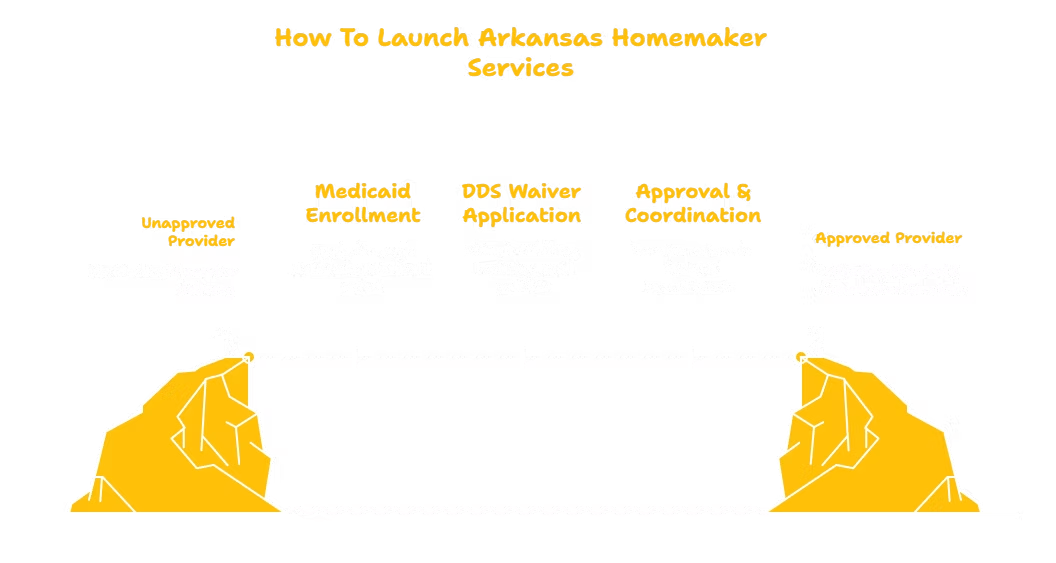
The process of becoming an approved Homemaker Services provider in Arkansas is a sequential undertaking that begins with foundational business registration. Prospective agencies must register their business with the Arkansas Secretary of State, secure an Employer Identification Number (EIN) from the IRS, and obtain a Type 2 National Provider Identifier (NPI). These administrative prerequisites form the backbone of the agency's legal and financial identity.
Once business formation is complete, the focus shifts to the formal enrollment process. This involves submitting the CES Waiver Provider Application to DDS and completing the comprehensive Medicaid provider enrollment process through the Arkansas Medicaid Portal. Agencies must be prepared to submit detailed documentation, including staffing plans, training protocols, and internal policies that outline participant rights, home safety procedures, and confidentiality measures.
Staffing, Training, and Quality Assurance
The quality of Homemaker Services depends heavily on the competence and reliability of direct support staff. Because these employees enter private homes, they must undergo stringent background checks, including clearance through the Adult and Child Maltreatment Registry. Prospective staff should possess at least a high school diploma or GED, and certification in CPR and First Aid is a mandatory standard of practice.
Training programs must be robust, focusing not only on technical housekeeping skills but also on the unique needs of individuals with developmental disabilities. Staff should be trained in infection control, the proper handling of chemical cleaning agents, and the maintenance of client confidentiality. Annual training requirements ensure that staff stay current with documentation standards, incident reporting protocols, and the ethical considerations involved in working with vulnerable populations.
- Minimum Education: High school diploma or GED.
- Safety Credentials: Current CPR and First Aid certification.
- Background Checks: Mandatory clearance of state and federal background checks and maltreatment registries.
- Annual Training: Ongoing instruction in safety, infection control, and privacy standards.
Frequently Asked Questions
What waivers cover Homemaker Services in Arkansas?
Homemaker Services are primarily authorized under the Community and Employment Supports (CES) Waiver. While other programs like the ARChoices in Homecare Waiver also provide in-home support, they operate under distinct guidelines and separate eligibility criteria.
What is the typical timeline for launching a provider agency?
The launch process generally spans several months. Business formation takes roughly 1–2 weeks, followed by a 45–90 day window for Medicaid and CES Waiver enrollment. Hiring and training typically require 30–45 days, with service launch and referral coordination finalized within an additional 2–4 weeks.
How are referrals received once the agency is approved?
After achieving approved provider status, the agency becomes eligible to receive service referrals from DDS Support Coordinators. These coordinators manage the Individualized Service Plans (ISP) for participants and align necessary services with approved provider agencies in the area.
Key Takeaways for Prospective Providers
Launching a Homemaker Services agency in Arkansas is a highly regulated endeavor that necessitates meticulous planning and strict adherence to DHS and DDS requirements. Success depends on maintaining clean, auditable documentation, investing in rigorous staff training, and fostering strong professional relationships with state Support Coordinators. By focusing on compliant administrative practices and quality service delivery, agencies can effectively support the independence of individuals with developmental disabilities while building a sustainable, mission-driven organization.
Last verified: October 2023. This information is intended for educational purposes and should not be considered legal or professional regulatory advice. Always consult directly with the Arkansas Department of Human Services (DHS) and current state policy manuals for the most accurate, up-to-date requirements.