HOME MODIFICATIONS SERVICES PROVIDER IN MONTANA
By Fatumata Kaba · 2025-08-06 · 5 min read
Understanding Home Modification Services in the Montana Medicaid Framework
Home Modification Services in Montana represent a critical component of the state’s Home and Community-Based Services (HCBS) waiver programs, designed to facilitate aging in place and independent living for individuals with disabilities. By providing structural adaptations and specialized equipment, these services allow participants to navigate their living environments safely, effectively reducing the need for institutional care while promoting autonomy.
For service providers, entering this market requires a deep understanding of the regulatory landscape managed by the Montana Department of Public Health and Human Services (DPHHS) and the Developmental Disabilities Program (DDP). Successfully delivering these services involves balancing construction expertise with strict Medicaid compliance standards to ensure that every modification is medically necessary, person-centered, and aligned with the participant's Individualized Service Plan (ISP).
How Are Home Modification Services Governed and Regulated?
The provision of home modifications is overseen by a multi-tiered regulatory structure that ensures public funding is used appropriately to meet clinical needs. At the state level, the Montana DPHHS serves as the primary authority, managing provider enrollment, service authorization, and reimbursement protocols. Within DPHHS, the Developmental Disabilities Program (DDP) acts as the operational lead, ensuring that services provided are of high quality, protect the participant, and comply with state-specific mandates.
At the federal level, the Centers for Medicare & Medicaid Services (CMS) provides oversight to ensure that Montana’s waiver programs remain consistent with national HCBS quality standards. This includes adherence to person-centered planning requirements, which mandate that all structural changes must be directly tied to the participant's specific functional limitations and documented within their ISP. Providers must operate within these federal guardrails, maintaining rigorous documentation and safety standards to remain in good standing.
What Types of Modifications Are Approved for Medicaid Waiver Participants?
Approved home modifications are strictly limited to those that address the mobility, accessibility, or safety needs of the participant as identified by a professional assessment. These modifications are not intended for home aesthetic improvements but for functional outcomes that allow the individual to live safely in the community. Authorized services generally fall into several key categories of environmental intervention.
- Accessibility Improvements: Installation of exterior and interior ramps, widening of doorways to accommodate wheelchairs, and the mounting of sturdy handrails.
- Bathroom Modifications: Development of roll-in showers, installation of grab bars, raised toilet seats, and accessible sinks to facilitate hygiene.
- Kitchen Adjustments: Lowering countertops, modifying cabinetry for accessible storage, and adapting appliances for ease of use.
- Safety and Environmental Controls: Installation of safety alarms, improved lighting, slip-resistant flooring, and smart home technologies that manage lighting, temperature, and home security.
- Structural Changes: Adjusting room layouts, hallways, and flooring transitions to create barrier-free living environments.
What Are the Prerequisites for Medicaid Provider Enrollment?
Becoming an authorized Medicaid Home Modification provider in Montana is a structured process that begins with legal and operational readiness. Before initiating the state enrollment portal process, an agency must be properly registered with the Montana Secretary of State as a business entity. This serves as the foundation for obtaining an Employer Identification Number (EIN) from the IRS and a Type 2 National Provider Identifier (NPI), both of which are mandatory for billing and identification purposes.
Beyond basic business identity, the agency must demonstrate technical competence and financial responsibility. This includes obtaining necessary contractor licenses from the Montana Department of Labor and Industry, as the nature of the work often triggers state-level construction regulations. Furthermore, agencies must maintain comprehensive general and professional liability insurance policies. Developing a robust Policy and Procedure Manual that covers project planning, contractor vetting, and quality assurance is an essential prerequisite for passing the DPHHS readiness review.
How Do Providers Successfully Navigate the Enrollment Process?
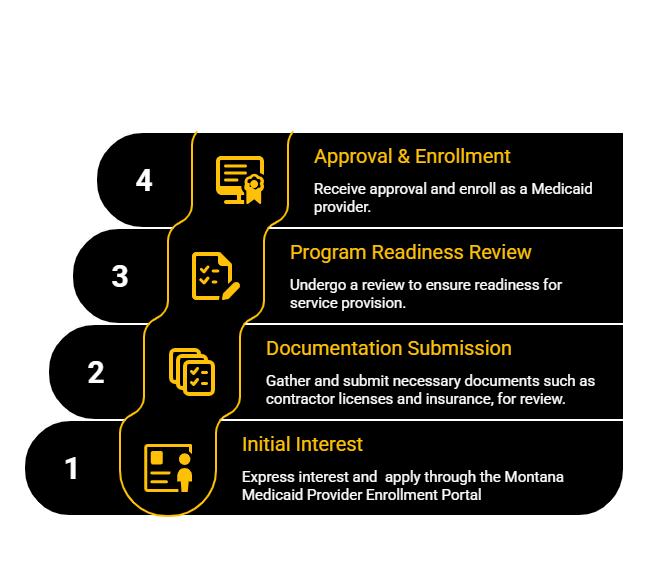
The transition from a business entity to an active Medicaid provider involves a phased application and review process. Providers begin by submitting an application through the Montana Medicaid Provider Enrollment Portal specifically designated for HCBS waiver services. This submission must be accompanied by all foundational documentation, including Articles of Incorporation, proof of NPI and EIN, current contractor licenses, and certificates of insurance.
Following the submission, the DPHHS conducts a program readiness review. This step is designed to evaluate the agency’s capacity to handle the sensitive nature of working within private residences of vulnerable populations. DPHHS will assess the provider’s protocols for project tracking, safety management, and subcontractor oversight. Upon successful review and approval, the provider is authorized to begin billing Medicaid using specific program codes. Maintaining this status requires ongoing audit readiness and adherence to documentation standards for every modification completed.
What Are the Essential Staffing and Competency Requirements?
A high-functioning home modification program relies on a mix of administrative oversight and technical construction skill. At the leadership level, a Program Director is typically required to oversee the coordination of projects, ensuring they align with healthcare administration standards and accessibility needs. This role often requires a background in construction management or a related healthcare field, emphasizing the intersection of home modification and clinical care.
Technical staff and contractors must hold state-specific licenses and have documented experience with accessibility-focused projects. Many successful programs utilize professionals with certifications like the Certified Aging-in-Place Specialist (CAPS) to ensure modifications are evidence-based. All personnel, regardless of their role, must undergo consistent training on HIPAA privacy regulations, participant rights, safety management, and the specific risk protocols inherent in working within a home-based environment. This investment in human capital is vital for ensuring long-term program compliance.
Frequently Asked Questions
Which Medicaid waivers currently cover home modifications in Montana?
Home modifications are covered under several programs, including the Big Sky Waiver (Aged and Disabled), the Comprehensive Waiver for Individuals with Developmental Disabilities, the Traumatic Brain Injury (TBI) Waiver, the Community Supports Waiver for Adults with Physical Disabilities, and the Children's Autism Waiver.
What documentation is required for each modification project?
Providers must maintain comprehensive records, including the original assessment justifying the need, the specific project plan, contractor credentials, building code compliance certificates, and evidence of client satisfaction upon project completion.
How long does the provider enrollment process typically take?
The end-to-end timeline can take several months, with the Medicaid Provider Enrollment and Readiness Review phase alone typically requiring 60 to 90 days, followed by an additional 30 to 45 days for billing system setup.
Key Takeaway
Establishing a Home Modification Services agency in Montana requires a rigorous commitment to both state licensing requirements and Medicaid-specific quality standards. By focusing on detailed documentation, qualified staffing, and strict adherence to the ISP process, providers can effectively bridge the gap between architectural accessibility and participant independence, ensuring that individuals across Montana's waiver programs can thrive in their own homes.
Last verified: October 2023. This content is for informational purposes only and does not constitute legal or professional advice. Always consult with the Montana Department of Public Health and Human Services (DPHHS) and relevant state regulatory boards for the most current rules, regulations, and program requirements.