HOME MODIFICATION SERVICES PROVIDER IN WEST VIRGINIA
By Fatumata Kaba · 2026-04-14 · 6 min read
Home Modification Services in West Virginia are critical infrastructure components designed to support individuals with disabilities or aging-related limitations to remain safely in their own homes. By providing essential physical adaptations—such as wheelchair ramps, accessible bathing facilities, and structural modifications—these services facilitate community-based living and prevent unnecessary institutionalization. This service line is managed through various Medicaid Home and Community-Based Services (HCBS) waiver programs, requiring providers to maintain strict compliance with state regulations and clinical authorization standards.
How Do West Virginia Medicaid Waivers Support Home Modifications?
In West Virginia, the provision of home modifications is primarily authorized through specific HCBS waiver programs, including the Intellectual/Developmental Disabilities (I/DD) Waiver, the Aged and Disabled Waiver (ADW), and the Traumatic Brain Injury Waiver (TBIW). These programs recognize that a person’s ability to thrive in a community setting is often dictated by the accessibility of their living environment. When a participant’s needs exceed basic household configurations, the waiver allows for permanent or semi-permanent changes that bridge the gap between their current home environment and their specific physical requirements.
The authorization process is heavily regulated to ensure that all modifications are medically necessary and directly tied to the participant’s disability. Before any work begins, the requested adaptations must be integrated into the participant’s Individualized Service Plan (ISP). This plan is reviewed and authorized by Acentra Health (formerly Kepro), which acts as the utilization review entity for the state. Providers must ensure that every project proposal clearly justifies how the modification will increase the participant’s safety, independence, or accessibility within the home.
What Are the Roles of State Agencies in Overseeing These Services?
Navigating the regulatory landscape of West Virginia Medicaid requires a clear understanding of the roles played by various governing bodies. The West Virginia Department of Health and Human Resources (WVDHHR) serves as the overarching entity, responsible for setting program policy, monitoring provider compliance, and determining individual eligibility for waiver services. Their oversight ensures that services are delivered in accordance with state and federal regulations governing long-term care supports.
Operational administration is handled by the Bureau for Medical Services (BMS), which manages the financial aspects of the waiver programs, including Medicaid funding, claims processing, and the formal enrollment of service providers. When a provider enters the marketplace, they do so through Gainwell Technologies, which acts as the fiscal agent for the state. Furthermore, Acentra Health facilitates the authorization workflow, serving as the critical link between the clinical needs of the participant and the financial authorization of the home modification project.
What Are the Essential Steps for Becoming an Approved Provider?
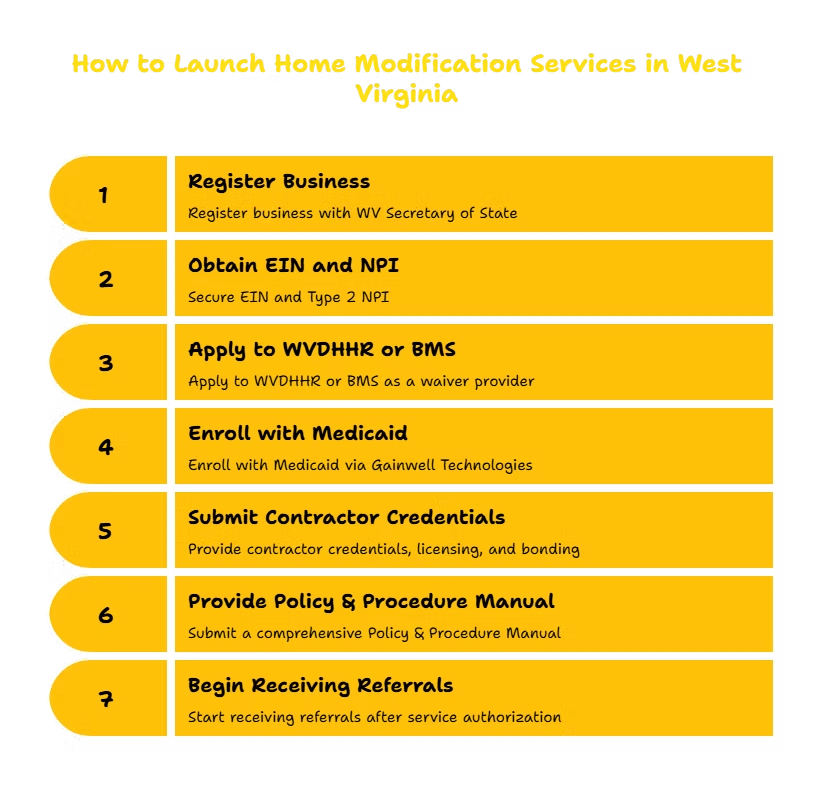
Becoming an approved Medicaid Home Modification provider in West Virginia is a multi-phased process that requires administrative rigor. A potential provider must first establish a legal business entity, register with the West Virginia Secretary of State, and obtain a Federal Employer Identification Number (EIN) and a Type 2 National Provider Identifier (NPI). These credentials form the foundation for all subsequent Medicaid enrollment applications processed through the Gainwell Technologies portal.
Beyond standard business registration, providers must demonstrate technical competency and regulatory readiness. This includes submitting comprehensive documentation related to contractor licensing, proof of liability insurance, and bonding requirements. The state also requires the submission of a detailed Home Modification Services Policy & Procedure Manual, which must articulate the provider’s internal processes for project estimation, ADA compliance, worksite safety, and the resolution of client grievances. Once these materials are reviewed and accepted, the provider enters the enrollment phase, eventually gaining the status necessary to receive referrals from case managers.
What Specific Modifications and Standards Must Providers Follow?
Home modifications must be executed with precision, adhering strictly to local building codes, Americans with Disabilities Act (ADA) guidelines, and the specific cost caps established within the waiver policy. Providers are expected to assess the participant’s home environment and recommend adaptations that are practical, durable, and directly related to the limitations identified in the clinical assessment. Projects that fall outside these scope requirements or fail to meet building standards are subject to denial or non-payment.
- Wheelchair ramps and permanent stair lifts.
- Widened doorways and hallways to accommodate mobility equipment.
- Installation of roll-in showers or accessible bathtubs.
- Mounting of grab bars and structural handrails in high-risk areas.
- Lowering of countertops and sinks for wheelchair accessibility.
- Bathroom and kitchen adaptations tailored to specific physical needs.
- Integration of environmental controls, such as voice-activated or remote-controlled systems.
- Specialized lighting, alarms, or alerts for sensory impairments.
- Minor structural modifications necessary to support durable medical equipment (DME).
What Are the Staffing and Documentation Requirements for Compliance?
The quality of service delivery relies on a qualified team capable of balancing construction excellence with the sensitivity required in a home-based care environment. Every project must be led by a licensed contractor who possesses a deep understanding of accessibility standards. Additionally, the role of a project manager or estimator is vital for coordinating site assessments, securing materials, and maintaining open communication with case managers to ensure the project remains within the authorized scope and budget.
Documentation is the primary mechanism for proving compliance during audits. Providers are required to maintain exhaustive records, including project estimates, evidence of worksite safety protocols, and client sign-off forms upon completion. Staff must undergo rigorous training, covering topics such as HIPAA compliance, confidentiality, and the specific expectations of the Medicaid waiver programs. Maintaining these records in an organized, easily retrievable format is essential for meeting the ongoing oversight requirements of the WVDHHR and the Bureau for Medical Services.
Frequently Asked Questions
How long does the provider enrollment process typically take?
The timeline for launching as a Home Modification provider varies based on administrative readiness. Business registration and licensing generally take 2–4 weeks, while Medicaid and waiver enrollment can take 1–2 months. Developing the required policy and procedure documentation typically spans 30–45 days. Service operations officially begin following authorization and formal referral from a case manager or service coordinator.
Do I need a specific contractor license to provide these services?
Yes, all entities providing home modifications must hold a valid West Virginia contractor license. Providers must also maintain current liability insurance and bonding documentation as required by the state. These credentials must be verified and submitted during the Medicaid provider enrollment process with Gainwell Technologies.
What happens if a home modification project exceeds the waiver cost cap?
All home modifications must adhere to the specific financial limits and cost caps outlined in the applicable waiver policy. Providers should work closely with the participant’s service coordinator and Acentra Health during the planning and estimation phase to ensure the proposed work stays within allowable budget thresholds. If a project exceeds these caps, it may not be authorized for reimbursement.
Key Takeaway: Successfully operating as a Medicaid Home Modification provider in West Virginia requires strict adherence to administrative filing, clinical justification for modifications, and ongoing compliance with state-mandated documentation standards. Providers must prioritize the alignment of their construction expertise with the specific regulatory frameworks of the I/DD, ADW, and TBIW waiver programs to ensure sustainable and reimbursable service delivery.
Last verified: 2024. This content is provided for informational purposes only and does not constitute legal or professional advice. Always consult the official West Virginia Department of Health and Human Resources (WVDHHR) and Bureau for Medical Services (BMS) policy manuals for the most current regulations and guidance regarding HCBS provider requirements.