HOME MODIFICATION SERVICES PROVIDER IN OKLAHOMA
By Fatumata Kaba · 2025-09-08 · 6 min read
Home Modification Services in Oklahoma are a critical component of the state’s Home and Community-Based Services (HCBS) ecosystem, providing essential structural adaptations that enable individuals with disabilities, chronic illnesses, and age-related needs to remain safely in their own homes. By facilitating access to modifications such as wheelchair ramps, roll-in showers, and widened doorways, these services fulfill the core mission of Medicaid waivers to support independence and prevent unnecessary institutionalization.
What is the Scope of Home Modification Services in Oklahoma?
At its core, the home modification benefit—often referred to as Environmental Accessibility Adaptations (EAA)—is designed to remove physical barriers that limit a participant's ability to function independently within their living environment. These services are not merely cosmetic; they are medically necessary interventions that bridge the gap between a participant's physical limitations and their home’s architecture. By improving navigation and safety, providers help reduce the risk of falls and other home-based health incidents.
Approved providers deliver a comprehensive range of interventions tailored to the unique, person-centered needs of each waiver participant. The process typically begins with a professional home assessment conducted in collaboration with occupational therapists, physical therapists, or environmental specialists. From there, providers move into the structural phase, which may include the installation of accessibility hardware, the renovation of bathrooms for mobility, or the exterior modification of entryways to ensure a safe path of travel for those using mobility aids.
- Initial Home Assessments: Collaborative evaluation with case managers and clinicians to identify functional deficits.
- Structural Modifications: Installation of wheelchair ramps, widening of doorways, and configuration of roll-in showers.
- Safety Improvements: Mounting of grab bars and handrails, application of non-slip flooring, and setup of emergency alert systems.
- Accessibility Enhancements: Lowering countertops and installing adaptive cabinetry for increased user agency.
- Documentation and Compliance: Detailed record-keeping including bids, progress photos, and post-installation inspections to verify adherence to state building codes.
Which Governing Agencies Oversee These Programs?
Operating as a home modification provider in Oklahoma requires navigating a multi-layered regulatory environment. The Oklahoma Health Care Authority (OHCA) serves as the primary administrative body for SoonerCare, which is the state's Medicaid program. OHCA manages the critical functions of provider enrollment and the processing of financial reimbursements for all approved waiver services, ensuring that billing practices remain consistent with federal and state mandates.
In addition to the OHCA, the Oklahoma Department of Human Services (OKDHS)—specifically through its Aging Services and Developmental Disabilities Services (DDS) divisions—plays a direct role in the day-to-day administration of waiver services. These departments are responsible for approving specific modification requests, coordinating with case managers, and monitoring providers for ongoing compliance with program regulations. At the highest level, the Centers for Medicare & Medicaid Services (CMS) sets the national standards that ensure all services provided in Oklahoma align with federal HCBS guidelines regarding safety, necessity, and person-centered care.
How Do Providers Secure Official Enrollment?
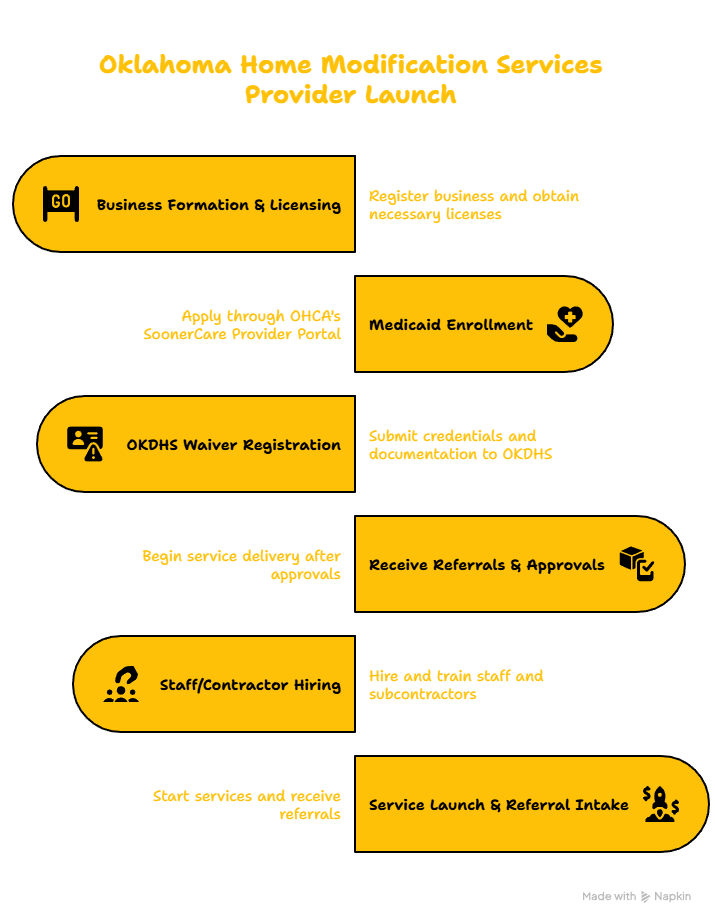
The path to becoming an approved provider begins with establishing a formal, compliant business entity. Founders must register their business with the Oklahoma Secretary of State and obtain the necessary federal identifiers, including an Employer Identification Number (EIN) and a Type 2 National Provider Identifier (NPI). Because home modifications involve structural work, the provider must either possess a valid Oklahoma contractor license or maintain a formal subcontracting agreement with a licensed, insured professional who meets state requirements.
Once the business foundation is laid, the enrollment process proceeds through the SoonerCare Provider Portal. Applicants must select the appropriate service category, typically listed as Environmental Accessibility Adaptations (EAA) or a related waiver-specific designation. During this phase, providers will submit their credentials to the OKDHS for review. This review includes the submission of project portfolios, documentation templates, and proof of required insurance, such as general liability, bonding, and workers' compensation. Only after receiving official authorization from the relevant waiver program can a provider begin accepting referrals and delivering services.
What Are the Essential Documentation and Policy Requirements?
Maintaining a successful and compliant home modification agency requires rigorous administrative oversight. Every provider is expected to maintain a robust Home Modification Services Policy & Procedure Manual. This document acts as the internal blueprint for operations, detailing how the agency handles intake, conducts home assessments, manages competitive bidding, and ensures participant safety during the construction process. It must also outline how the agency will vet subcontractors and ensure they adhere to Medicaid privacy and HIPAA standards.
Operational documentation must be meticulous. Beyond the initial contract and work order, agencies must maintain evidence of work progress, including photo documentation that substantiates the need for and completion of the modifications. Billing logs must accurately reflect the specific services provided under the authorized waiver plan. Finally, the inclusion of warranty and follow-up logs is critical for ensuring long-term accountability, as these records confirm that the work performed remains in good standing and continues to meet the safety requirements of the waiver program.
Staffing and Professional Competency Standards
The quality of service delivery depends on the expertise of the project team. A lead project manager should have verified experience with ADA accessibility codes and a thorough understanding of Medicaid waiver compliance. While the project manager oversees the timeline and budget, they must be supported by individuals—such as occupational or physical therapists—who can provide clinical insights during the assessment phase. This interdisciplinary approach ensures that the modifications are not only structurally sound but also functionally appropriate for the participant.
All staff and subcontractors must be fully trained on the unique demands of the HCBS environment. This goes beyond construction knowledge to include essential soft skills and regulatory training. Specifically, all personnel entering a participant's home must be trained on HIPAA participant privacy protocols, emergency preparedness, and the nuances of working with individuals who may have complex developmental or physical needs. Regular safety and competency training helps mitigate liability and ensures a high standard of care throughout the project lifecycle.
Frequently Asked Questions
How long does the provider enrollment process typically take?
The timeline varies based on the state of your business documentation. Generally, the initial business formation and licensing phase takes 1–2 months, followed by 2–3 months for Medicaid enrollment and OKDHS approval. Preparing your staffing and operational readiness usually adds another 30–60 days before you can begin accepting participant referrals.
What waiver programs are most common for these services?
Home modification services are covered under several key programs, including the ADvantage Waiver for aging adults, the Medically Fragile Waiver, the In-Home Supports Waiver for individuals with intellectual or developmental disabilities, and the Community Waiver (DDS). The Living Choice Program also provides coverage for participants transitioning from institutions back into community settings.
Do I need to be a licensed contractor to enroll?
Yes. You must either hold a valid Oklahoma contractor license yourself or maintain a verifiable subcontracting agreement with a licensed, bonded, and insured contractor who is capable of performing the specific modifications required under the waiver.
Key Takeaways for Prospective Providers
Launching a Home Modification Services agency in Oklahoma requires a dual focus: structural excellence and regulatory compliance. Success is predicated on a well-documented policy manual, clear adherence to OHCA and OKDHS enrollment requirements, and a commitment to professional, interdisciplinary service delivery. By focusing on these administrative foundations, providers can ensure they are fully prepared to support the independence and safety of Medicaid waiver participants across the state.
Last verified: May 2024. This information is intended for educational purposes and does not constitute legal or professional consulting advice. For specific regulatory questions or to begin your provider enrollment journey, please contact the Oklahoma Health Care Authority (OHCA) directly via their official website at https://oklahoma.gov/ohca or reach out to the Oklahoma Department of Human Services (OKDHS) at https://oklahoma.gov/okdhs.