HOME MODIFICATION SERVICES PROVIDER IN OHIO
By Fatumata Kaba · 2025-09-17 · 5 min read
Home Modification Services in Ohio are specialized professional offerings that adapt residential environments to improve the safety, accessibility, and functional independence of individuals with disabilities or aging-related mobility limitations. These services, authorized under Ohio Medicaid Home and Community-Based Services (HCBS) waiver programs, involve complex physical renovations that must adhere to state-specific quality standards and regulatory compliance frameworks.
For entrepreneurs and agencies looking to enter this sector, establishing a provider business requires a blend of construction industry expertise, rigorous administrative oversight, and strict adherence to Medicaid billing protocols. By bridging the gap between clinical needs and physical infrastructure, these providers play a critical role in the long-term support systems designed to keep Ohioans in their homes and out of institutional care settings.
Which Agencies Govern Home Modification Services in Ohio?
The regulatory landscape for home modification services is managed through a multi-agency framework. The Ohio Department of Medicaid (ODM) holds primary authority, overseeing the reimbursement and compliance landscape for all services provided under various Medicaid waiver programs. This ensures that federal dollars are used effectively and that all modifications meet the core requirements of health and safety for the program participants.
For providers serving specific populations, additional departments provide oversight and certification. The Ohio Department of Developmental Disabilities (DODD) is responsible for certifying and monitoring providers who support individuals with intellectual or developmental disabilities (IDD). Meanwhile, the Ohio Department of Aging (ODA) coordinates these services specifically for older adults under the PASSPORT Waiver. Finally, the Centers for Medicare & Medicaid Services (CMS) provides the overarching federal guidance to ensure that all state-led initiatives align with national HCBS quality, safety, and accessibility standards.
What Specific Services Do Approved Providers Deliver?
Home Modification Services are defined by their focus on increasing independence through physical environment changes. Approved providers must offer services that are directly linked to a participant's functional needs, as documented in their individual service plan. These renovations are not merely aesthetic; they are necessity-driven structural adjustments that allow individuals to navigate their living space safely.
- Mobility Enhancements: Installation of ramps, grab bars, stair lifts, widened doorways, and handrails.
- Bathroom Modifications: Construction of roll-in showers, installation of raised toilet seats, and accessible sinks.
- Kitchen Modifications: Adjusting cabinet heights, lowering countertops, and installing adaptive appliances.
- Flooring & Surface Changes: Installing non-slip materials and creating smooth, safe transitions between rooms.
- Door and Lock Modifications: Adding lever handles, electronic security locks, and automatic door openers.
- Environmental Controls: Integrating smart switches, remote-access lighting, and accessible thermostat controls.
- Safety Enhancements: Installing emergency alert systems and implementing comprehensive fall prevention adaptations.
How Do You Meet Licensing and Provider Approval Requirements?
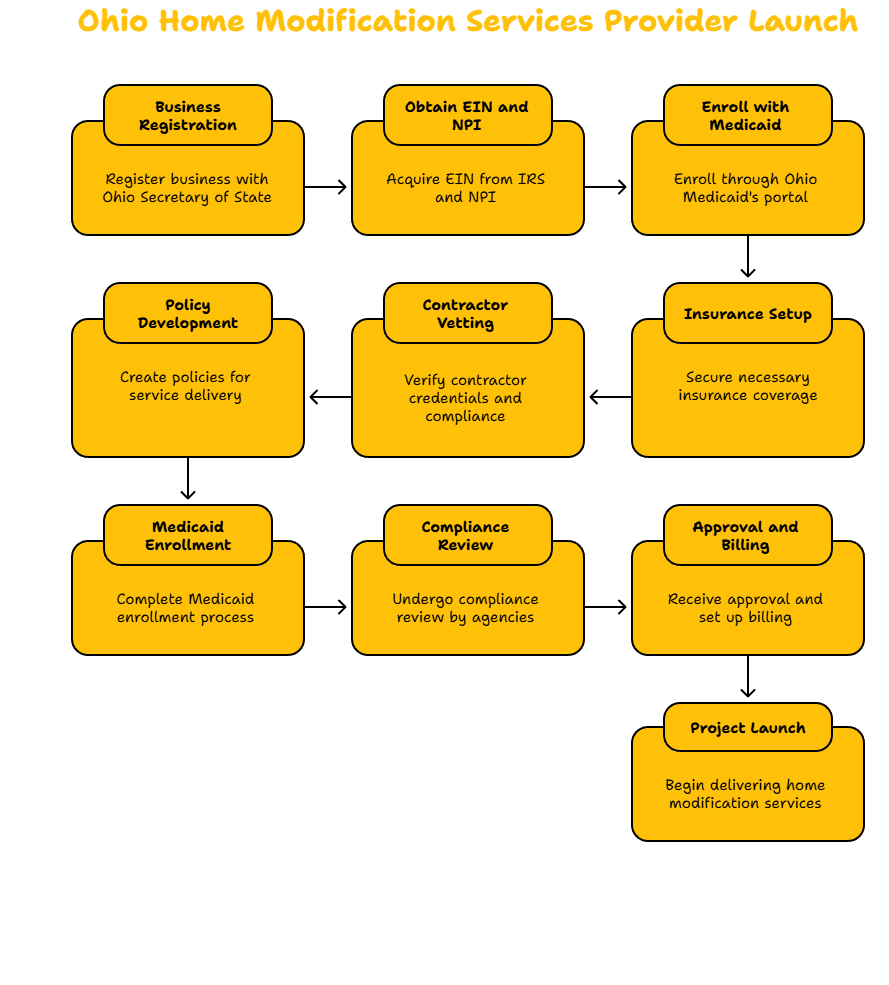
The journey to becoming an approved provider begins with establishing a formal business entity. Providers must register their business with the Ohio Secretary of State and obtain an Employer Identification Number (EIN) from the IRS. Furthermore, obtaining a Type 2 National Provider Identifier (NPI) is essential for billing purposes under the Medicaid system. Once the foundation is laid, agencies must ensure they maintain comprehensive insurance coverage, including general liability, workers’ compensation, and specialized construction-related insurance.
A critical component of this process is contractor management. Agencies must work with licensed contractors who remain in good standing with the Ohio Construction Industry Licensing Board (OCILB). Every project must comply with Americans with Disabilities Act (ADA) standards and local building codes, which necessitates the development of robust internal policies regarding planning, installation quality, and consumer protections. These policies act as the blueprint for how the business interacts with Medicaid oversight bodies.
What is the Process for Ohio Medicaid Provider Enrollment?
Provider enrollment is a sequenced, multi-phase process managed through official portals. Initial applications must be submitted via the Ohio Medicaid Provider Enrollment Portal or through DODD, depending on the specific population the provider intends to serve. During this stage, providers must submit a detailed portfolio of documentation, including business licenses, proof of insurance, contractor credentials, and comprehensive internal policies regarding the delivery of construction services.
Following submission, the state will conduct a compliance review to assess the agency's operational readiness. This involves verifying that the provider has established reliable safety protocols, cost-reasonableness measures, and the infrastructure to deliver complex construction work. Once the application is approved, the agency will receive a Medicaid billing number, which is the final authorization required to begin delivering services and invoicing the state for completed home modifications.
How Do You Maintain Compliance with Documentation and Staffing?
Documentation is the backbone of the Medicaid audit trail. A successful provider must maintain detailed project files that include blueprints, receipts, site photos, and a clear, written justification of how each modification directly supports the participant’s functional independence. These records must be supported by a comprehensive Policy & Procedure Manual, which should detail how the agency handles needs assessments, scope-of-work planning, pre- and post-installation inspections, and HIPAA compliance.
Staffing requirements are equally stringent. A Home Modifications Program Manager is required to possess relevant experience in construction management, rehabilitation services, or occupational therapy. All staff and subcontractors must undergo thorough training regarding participant rights, confidentiality, and safety protocols for construction within occupied residential settings. Regular, documented training sessions ensure that the team remains current on evolving ADA requirements and Medicaid documentation protocols.
Frequently Asked Questions
What types of Medicaid waivers cover home modification services?
Home modification services are available under several programs, including the Individual Options (IO) Waiver, the SELF Waiver, and the Level One Waiver. Additionally, services are provided through the Ohio Home Care Waiver, the PASSPORT Waiver, and MyCare Ohio for dual-eligible adults.
What is the typical timeline for launching a home modification provider agency?
The total timeline generally ranges from 6 to 9 months. Business registration and insurance setup usually take 1–2 months, contractor vetting and policy development require 2–3 months, Medicaid enrollment takes 60–90 days, and final billing setup can take another 30–45 days.
Do I need to be a licensed contractor to start this business?
While an agency administrator does not always need to be a contractor themselves, the agency must have access to or employ licensed contractors in good standing with the Ohio Construction Industry Licensing Board. All physical modifications must be performed by professionals who meet state licensing and insurance requirements.
Key Takeaway
Success as a home modification provider in Ohio relies on the integration of high-quality construction practices with rigid Medicaid administrative compliance. By focusing on detailed documentation, maintaining valid contractor credentials, and staying aligned with the requirements of the Ohio Department of Medicaid and the Ohio Department of Developmental Disabilities, agencies can successfully serve the needs of Ohio’s most vulnerable populations while ensuring long-term operational sustainability.
Last verified: October 2023. Disclaimer: This information is for educational purposes only and does not constitute legal or professional consulting advice. Requirements for Medicaid provider enrollment are subject to change by the Ohio Department of Medicaid, the Ohio Department of Developmental Disabilities, and the Ohio Department of Aging. Please consult official state resources and current administrative codes before initiating any business activities.