HOME MODIFICATION SERVICES PROVIDER IN NEW JERSEY
By Fatumata Kaba · 2025-09-05 · 5 min read
Home Modification Services in New Jersey serve as a critical component of the state’s Medicaid Home and Community-Based Services (HCBS) ecosystem, providing essential structural and adaptive environmental adjustments for individuals with disabilities. By offering specialized installation and design services, approved providers enable program participants to maintain safety, health, and independence within their own residences, ultimately preventing premature institutionalization.
How Do Home Modification Services Impact Medicaid HCBS Participants?
Home Modification Services are designed to transform living environments into spaces that accommodate the specific physical or cognitive needs of Medicaid waiver participants. By bridging the gap between a standard residential layout and the requirements of an individual with mobility challenges, these services significantly reduce the risk of accidents, such as falls, and foster a higher quality of life through increased autonomy.
Authorized providers focus on a wide spectrum of environmental interventions. These range from structural architectural changes—such as widening doorways and hallways to accommodate wheelchairs—to the installation of critical safety equipment like grab bars, stairlifts, and vertical platform lifts. Each modification is strictly dictated by the participant’s Individualized Service Plan (ISP), ensuring that every project is medically necessary and tailored to the unique clinical profile of the individual being served.
- Accessibility Improvements: Installation of ramps, widened doorways, and handrails.
- Bathroom Modifications: Roll-in showers, grab bars, accessible sinks, and raised toilet seats.
- Kitchen Adjustments: Lowered countertops, accessible cabinets, and adapted appliances.
- Safety Enhancements: Installation of safety alarms, improved lighting, and slip-resistant flooring.
- Mobility Aids: Stairlifts, vertical platform lifts, and grab bars.
- Home Automation Integration: Smart home technologies for lighting, temperature, and security management.
Which Agencies Govern Home Modification Services in New Jersey?
The regulatory framework for these services is maintained through a collaborative effort between state and federal oversight bodies. The New Jersey Department of Human Services (DHS) acts as the primary administrator, managing Medicaid waiver funding, provider enrollment, and the critical processes of service authorization and reimbursement. This ensures that the fiscal integrity of the program remains consistent across the state.
In addition to the DHS, the Division of Developmental Disabilities (DDD) holds direct responsibility for ensuring that providers meet stringent quality standards and comply with all HCBS waiver regulations. At the national level, the Centers for Medicare & Medicaid Services (CMS) provides federal oversight. CMS mandates that all state-funded modifications adhere to strict person-centered planning guidelines, participant protection protocols, and accessibility standards, ensuring that state operations remain aligned with federal mandates.
What Are the Essential Requirements for Provider Enrollment?
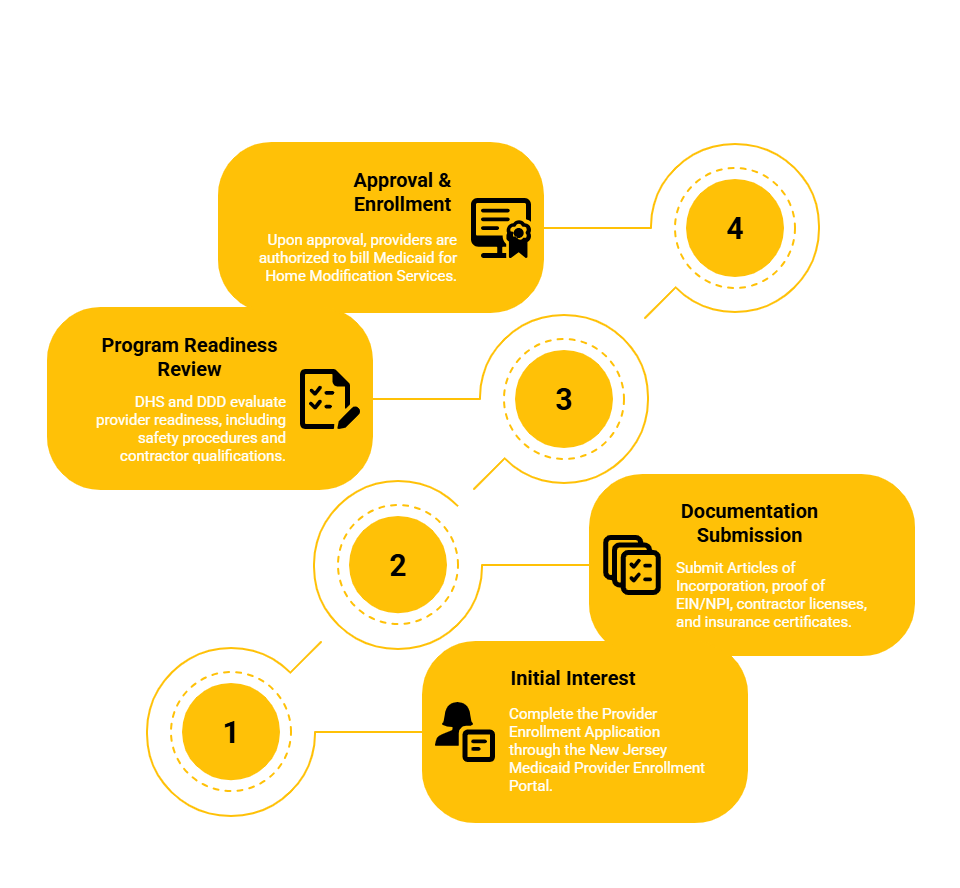
Becoming an approved Medicaid Home Modification provider in New Jersey requires a rigorous commitment to compliance and documentation. Agencies must first establish a formal business entity through the New Jersey Division of Revenue and Enterprise Services and secure a federal Employer Identification Number (EIN) and a Type 2 National Provider Identifier (NPI). These foundational credentials are required before the provider can initiate the application process via the New Jersey Medicaid Provider Enrollment Portal.
Beyond basic business registration, agencies must demonstrate operational competence and legal compliance. This includes maintaining active general and professional liability insurance and holding the necessary contractor licenses issued by the New Jersey Division of Consumer Affairs. Providers are expected to maintain a comprehensive suite of internal policies—covering everything from safety protocols to project management guidelines—to ensure that all work performed satisfies building codes and ADA accessibility requirements.
What Documentation Is Required for the Enrollment Process?
The enrollment process is documentation-heavy, as the state must verify the provider’s ability to perform high-stakes residential modifications safely and legally. Applicants must be prepared to submit Articles of Incorporation, proof of valid EIN/NPI, active contractor licenses, and certificates of insurance. Failure to provide complete documentation can lead to significant delays in the review process and the subsequent ability to bill for services.
A significant portion of the submission involves the Home Modification Services Policy & Procedure Manual. This document serves as the backbone of the agency's operations and must include, at a minimum, the following:
- Safety and risk assessment protocols for site evaluation.
- Comprehensive project planning and modification guidelines.
- Clear procedures for contractor vetting, background checks, and credential verification.
- Evidence of compliance with all relevant building codes and safety regulations.
- Structured documentation standards for tracking project progress and Medicaid billing accuracy.
- Internal quality assurance systems and emergency preparedness procedures.
What Are the Staffing and Competency Expectations?
Effective delivery of Home Modification Services requires a blend of construction expertise and a deep understanding of healthcare-related accessibility needs. The program must be led by a Home Modification Program Director, typically holding a bachelor’s degree in construction management, healthcare administration, or a related field, along with documented experience in managing accessibility-focused projects. This leadership role is vital for coordinating between contractors, clinical staff, and case managers.
The field personnel, including licensed contractors and accessibility specialists—such as those holding a Certified Aging-in-Place Specialist (CAPS) credential—must possess not only technical skill but also a commitment to regulatory compliance. All staff, including subcontractors, must undergo rigorous background checks. Furthermore, all personnel are required to complete ongoing training that covers HIPAA compliance, patient rights, safety management, and annual competency evaluations to ensure they remain updated on the latest accessibility standards and program protocols.
Frequently Asked Questions
What is the typical timeline for launching a Home Modification agency?
The launch process generally spans 5 to 9 months. Business formation and initial compliance preparation typically take 1–2 months, followed by 2–3 months for staff hiring and credentialing. The formal Medicaid provider enrollment and readiness review process takes 60–90 days, with a final 30–45 day period for setting up billing systems.
Which Medicaid waivers cover these services in New Jersey?
Services are authorized under several programs, including the Community Care Program for the Elderly and Disabled (CCPED), the Supports Program Waiver, the Acquired Brain Injury (ABI) Waiver, the Personal Care Assistant (PCA) Waiver, and the general HCBS Waiver.
How does an agency demonstrate quality assurance to the DDD?
Providers demonstrate quality through the submission and consistent application of a formal Policy & Procedure manual. Agencies must show that they have established, documented protocols for contractor vetting, periodic project inspections, client feedback loops, and adherence to state-mandated safety and building code standards.
Key Takeaway
Successful entry into the New Jersey Home Modification market relies on a dual-focus strategy: maintaining strict compliance with state Medicaid and consumer affairs regulations while building a professional team capable of executing complex, person-centered accessibility projects. By meticulously following the established enrollment pathways and investing in high-quality policy and safety frameworks, provider agencies can effectively support the independence of the individuals served under the state’s HCBS waiver programs.
Last verified: 2024. This information is intended for educational purposes for prospective and current Medicaid providers and does not constitute legal or financial advice. Please consult with the New Jersey Department of Human Services or the Division of Developmental Disabilities for the most current regulatory guidance and official program requirements.