HOME MODIFICATION SERVICES PROVIDER IN NEVADA
By Fatumata Kaba · 2025-09-04 · 5 min read
Home Modification Services in Nevada play a critical role in enabling individuals with disabilities, chronic conditions, and age-related mobility limitations to thrive in their own homes rather than in institutional settings. By providing essential structural changes and adaptive equipment, these services directly support the objectives of Nevada Medicaid Home and Community-Based Services (HCBS) waivers by fostering independence and physical safety. This guide outlines the regulatory requirements, provider responsibilities, and the developmental pathway for agencies looking to enter this vital sector of the Nevada healthcare market.
What Are the Governing Agencies for Home Modification in Nevada?
The delivery of Home Modification Services within the state of Nevada is governed by a multi-tiered regulatory framework. At the federal level, the Centers for Medicare & Medicaid Services (CMS) sets the overarching standards for all HCBS waiver programs. CMS oversight ensures that states maintain compliance with person-centered planning, participant rights, and health and safety protections, ensuring that federal funding is used effectively to prevent unnecessary institutionalization.
Within the state, the Nevada Department of Health and Human Services (DHHS) serves as the primary administrative authority. DHHS is responsible for the overall management of Medicaid waiver funding, overseeing the provider enrollment process, and directing reimbursement policies. Working in conjunction with DHHS, the Aging and Disability Services Division (ADSD) focuses on operational quality. ADSD ensures that individual providers adhere to established service delivery standards and maintain compliance with the clinical and safety requirements mandated by the waiver programs.
How Do Providers Define and Deliver Home Modification Services?
Home Modification Services encompass a wide range of structural and adaptive interventions tailored to the specific needs identified in a participant’s Individualized Service Plan (ISP). These modifications are not one-size-fits-all; they must be grounded in a professional assessment of the participant's physical limitations and the specific architectural constraints of their residence. The goal is always to maximize safety, minimize fall risks, and promote the participant’s ability to perform activities of daily living independently.
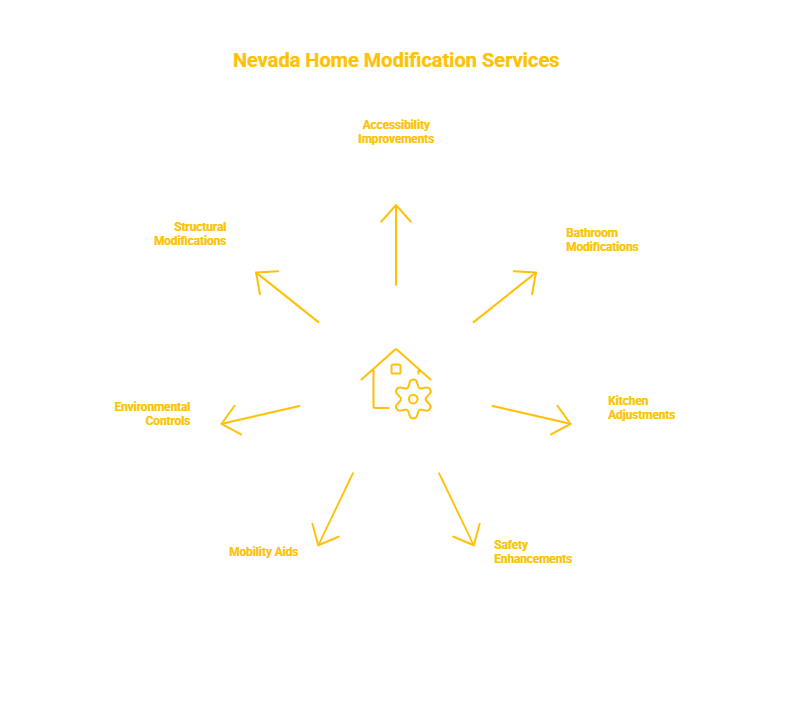
Approved providers often offer a diverse portfolio of interventions to address varying levels of impairment. These services generally fall into several key categories of home improvement:
- Accessibility Improvements: Installation of wheelchair ramps, widening of doorways to accommodate mobility devices, and the secure mounting of handrails.
- Bathroom and Kitchen Adjustments: Conversion to roll-in showers, installation of grab bars, adjustment of countertop heights, and the placement of accessible cabinetry and specialized fixtures.
- Safety and Environmental Controls: Integration of smart home technology for lighting and security, installation of slip-resistant flooring, and enhanced emergency alarm systems.
- Mobility Aids: Implementation of stairlifts, vertical platform lifts, and other mechanical assistive devices.
What Are the Essential Licensing and Administrative Prerequisites?
Launching a Home Modification agency requires strict adherence to both state business regulations and Medicaid-specific requirements. Before a provider can be authorized to perform work under an HCBS waiver, they must ensure their business entity is formally recognized by the Nevada Secretary of State and possesses the necessary federal tax identification (EIN) and a Type 2 National Provider Identifier (NPI).
Beyond standard business registration, providers must navigate the specific demands of the Nevada construction and healthcare industries. This includes obtaining the appropriate contractor licenses through the Nevada State Contractors Board, as many structural modifications require specific building certifications. Furthermore, providers must maintain comprehensive general and professional liability insurance and develop robust internal policy manuals that detail their safety protocols, project management workflows, and quality assurance mechanisms for subcontractor vetting.
How Does the Nevada Provider Enrollment Process Function?
The path to becoming a Medicaid-enrolled provider involves a structured sequence of application and readiness verification. Initially, agencies must submit their credentials through the Nevada Medicaid Provider Enrollment Portal. This application must include comprehensive supporting documentation, such as Articles of Incorporation, proof of business insurance, and evidence of necessary contractor licensure. This stage acts as a foundational screening for institutional capacity.
Following the initial submission, the DHHS performs a Program Readiness Review. This process evaluates the agency's operational infrastructure, focusing on their ability to execute projects safely, document service delivery in accordance with ISP requirements, and manage billing correctly. Once the readiness review is successfully cleared and the agency is fully enrolled, they receive authorization to use specific Medicaid billing codes for their services. Ongoing success depends on maintaining audit readiness, which requires diligent record-keeping of every modification performed.
What Are the Staffing and Competency Requirements?
Success in this field relies heavily on the expertise of the personnel involved. Agencies are expected to employ a Program Director who possesses a bachelor's degree in construction management, healthcare administration, or a closely related field, along with demonstrable experience in home accessibility projects. This leadership role is vital for balancing the technical demands of construction with the sensitive requirements of Medicaid compliance.
Staffing requirements extend to the field level, where licensed contractors and accessibility specialists—often holding professional certifications such as the Certified Aging-in-Place Specialist (CAPS)—ensure that all work meets local building codes and ADA standards. All personnel must also undergo consistent training, including:
- HIPAA compliance and the protection of participant privacy.
- Comprehensive safety training and risk management for diverse home environments.
- Annual competency evaluations and updates regarding changes to state safety protocols.
- Training on participant rights to ensure all modifications are conducted with dignity and respect.
Frequently Asked Questions
Which Medicaid waiver programs cover these services?
Home Modification Services are authorized under several Nevada Medicaid waivers, including the Aged and Disabled (AD) Waiver, the Traumatic Brain Injury (TBI) Waiver, the Intellectual and Developmental Disabilities (IDD) Waiver, the Physical Disabilities Waiver, and the standard Home and Community-Based Services (HCBS) Waiver.
How long does the launch process typically take?
The timeline varies by agency, but generally requires 1–2 months for business formation, 2–3 months for staffing and internal development, 60–90 days for Medicaid enrollment and readiness reviews, and 30–45 days for final billing system setup.
What must be included in a policy and procedure manual?
The manual must detail safety and risk assessment protocols, the internal process for project approval, procedures for vetting and credentialing subcontractors, compliance with ADA standards, and specific workflows for Medicaid billing and audit preparation.
Key Takeaway for Agencies
Establishing a Home Modification Service provider in Nevada is a complex, regulated endeavor that requires a synthesis of construction expertise, clinical compliance, and administrative diligence. By focusing on robust internal policy development, maintaining strict adherence to DHHS and ADSD standards, and prioritizing the safety and autonomy of the waiver participants, providers can successfully build a sustainable agency that fulfills the critical need for accessible housing solutions across the state.
Last verified: August 2024. This information is intended for educational purposes and does not constitute legal or financial advice. Regulations governing Nevada Medicaid are subject to change; please consult the official Nevada Medicaid Provider Enrollment Portal and the Department of Health and Human Services for the most current requirements and policy updates.