HOME MODIFICATION SERVICES PROVIDER IN NEBRASKA
By Fatumata Kaba · 2025-08-08 · 5 min read
Home Modification Services in Nebraska empower individuals with disabilities, chronic health conditions, and age-related mobility limitations to sustain their independence within their own homes. By facilitating structural changes and the installation of essential adaptive equipment, these Medicaid-funded services ensure that participants have a safe and accessible environment that aligns with their Individualized Service Plan (ISP).
What Are the Governance and Regulatory Requirements for Providers?
The delivery of Home Modification Services in Nebraska is strictly regulated to ensure participant safety and the responsible use of public funds. The primary governing authority is the Nebraska Department of Health and Human Services (DHHS), which manages provider enrollment, verifies service authorization, and oversees the reimbursement process. The Nebraska Medicaid and Long-Term Care (MLTC) Division works in tandem with DHHS to establish quality standards and ensure all service delivery remains in compliance with state and federal regulations.
At the federal level, the Centers for Medicare & Medicaid Services (CMS) provides the necessary oversight for Home and Community-Based Services (HCBS) waiver programs. This oversight ensures that all modifications adhere to rigorous person-centered planning requirements and participant protection standards. Providers must remain cognizant that these layers of regulation are designed to prioritize the health and welfare of the individual receiving care.
How Do Providers Determine Eligible Home Modification Services?
Home Modification Services are specifically designed to reduce barriers to independent living. Eligible services are based on a professional assessment of the participant's unique needs as outlined in their ISP. These modifications must be practical, necessary, and designed to improve accessibility or ensure the safety of the individual within the home environment.
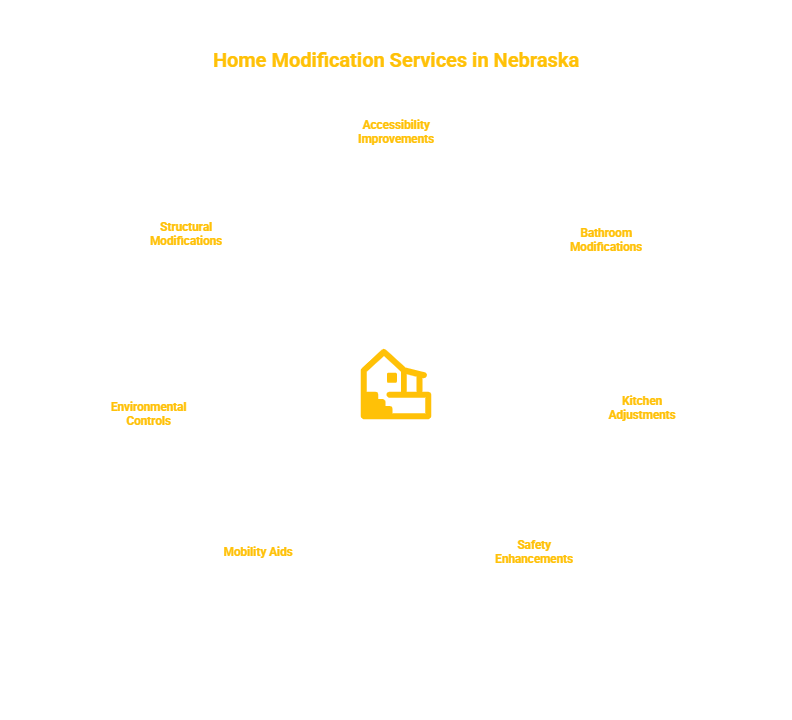
- Accessibility Improvements: Installation of ramps, widened doorways for wheelchair access, and secure handrails.
- Bathroom Modifications: Installation of roll-in showers, grab bars, accessible sinks, and raised toilet seats.
- Kitchen Adjustments: Lowering countertops, modifying cabinets for reachability, and installing accessible appliances.
- Safety Enhancements: Installation of specialized alarms, improved lighting, and slip-resistant flooring.
- Mobility Aids: Integration of stairlifts, vertical platform lifts, and exterior accessibility hardware.
- Environmental Controls: Implementation of smart home technology for managing lighting, temperature, and security.
- Structural Modifications: Adjustment of doorframes, widening of hallways, and creation of accessible entryways.
What Is the Process for Enrollment and Authorization?
The path to becoming an approved provider begins with establishing the business entity with the Nebraska Secretary of State. Once the business is formed, the agency must secure a federal Employer Identification Number (EIN) and a Type 2 National Provider Identifier (NPI). These are fundamental prerequisites before entering the Nebraska Medicaid Provider Enrollment Portal to initiate the enrollment process for HCBS waiver services.
Following the initial application, DHHS conducts a formal Program Readiness Review. During this phase, the state evaluates the provider’s operational infrastructure, including safety procedures, project management protocols, and contractor qualifications. It is essential that providers demonstrate full compliance with both state licensing requirements—such as those managed by the Nebraska Department of Labor—and Medicaid-specific standards. Only after a successful review and formal approval will the provider be authorized to bill Medicaid using designated service codes.
What Documentation and Staffing Standards Are Required?
Maintaining high-quality documentation is a cornerstone of Medicaid compliance. Providers must maintain a comprehensive Policy & Procedure Manual that covers risk assessment, contractor vetting, and HIPAA-compliant data management. Proof of valid general and professional liability insurance is mandatory, as is evidence of current contractor licenses for all personnel performing structural work.
Staffing requirements are equally stringent to ensure professional and safe service delivery. The Home Modification Program Director should hold a bachelor’s degree in a relevant field, such as construction management or healthcare administration. Accessibility Specialists, who may hold certifications like the Certified Aging-in-Place Specialist (CAPS), are vital for the assessment process. All staff members must undergo rigorous background screenings and receive ongoing training in safety protocols, participant rights, and emergency preparedness.
Which Medicaid Waivers Cover These Services?
Nebraska offers Home Modification Services through various HCBS waiver programs, each serving specific populations. Providers must be aware of the nuances between these programs to ensure proper billing and adherence to the individualized care goals of the participant.
- Aged and Disabled (AD) Waiver: Focused on enabling seniors and individuals with physical disabilities to remain at home.
- Traumatic Brain Injury (TBI) Waiver: Provides support for individuals requiring environmental modifications following a brain injury.
- Developmental Disabilities (DD) Waiver: Offers structural and safety modifications for individuals with developmental support needs.
- Children with Disabilities Waiver: Assists families in making homes accessible for children with significant needs.
- General HCBS Waiver: Provides broader coverage for participants across various disability categories.
Frequently Asked Questions
What is the typical timeline for launching a provider agency?
The launch process generally spans 6 to 10 months. Business formation and compliance preparation take 1–2 months, followed by 2–3 months for hiring and credentialing. The Nebraska Medicaid Provider Enrollment and Readiness Review takes 60–90 days, and the final setup for billing and service launch typically requires 30–45 days.
Are background checks mandatory for contractors?
Yes, all contractors and subcontractors must undergo background checks to ensure the safety and security of the vulnerable populations receiving services. Compliance with these checks must be documented in the provider’s internal files.
Is a CAPS certification required for all staff?
While not universally mandated by state statute for every staff member, professional certifications like CAPS are strongly encouraged for Accessibility Specialists to ensure they possess the necessary expertise to plan modifications that meet both ADA standards and the unique clinical needs of the participant.
Waiver Consulting Group’s Start-Up Assistance Service
WCG supports agencies and contractors in launching Medicaid-compliant Home Modification Services in Nebraska by offering comprehensive guidance on business registration, Medicaid enrollment, and contractor licensing. We assist in the development of robust policy manuals for home accessibility planning and safety compliance, as well as the creation of contractor credentialing and training program templates. Furthermore, we provide support with Medicaid billing system setup, project management, and quality assurance systems to ensure your agency is prepared for audits and ongoing success in the HCBS sector.
Key Takeaway: Successfully operating as a Home Modification Services provider in Nebraska requires a dual focus on rigorous adherence to Medicaid administrative requirements and the technical expertise to perform high-quality, safe accessibility modifications. Agencies that prioritize thorough documentation, reliable contractor vetting, and ongoing staff development are best positioned to serve the needs of Nebraska's Medicaid waiver participants.
Last verified: [Insert Date]. This information is intended for educational purposes only and does not constitute legal or professional advice. Always consult with the Nebraska Department of Health and Human Services (DHHS) or qualified legal counsel to ensure your agency remains in full compliance with current state and federal regulations.