HOME MODIFICATION SERVICES PROVIDER IN MISSOURI
By Fatumata Kaba · 2025-08-07 · 5 min read
ENHANCING SAFETY AND ACCESSIBILITY WITH HOME ADAPTATIONS FOR INDIVIDUALS WITH DISABILITIES
Home Modification Services in Missouri are essential interventions designed to transform living environments into safe, accessible, and functional spaces for individuals with disabilities or mobility limitations. By facilitating structural adaptations, these services empower participants to remain in their own homes and communities, avoiding the necessity of institutional care. These specialized services are facilitated through Missouri’s Home and Community-Based Services (HCBS) Waivers, providing a pathway for authorized providers to improve the quality of life for Medicaid beneficiaries.
What Are the Governing Agencies and Regulatory Frameworks?
The delivery of Home Modification Services is governed by a multi-tiered regulatory structure that ensures service quality, safety, and fiscal accountability. At the state level, the Missouri Department of Health and Senior Services (DHSS) serves as the primary entity responsible for administering HCBS Waiver programs. This agency sets the standards for participant eligibility and determines the scope of services allowed within the individual’s Person-Centered Plan (PCP) or Individual Service Plan (ISP).
The Missouri Department of Social Services (DSS) acts as the operational lead for provider enrollment and ongoing service authorization. It is through the DSS that providers are vetted and approved to participate in the Medicaid program. Simultaneously, the Centers for Medicare & Medicaid Services (CMS) provides the overarching federal framework, ensuring that all state-level modifications comply with federal accessibility standards and waiver mandates.
- Missouri Department of Health and Senior Services (DHSS): Administers Medicaid and HCBS Waiver programs, including home modification services.
- Missouri Department of Social Services (DSS): Oversees Medicaid provider enrollment and service authorization.
- Centers for Medicare & Medicaid Services (CMS): Provides federal oversight and ensures waiver compliance.
How Do Providers Implement Home Modification Services?
Home Modification Services are not "one-size-fits-all"; they are strictly tailored to meet the documented needs of the participant as identified in their clinical assessment. The modification process begins with a formal evaluation of the residence to determine which structural adjustments will mitigate safety risks, such as falls, or overcome architectural barriers that prevent the participant from navigating their home independently.
Common projects include the installation of ramps and widened doorways to accommodate mobility devices, and bathroom retrofits like roll-in showers and grab bars. Kitchens may be redesigned with lowered countertops or adaptive appliances. Furthermore, environmental controls—such as voice-activated lighting or specialized flooring—are frequently implemented to enhance daily functioning. All work must be performed in accordance with the Individual Service Plan to ensure that the modifications are medically necessary and appropriately documented for billing purposes.
What Are the Licensing and Provider Approval Prerequisites?
Launching a service agency requires rigorous adherence to both business and clinical regulatory standards. Before applying for Medicaid enrollment, an agency must be properly registered with the Missouri Secretary of State. Once the business entity is established, the provider must obtain an Employer Identification Number (EIN) from the IRS and a Type 2 National Provider Identifier (NPI), which is required for organizational billing.
Operational compliance is just as critical. Providers must obtain all necessary contractor licenses mandated by the Missouri Division of Professional Registration. Because these services involve structural construction, agencies must maintain adequate liability insurance and demonstrate strict adherence to local and state building codes. Establishing a comprehensive policy and procedure manual that outlines assessment protocols, construction safety guidelines, and client documentation workflows is a mandatory precursor to gaining enrollment approval.
What Does the Medicaid Provider Enrollment Process Entail?
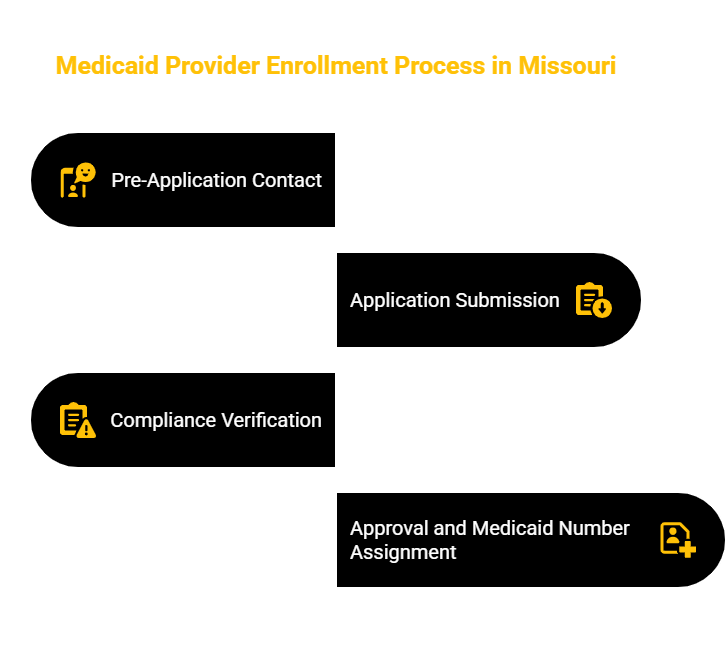
The transition from a business entity to an approved Medicaid provider follows a structured, multi-step progression. The process begins with a pre-application phase, during which the agency must contact the Missouri Department of Social Services to verify specific programmatic requirements and current enrollment guidelines. Understanding these requirements early prevents delays in the processing of the formal application.
Following the pre-application, the provider must submit a complete application packet. This includes proof of business registration, valid contractor licensure, insurance certificates, and documentation of operational readiness. During the compliance verification phase, state authorities may review the agency's ability to meet safety standards. Once all submissions are verified and accepted, the agency is assigned a Medicaid provider number, officially authorizing them to bill for services rendered to waiver participants.
How Are Staffing and Operational Compliance Managed?
Staffing for a Home Modification agency requires a combination of construction management expertise and an understanding of the unique needs of the disability community. The Home Modification Project Manager is a central role, typically requiring extensive experience in residential accessibility and construction management to oversee projects from assessment to final inspection. All technicians or contractors assigned to these projects must hold valid Missouri contractor licenses, maintain proper insurance, and ideally possess training in ADA-compliant design.
Beyond technical skills, staff must be trained on the specific nuances of the Medicaid HCBS environment. Training protocols should cover universal design principles, risk management, and the documentation requirements mandated by the state. Ensuring that all modifications are logged accurately—with client consent and follow-up satisfaction surveys—is essential for maintaining compliance during future audits or reviews conducted by the DHSS or DSS.
Frequently Asked Questions
Which Medicaid waivers currently include Home Modification Services?
In Missouri, Home Modification Services are generally available through the Aged and Disabled Waiver (ADW), the Independent Living Waiver, and the Medically Fragile Adult Waiver, subject to the individual's specific service plan and state-defined criteria.
Is a specific license required for every home modification project?
Yes. Providers must ensure that all staff or subcontractors performing work hold the appropriate contractor license issued by the Missouri Division of Professional Registration. Compliance with local building codes is also mandatory for every structural modification.
How long does the provider enrollment process typically take?
The timeline for Medicaid provider enrollment can range from 60 to 90 days. Factors influencing this duration include the completeness of the initial application packet, responsiveness to requests for additional information, and the current volume of applications being processed by the Department of Social Services.
Key Takeaway
Successful participation in the Missouri HCBS Home Modification landscape requires a disciplined approach to both construction safety and administrative compliance. By aligning business operations with the specific requirements of the Department of Social Services and the Department of Health and Senior Services, providers can ensure the delivery of high-quality, life-improving modifications that enable participants to thrive in their homes. Maintaining rigorous documentation and adhering to all licensing mandates remain the most effective strategies for long-term operational success.
Last verified: 2024-05-22. This content is for informational purposes only and does not constitute legal or professional advice. Always consult with the Missouri Department of Social Services or the Missouri Department of Health and Senior Services for the most current regulatory requirements and enrollment guidelines.