HOME MODIFICATION SERVICES PROVIDER IN MISSISSIPPI
By Fatumata Kaba · 2025-08-06 · 5 min read
Home Modification Services in Mississippi serve as a vital component of the state’s Home and Community-Based Services (HCBS) ecosystem, enabling individuals with disabilities and the elderly to age in place safely. By providing structural and functional adaptations—such as ramp installations and bathroom accessibility upgrades—these services directly mitigate the risks of institutionalization while fostering independence for Medicaid waiver participants.
For entrepreneurs and established home health agencies, becoming a designated provider involves navigating a rigorous regulatory landscape governed by the Mississippi Division of Medicaid (DOM) and the Mississippi Department of Mental Health (DMH). This guide outlines the essential requirements, operational standards, and administrative steps necessary to establish a compliant and effective Home Modification program within the state.
What are the regulatory and oversight structures for Home Modification providers in Mississippi?
The delivery of Home Modification services is not a standalone business venture; it is a highly regulated healthcare support function operating under federal and state mandates. Oversight is tripartite, involving federal guidelines from the Centers for Medicare & Medicaid Services (CMS) and state-level administration through the Mississippi Division of Medicaid (DOM). Providers must align their service delivery models with the specific Person-Centered Plan (PCP) or Individual Program Plan (IPP) established for each waiver participant.
The Mississippi Department of Mental Health (DMH) plays a critical role in coordinating the delivery of these services, particularly for populations served under the various HCBS waivers. Understanding the hierarchical relationship between these agencies is the first step for any provider. Compliance is not merely a legal suggestion; it is a condition of participation. Agencies must ensure that all modifications adhere to both state building codes and the specific clinical requirements set forth in the participant’s approved waiver plan.
- Mississippi Department of Mental Health (DMH): Coordinates HCBS Waiver services and oversees program-specific service delivery.
- Mississippi Division of Medicaid (DOM): Manages Medicaid funding and regulates provider enrollment and administrative compliance.
- Centers for Medicare & Medicaid Services (CMS): Sets federal standards and ensures that Mississippi’s waiver programs remain in compliance with national statutes.
What specific home modifications are reimbursable under Mississippi HCBS Waivers?
Reimbursable services are strictly limited to those that directly address an individual’s disability-related needs as defined in their medical documentation. The goal of these modifications is to eliminate physical barriers that impede daily living activities or compromise personal safety. Any project undertaken must be clinically justified, meaning the modification is essential to prevent institutional placement or to improve the participant's functional independence within their existing residence.
Commonly approved modifications include structural changes and equipment installations that transform a standard dwelling into an accessible home environment. These projects must be executed by qualified professionals who understand the intersection of construction standards and healthcare accessibility requirements. Documentation of the "medical necessity" for every project is mandatory to ensure claims processing and audit readiness.
- Installation of wheelchair ramps and handrails for safe ingress and egress.
- Widening of doorways to accommodate mobility aids like wheelchairs and walkers.
- Accessible bathroom modifications, including roll-in showers and specialized fixtures.
- Stair lifts and grab bars to prevent falls in multi-level homes.
- Adaptations for kitchen accessibility, such as lowered countertops or reachable cabinetry.
- Safety enhancements, including non-slip flooring and improved lighting configurations.
How do you navigate the Medicaid provider enrollment and licensing process?
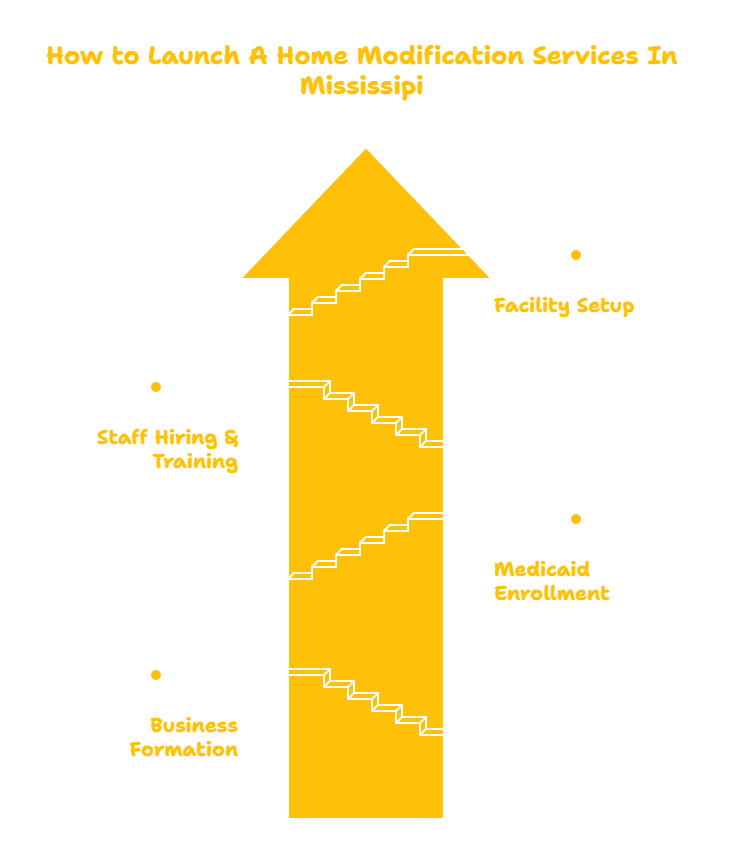
The journey to becoming an approved provider begins with establishing a formal business entity and securing the necessary credentials to perform construction-related work in Mississippi. Applicants must be registered with the Mississippi Secretary of State and obtain an Employer Identification Number (EIN) from the IRS. Furthermore, a Type 2 National Provider Identifier (NPI) is required to bill Medicaid for services rendered to waiver participants.
Following business formation, the provider must obtain the appropriate contractor’s license if the scope of work includes structural modifications. Once licensed, the provider initiates the enrollment process with the Mississippi Division of Medicaid. This phase requires significant transparency; providers must submit proof of liability insurance, detailed service descriptions, and operational policies that demonstrate the capacity to meet both state and federal requirements for quality assurance.
- Step 1: Pre-Application: Engage with the Mississippi Division of Medicaid to review current provider requirements and program-specific bulletins.
- Step 2: Application Submission: Provide comprehensive business documentation, insurance certificates, and proof of structural licensing.
- Step 3: Verification: Undergo review by the Division of Medicaid to verify that all licenses and credentials meet state safety and quality standards.
- Step 4: Enrollment: Upon successful review, the agency is assigned a Medicaid provider number, officially authorizing the delivery of reimbursable modification services.
What administrative and staffing standards must be maintained for operational compliance?
Success as a Medicaid provider relies heavily on the quality of the policy and procedure manual. This document serves as the foundation for daily operations, outlining how the agency handles client intake, risk management, and service documentation. Because these services are funded by public health programs, providers must maintain meticulous records, including staff logs, incident reports, and evidence of adherence to the Americans with Disabilities Act (ADA).
Staffing requirements are equally rigorous. A project supervisor must be appointed to oversee all construction management, ensuring that every modification meets professional trade standards. Installers and technicians must have demonstrated experience in carpentry or construction, and they must undergo thorough background checks and health screenings, such as TB clearance, to ensure the safety of the vulnerable populations they serve.
- Safety Protocols: Documented procedures for job site safety and ADA compliance.
- Staff Qualifications: Maintenance of personnel files that include training logs, certifications, and background check results.
- Client Intake: Standardized assessment forms to verify participant eligibility and specific project needs.
- Service Documentation: Comprehensive logs detailing the modification process from initial site assessment to final inspection.
Frequently Asked Questions
Which Medicaid waiver programs cover home modification services?
Home modification services are available through three primary programs: the 1915(c) HCBS Waiver for the Elderly and Disabled, the Mississippi Independent Living Waiver, and the Traumatic Brain Injury/Spinal Cord Injury (TBI/SCI) Waiver.
How long does the provider enrollment process typically take?
The timeline for Medicaid provider enrollment generally ranges between 60 and 90 days. Factors affecting this duration include the completeness of the initial application packet and the processing times at the Mississippi Division of Medicaid.
What type of insurance is required for home modification providers?
Providers must maintain comprehensive liability insurance. Documentation of this coverage is a mandatory component of the initial Medicaid provider enrollment application and must be kept active to remain in good standing with the state.
Key Takeaway
Launching a Home Modification agency in Mississippi requires a disciplined focus on regulatory compliance, administrative thoroughness, and a commitment to high-quality craftsmanship. By successfully aligning business operations with the guidelines established by the Mississippi Division of Medicaid and the Department of Mental Health, providers can play a critical role in supporting the long-term independence and safety of Mississippi’s elderly and disabled residents.
Last verified: 05/22/2024. Disclaimer: This information is for educational purposes only and does not constitute legal or professional advice. Always verify current state requirements with the Mississippi Division of Medicaid or the Department of Mental Health before making business decisions.