HOME MODIFICATION SERVICES PROVIDER IN IOWA
By Fatumata Kaba · 2025-07-22 · 5 min read
Home Modification Services in Iowa offer essential physical adaptations to a participant’s primary residence, ensuring that individuals with disabilities or aging-related conditions can navigate their living spaces with maximum safety, accessibility, and independence. By providing critical home adjustments such as ramps, widening doorways, and bathroom modifications, these services allow participants to successfully avoid institutionalization and remain within their preferred community settings.
What Are the Roles of Governing Agencies in Iowa Home Modifications?
The delivery of Home Modification Services is governed by a multi-tiered regulatory framework designed to ensure participant safety and fiscal accountability. At the state level, the Iowa Department of Health and Human Services (HHS), specifically through the Iowa Medicaid Enterprise (IME), holds the primary responsibility for setting service standards, overseeing provider enrollment, and maintaining the regulatory requirements for HCBS waiver funding. They ensure that all services remain aligned with both state and federal directives.
Operational oversight is largely handled by Managed Care Organizations (MCOs). These entities work directly with participants to authorize home modifications through the individualized service planning process. They manage the specific fiscal authorizations for each project and oversee provider reimbursements, ensuring that the work performed meets the participant’s clinical goals. Furthermore, the Centers for Medicare & Medicaid Services (CMS) provides federal-level oversight to ensure that all Iowa waiver programs remain in full compliance with the HCBS Settings Rule.
What Scope of Work is Approved Under HCBS Waivers?
Home Modification Services must be strictly rooted in medical necessity as defined by the participant’s Individualized Service Plan (ISP). Providers are tasked with executing physical changes that directly improve mobility, mitigate fall risks, and support activities of daily living. Because these modifications are funded through public health dollars, every project must undergo a rigorous approval process to ensure it is the most cost-effective and clinically appropriate solution for the participant.
Commonly approved modifications include:
- Installation of ramps, grab bars, and handrails to prevent falls.
- Widening of doorways and hallways to accommodate wheelchair access.
- Bathroom modifications, such as the installation of roll-in showers and raised toilets.
- Installation of stair lifts or vertical platform lifts for multi-level accessibility.
- Kitchen modifications, including lowered countertops and accessible cabinetry.
- Flooring material changes to ensure stability and reduce trip hazards.
- Smart home or voice-activated systems where these technologies directly foster independence.
What are the Prerequisites for Provider Enrollment and Licensing?
Entering the Iowa Medicaid market as a home modification provider requires strict adherence to both business and construction-related mandates. Before beginning the enrollment process, a business must be properly registered with the Iowa Secretary of State and hold a valid federal Employer Identification Number (EIN). Furthermore, providers must secure a Type 2 National Provider Identifier (NPI) to bill Medicaid effectively.
Beyond standard business registration, providers must maintain rigorous insurance and credentialing standards. General liability and product liability insurance are mandatory to protect the provider and the participant during the construction phase. Because the work often involves significant structural alterations, all contractors must hold the necessary state-issued licenses and permits. Additionally, organizations must develop comprehensive internal policies governing project safety, ADA compliance, and detailed record-keeping to ensure audit readiness at all times.
How Do You Navigate the Iowa Provider Enrollment Process?
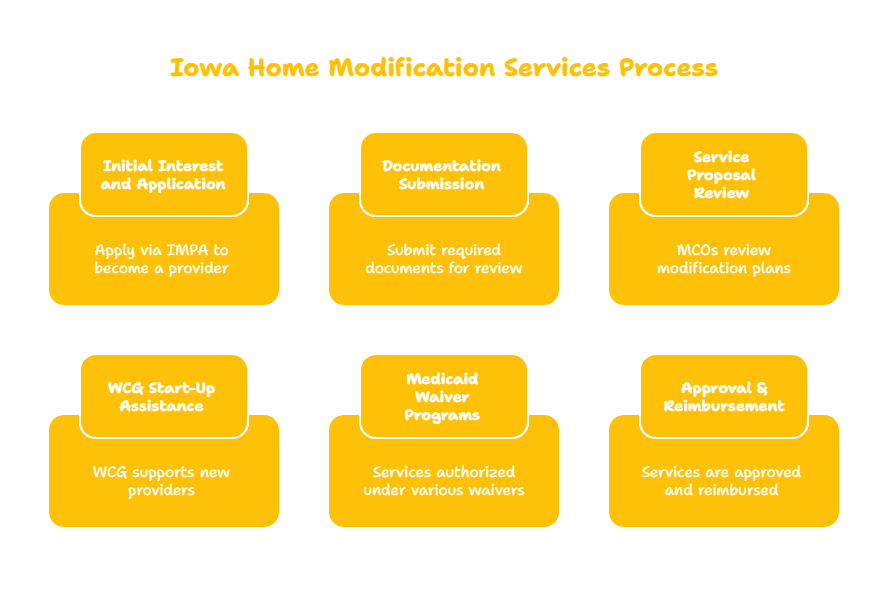
The path to becoming an approved provider begins with submission through the Iowa Medicaid Provider Portal (IMPA). Applicants must ensure that all documentation—including Articles of Incorporation, proof of insurance, and business licenses—is current and ready for review. Following the initial portal submission, the provider must coordinate with the various MCOs operating in Iowa to finalize the authorizations required for specific participants.
The approval workflow generally follows a project-specific sequence. Once a participant identifies a need, the provider submits a detailed service proposal, including bids, professional recommendations from therapists, and specific project goals. The MCO reviews these documents to determine if the plan aligns with the participant's ISP. Once authorized, the provider completes the installation, submits the final invoices, and ensures that the participant provides formal acknowledgment of the completed work before Medicaid reimbursement is issued.
What Are the Essential Staffing and Training Requirements?
Successful execution of home modifications requires a blend of construction expertise and clinical understanding. The Project Manager or Supervisor oversees the technical aspects of the work, ensuring all modifications meet ADA and Medicaid standards. It is often necessary to collaborate with Occupational or Physical Therapists who are licensed in Iowa; these professionals play a critical role in documenting the functional need and recommending the specific adaptations required for the participant’s unique situation.
All personnel must undergo rigorous training to ensure high-quality service delivery. This training curriculum should cover:
- Comprehensive safety protocols and injury prevention during construction.
- Strict adherence to HIPAA regulations and participant confidentiality.
- Knowledge of ADA accessibility standards and local building codes.
- Incident reporting procedures and mandatory annual refresher courses.
- Background screening and clearance for all employees and subcontractors.
Frequently Asked Questions
What Iowa Medicaid waiver programs cover Home Modifications?
Home Modification Services are currently authorized under the Intellectual Disability (ID) Waiver, Brain Injury (BI) Waiver, Health and Disability (HD) Waiver, Elderly Waiver, and the Children’s Mental Health (CMH) Waiver, where applicable.
How long does the provider enrollment process typically take?
The timeline varies based on organizational readiness, but the full lifecycle—from business formation to MCO coordination and system setup—typically spans between 4 to 9 months depending on administrative efficiency.
What must be included in a Policy and Procedure Manual?
A manual must include project planning procedures, safety and ADA compliance protocols, subcontractor management agreements, HIPAA-compliant documentation, grievance policies, and tools for billing and audit readiness.
Key Takeaway
Launching a Home Modification Services agency in Iowa requires balancing technical construction capabilities with the stringent regulatory and documentation requirements of the Iowa Medicaid Enterprise. By maintaining robust internal policies, ensuring proper credentialing, and fostering strong relationships with MCOs and clinical professionals, providers can successfully help Iowa’s vulnerable populations remain safe and independent in their own homes.
Last verified: September 2023. This information is intended for educational purposes and does not constitute legal or financial advice. Providers should consult directly with the Iowa Department of Health and Human Services and relevant MCOs for the most current regulatory updates.