HOME MODIFICATION SERVICES PROVIDER IN IDAHO
By Fatumata Kaba · 2025-07-17 · 5 min read
PROMOTING INDEPENDENCE, SAFETY, AND ACCESSIBILITY THROUGH STRUCTURAL HOME ADAPTATIONS
Home Modification Services in Idaho allow individuals with disabilities, chronic conditions, or age-related mobility needs to receive structural adaptations that improve their home environment. By delivering these essential services, providers play a vital role in supporting participants under Idaho’s Medicaid Home and Community-Based Services (HCBS) waiver programs, ultimately facilitating safer living conditions and greater community integration.
What Are Home Modification Services Under Idaho Medicaid?
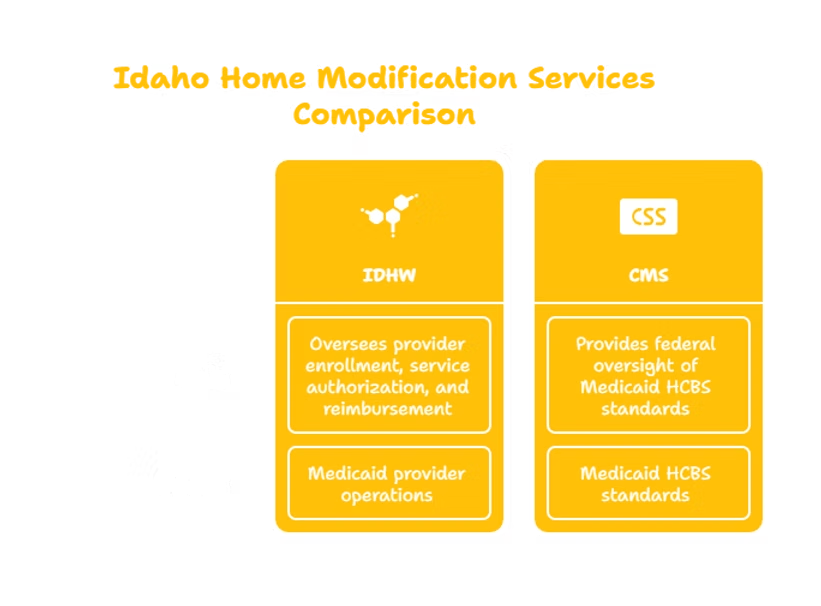
Home Modification Services involve deliberate physical changes to a participant's primary residence to eliminate architectural barriers, enhance safety, and foster independence. These modifications are strictly guided by the participant's Individualized Service Plan (ISP) and must demonstrate a direct link to the participant’s functional needs, as mandated by the Idaho Department of Health and Welfare (IDHW) and federal oversight from the Centers for Medicare & Medicaid Services (CMS).
The scope of work for an approved provider encompasses a range of structural and environmental adaptations. Common project types include:
- Installation of ramps, stair lifts, and the widening of doorways to improve mobility.
- Comprehensive bathroom modifications, such as the installation of roll-in showers, grab bars, and accessible sinks or toilets.
- Kitchen redesigns, including lowering counters and installing accessible appliances to support activities of daily living.
- General safety enhancements, such as reinforced entryways, handrails, non-slip flooring, and specialized lighting or environmental control systems.
What Are the Licensing and Regulatory Prerequisites for Providers?
Establishing an HCBS-compliant agency requires adherence to both state business regulations and specific Medicaid enrollment criteria. Prospective providers must first register their business entity with the Idaho Secretary of State and secure a federal Employer Identification Number (EIN). Furthermore, a Type 2 National Provider Identifier (NPI) is necessary for billing purposes under the Medicaid framework.
Beyond standard business registration, providers must ensure their construction operations comply with state law. If the business intends to perform structural modifications, it must maintain the appropriate contractor licensing as overseen by the Idaho Division of Building Safety. Providers are also required to maintain comprehensive insurance coverage, including general liability, professional liability, and workers’ compensation, to protect both the firm and the program participants.
How Do Agencies Complete the IDHW Provider Enrollment Process?
The path to becoming an approved provider involves a structured sequence of application and readiness reviews managed through the Idaho Medicaid Management Information System (MMIS). Once the business is legally established, the provider must submit an enrollment application specifically designating Home Modification Services as their area of expertise. This submission requires an extensive portfolio of supporting documentation.
The IDHW assesses the provider's readiness by reviewing internal protocols, such as project safety standards, participant grievance procedures, and billing system integrity. The application package should include:
- Articles of Incorporation and proof of NPI/EIN status.
- Evidence of appropriate contractor licenses for structural work.
- Comprehensive HCBS-compliant policies, including staff training manuals, background screening procedures, and HIPAA-compliant participant protection protocols.
- Operational templates for intake, project assessment, and the construction planning phase.
What Are the Staffing and Training Expectations?
Staffing a home modification agency requires a balance of skilled trade expertise and human-services compliance. The Home Modification Program Manager or Construction Supervisor must be a licensed contractor or experienced construction lead with proven competence in ADA-compliant modifications. All technicians and installers must possess the relevant skilled trades experience and must undergo rigorous background screening to ensure the safety of the vulnerable populations being served.
Ongoing staff development is a critical component of the HCBS model. Every employee must receive comprehensive training in the following areas:
- HIPAA confidentiality regulations and the specific rights of Medicaid participants.
- Home accessibility standards, including specialized training in emergency preparedness during construction.
- Annual updates regarding changes to building codes and evolving best practices for disability-inclusive home design.
Which Medicaid Waivers Authorize These Services?
Home Modification Services are authorized through specific HCBS waivers designed to support individuals who choose to live in their own homes rather than in institutional settings. Providers must be familiar with the unique requirements of the Aged and Disabled (A&D) Waiver, the Developmental Disabilities (DD) Waiver, and the Children’s Developmental Disabilities Waiver. Each of these programs maintains specific standards for how services are authorized and billed.
When delivering services under these waivers, the provider’s focus must remain on the environmental adaptations that directly impact the participant's daily safety. Whether the modification is a minor repair required to ensure the stability of a larger installation or a complex environmental control system, every project must be strictly reconciled against the approved Individualized Service Plan to remain eligible for Medicaid reimbursement.
Frequently Asked Questions
How long does the provider enrollment process typically take?
The timeline varies based on the completeness of the documentation provided. Generally, business formation and credentialing take 2–4 weeks, contractor licensing and insurance setup require 1–2 months, and the formal IDHW enrollment and readiness review process spans 60–90 days. Medicaid billing system configuration follows, adding an additional 30–45 days.
Is a contractor's license required for all home modifications?
A contractor's license is required for any project involving structural modifications to the home. The Idaho Division of Building Safety oversees these requirements. Providers should consult with the Division to ensure their specific trade activities align with state licensure mandates.
What documentation is required in the HCBS-compliant policy manual?
Your manual must include detailed procedures for participant intake, site assessment, and project planning. It must also cover construction standards, HIPAA compliance, emergency protocols during construction, participant grievance procedures, and internal systems for billing, authorization tracking, and audit readiness.
Key Takeaway: Successfully launching a Home Modification Services agency in Idaho requires a dual commitment to construction excellence and strict Medicaid regulatory compliance. By aligning business operations with the guidelines set forth by the Idaho Department of Health and Welfare and maintaining rigorous documentation, providers can effectively scale their operations to support the critical needs of Idaho’s HCBS waiver participants.
Last verified: October 2023. This content is for informational purposes only and does not constitute legal or professional advice. Requirements for Medicaid provider enrollment are subject to change by the Idaho Department of Health and Welfare. Please refer to official IDHW and CMS documentation for the most current regulatory guidance.