HOME MODIFICATION SERVICES PROVIDER IN GEORGIA
By Fatumata Kaba · 2025-07-14 · 5 min read
CREATING SAFE, ACCESSIBLE LIVING ENVIRONMENTS TO SUPPORT INDEPENDENCE AND COMMUNITY LIVING
Home Modification Services in Georgia represent a vital component of the state’s Home and Community-Based Services (HCBS) framework, enabling individuals with disabilities to maintain independence within their own homes. By providing essential physical adaptations—such as wheelchair ramps, accessible bathroom configurations, and doorway widenings—authorized providers help participants avoid unnecessary institutionalization and achieve a higher quality of life.
What Are Home Modification Services and Who Do They Serve?
Home Modification Services are specialized construction and installation services authorized under Georgia’s Medicaid waiver programs, specifically the Comprehensive Supports Waiver Program (COMP) and the New Options Waiver Program (NOW). These services are intended for individuals whose physical environment presents barriers to their safety, health, or functional independence. The primary goal is to ensure that a participant’s primary residence is fully accessible and safe for daily activities.
To qualify for these modifications, the services must be deemed medically necessary and directly support the participant’s ability to remain in the community. Every project must be explicitly authorized in the participant’s Individualized Service Plan (ISP). This ensures that all environmental adaptations are directly linked to the specific, assessed needs of the individual, rather than general home improvement or property value enhancement.
Which Agencies Govern Georgia Home Modification Providers?
The regulatory landscape for Home Modification Services in Georgia involves three primary entities, each serving a distinct function in the oversight and management of the program. The Georgia Department of Community Health (DCH) acts as the lead agency, managing Medicaid provider enrollment, setting reimbursement rates, and overseeing the billing and authorization process for services delivered through the Georgia Medicaid Management Information System (GAMMIS).
The Georgia Department of Behavioral Health and Developmental Disabilities (DBHDD) serves as the primary administrator for individuals with intellectual and developmental disabilities. This department monitors provider compliance, manages the service certification process, and ensures that the delivery of home modifications adheres to state-level quality standards. Finally, the Centers for Medicare & Medicaid Services (CMS) provides the overarching federal framework, ensuring that Georgia’s waiver programs meet the national standards for Home and Community-Based Services.
What Are the Essential Requirements for Provider Enrollment?
Launching a Home Modification agency in Georgia requires a structured approach to licensing and credentialing. Before seeking Medicaid enrollment, the entity must be registered with the Georgia Secretary of State and possess a valid EIN from the IRS, along with a Type 2 NPI. Because these services involve physical alterations to residential structures, obtaining the correct professional licensure is mandatory; specifically, a Georgia General Contractor License is required for any structural modifications.
Beyond technical licensure, providers must be prepared to demonstrate high levels of operational readiness. This involves developing a robust Policy & Procedure manual that covers every aspect of the project lifecycle, from initial participant intake to final safety inspections. Agencies must also secure comprehensive insurance coverage, including general liability and, where applicable, workers’ compensation, to protect both the business and the individuals served.
How Does the Enrollment and Certification Process Work?
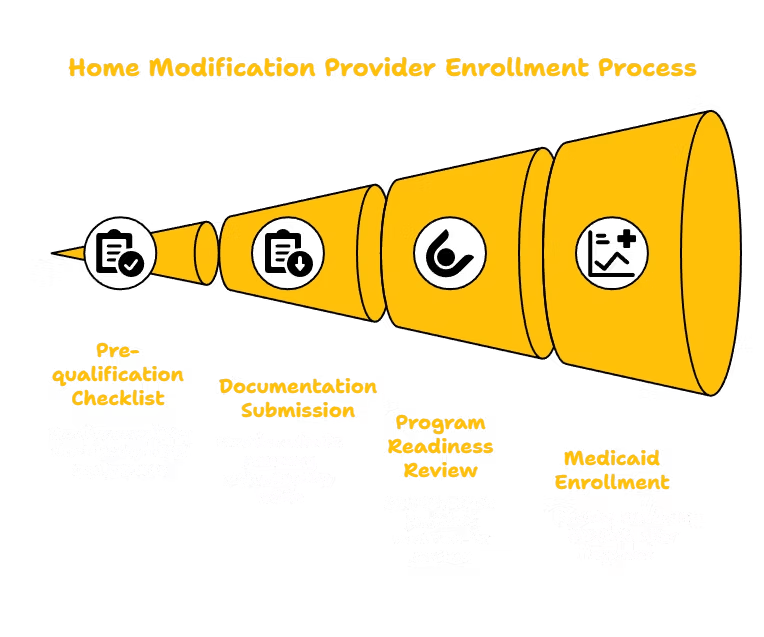
The provider enrollment process is a multi-phased journey that requires attention to administrative detail and compliance with DBHDD standards. Initially, an interested provider must submit a Letter of Intent to the DBHDD Provider Enrollment office and complete a pre-qualification checklist. This checklist confirms that the business meets basic eligibility requirements, such as professional licensure and foundational business registrations.
Following the initial inquiry, the applicant must submit a full documentation packet, including Articles of Incorporation, proof of NPI/EIN, and detailed sample project plans that demonstrate an understanding of accessibility construction. The DBHDD will then conduct a Program Readiness Review, which evaluates the provider’s internal systems, such as their documentation software, emergency response protocols, and procedures for maintaining HIPAA compliance. Only after receiving DBHDD approval can the provider finalize their Medicaid enrollment through the GAMMIS portal and configure their billing codes.
- Documentation Phase: Submission of business licenses, contractor credentials, and insurance certificates.
- Systems Review: Demonstrating capacity for HIPAA-compliant record keeping and participant-centered project management.
- Billing Setup: Configuring the GAMMIS system for accurate claims processing according to authorized waiver codes.
What Are the Staffing and Safety Standards for Providers?
Staffing a Home Modification agency requires a blend of construction expertise and a deep understanding of Medicaid compliance. The key leadership role is the Home Modification Services Manager or Project Supervisor, who must hold a valid Georgia Certified General or Residential Contractor License. This individual is responsible for ensuring that all construction meets ADA accessibility standards and local building codes.
For the skilled trades workers—such as carpenters, plumbers, and electricians—the provider must ensure that each individual is properly licensed and background-screened. All staff must also undergo specialized training. This includes OSHA safety training, HIPAA confidentiality protocols, and instruction on participant rights. Annual continuing education on accessibility standards is highly recommended to ensure that the agency remains current with the latest best practices in home adaptation.
Frequently Asked Questions
What types of home modifications are typically approved?
Approved services generally include the installation of ramps, stair lifts, and grab bars, as well as more complex projects like roll-in shower conversions, kitchen accessibility adjustments, and the widening of doorways to accommodate wheelchairs and other mobility devices.
Is a contractor license required for all home modification providers?
Yes, any provider performing structural modifications must hold a valid Georgia General Contractor License. This ensures the safety and structural integrity of the modifications performed for Medicaid participants.
How long should a new agency expect the launch process to take?
While timelines vary based on organizational preparedness, the total launch process typically ranges from 150 to 200 days. This includes 2–3 weeks for business formation, 90–120 days for the DBHDD review, and additional time for staff training and final Medicaid billing system integration.
Support for New Providers
WCG provides comprehensive start-up assistance for entities looking to enter the Georgia Home Modification Services market. Services include support with business registration, Medicaid enrollment, the development of comprehensive Policy & Procedure manuals, and the creation of clinical and operational templates for intake, home assessment, and project management. WCG also assists in establishing quality assurance frameworks and networking strategies to help providers build sustainable partnerships with hospitals and disability organizations.
Key takeaway: Establishing a successful Home Modification agency in Georgia relies on the integration of rigorous construction standards with strict adherence to DBHDD and DCH administrative requirements, ensuring that participants receive safe, compliant, and life-changing accessibility solutions.
Last verified: 2024. This content is provided for informational purposes only and does not constitute legal or professional advice. Always consult with the relevant state authorities and your legal counsel to ensure your agency meets all current regulations and requirements.