HOME MODIFICATION SERVICES PROVIDER IN COLORADO
By Fatumata Kaba · 2025-07-06 · 5 min read
IMPROVING SAFETY, ACCESSIBILITY, AND INDEPENDENCE THROUGH STRUCTURAL ADAPTATIONS FOR MEDICAID MEMBERS AT HOME
Home Modification Services in Colorado allow Medicaid members to age in place or remain within their communities by funding essential physical adaptations to their primary residences. These services, administered through the Colorado Department of Health Care Policy and Financing (HCPF), are designed to mitigate safety risks and support the functional needs of individuals enrolled in Home and Community-Based Services (HCBS) waivers.
What Are Colorado Home Modification Services and Who Do They Support?
Home modifications represent a critical component of the HCBS ecosystem, providing permanent or semi-permanent structural changes that remove barriers to accessibility. By enabling members to navigate their living environments safely, these services reduce the reliance on higher levels of institutional care and promote long-term independence for individuals with physical or cognitive disabilities.
These services are integrated into several specific waiver programs, including the Elderly, Blind, and Disabled (EBD), Supported Living Services (SLS), and Children’s Extensive Support (CES) waivers. Participation is contingent upon the modification being deemed medically necessary, cost-effective, and officially documented within the participant’s approved Service Plan. Providers play a vital role by executing these projects in strict alignment with the individual's clinical needs.
Governing Agencies and Federal Oversight
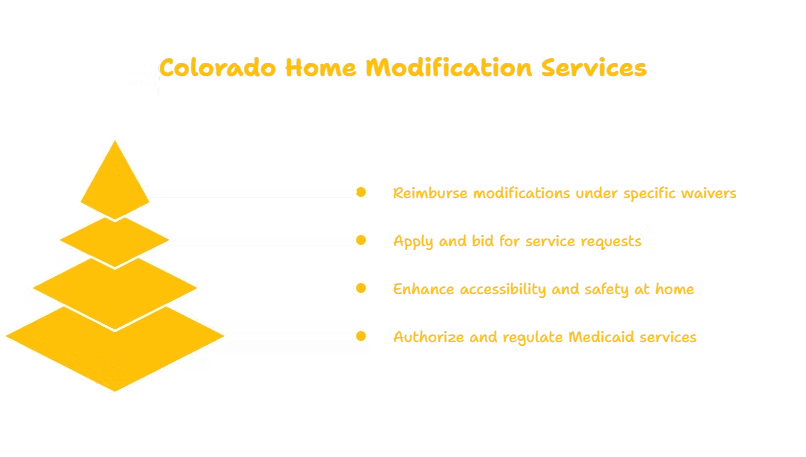
The delivery of Home Modification services is governed by a dual-layered regulatory framework. At the state level, the Colorado Department of Health Care Policy and Financing (HCPF) holds the primary responsibility for authorizing, reimbursing, and regulating these services. HCPF ensures that all modifications meet state-specific standards and are aligned with the goals of the Medicaid HCBS waivers.
At the federal level, the Centers for Medicare & Medicaid Services (CMS) oversees the administration of Medicaid funds. CMS ensures that Colorado’s programs remain in federal compliance regarding environmental accessibility adaptations. For providers, this means maintaining rigorous documentation that demonstrates how each project adheres to federal requirements regarding medical necessity and the prudent use of Medicaid resources.
Establishing Eligibility as a Medicaid Provider
Becoming an approved Colorado Medicaid Home Modification provider requires a systematic approach to business registration and regulatory compliance. Prospective providers must establish their legal business entity with the Colorado Secretary of State and secure an Employer Identification Number (EIN) from the IRS. Furthermore, obtaining a Type 2 National Provider Identifier (NPI) is a mandatory step for organizations billing Medicaid for these services.
Beyond basic business registration, providers must meet operational standards, which include obtaining appropriate Colorado contractor licensing for any structural work performed. Maintaining comprehensive general liability and workers’ compensation insurance is non-negotiable. Finally, all potential providers must enroll through the Gainwell Provider Portal, ensuring that their administrative infrastructure can interface directly with the state's Medicaid systems.
The Provider Enrollment and Bid Process
The enrollment journey begins in the Colorado Medicaid Provider Web Portal, where the applicant selects the “Home Modification” service type. During this phase, the provider must submit all necessary licensing, insurance documentation, and professional credentials. Once enrolled, the provider enters the operational phase, which involves interacting with Case Management Agencies (CMAs) to receive service referrals.
When a modification is requested, the provider must participate in a formal bid process. This entails developing a scope of work, providing detailed cost estimates, and outlining project timelines in accordance with HCPF guidelines. Success in this area relies on the ability to communicate effectively with case managers and provide transparent, itemized documentation that justifies the proposed costs to the state.
Documentation and Operational Requirements
An effective home modification agency must maintain a comprehensive Policy and Procedure manual. This manual serves as the backbone of the organization, encompassing everything from intake and home assessment procedures to specific project scope and bid templates. Documentation must be meticulous, as it is often subject to audit to ensure compliance with Medicaid billing regulations.
Core elements of the required documentation include evidence of ADA compliance, before-and-after project photos, clinical justification for the adaptation, and signed consumer rights and consent forms. Additionally, agencies must maintain rigorous safety protocols and clear warranty terms to protect both the Medicaid member and the business. Consistent documentation ensures that every project is traceable from the initial assessment to final payment.
Staffing and Professional Qualifications
Staffing needs vary based on the scale of the organization, but every agency must employ personnel capable of performing ADA-compliant construction. Home modification contractors and technicians must possess the relevant Colorado contractor licenses and a proven history of performing accessibility-related work. Background checks are essential for all staff members entering private homes, and clear communication skills are vital for coordinating with the participant and their family.
Many successful providers also integrate occupational therapists (OTs) into their workflow, either as employees or consultants. OTs are invaluable for conducting environmental assessments and providing the clinical justification necessary to prove medical necessity. Ongoing training for all staff should include HIPAA compliance, working with vulnerable populations, incident documentation, and the latest standards in universal design and accessibility.
Frequently Asked Questions
What types of modifications are typically covered?
Covered modifications include structural changes such as the installation of ramps, stair lifts, grab bars, and handrails. Other common adaptations include widening doorways, installing accessible flooring, creating roll-in showers, and adjusting kitchen layouts for safety. Specialized environmental control units may also be covered if functionally necessary.
How long does the provider enrollment process take?
The overall timeline varies, but the business formation phase typically takes 1–2 weeks, followed by contractor licensing and insurance, which requires 2–4 weeks. The Medicaid enrollment process through Gainwell Technologies generally takes 30–60 days. Referral networking and bid preparation are ongoing efforts that begin after enrollment is secured.
What role do Case Management Agencies (CMAs) play?
CMAs act as the primary point of contact between the Medicaid member and the provider. They assess the member's needs, include the home modification in the Service Plan, and coordinate the bid process. Providers must maintain clear communication with CMAs to ensure that service requests are properly authorized and that billing documentation meets state requirements.
Key Takeaway: Successful operation as a Colorado Medicaid Home Modification provider requires a balance of rigorous business compliance, detailed financial documentation, and a deep commitment to ADA-compliant construction standards. By navigating the Gainwell enrollment process carefully and building strong partnerships with local Case Management Agencies, providers can secure a stable role in supporting the critical independence of Colorado's Medicaid population.
Last verified: October 2023. Disclaimer: This guide is for informational purposes and does not constitute legal or professional advice. Always refer to the official Colorado Department of Health Care Policy and Financing (HCPF) regulations and the Gainwell Provider Portal for the most current program requirements and policy updates.