HOME HEALTH SERVICES PROVIDER IN TENNESSEE
By Fatumata Kaba · 2025-10-22 · 5 min read
Home health services in Tennessee provide essential short-term, intermittent, or ongoing medical care to individuals recovering from illness, managing chronic conditions, or addressing functional limitations within their own homes. These services are authorized and reimbursed through a complex framework involving TennCare’s Medicaid State Plan, 1915(c) HCBS Waivers, ECF CHOICES, and the Katie Beckett Program for children with medical complexity.
Establishing a home health agency in Tennessee requires a rigorous commitment to clinical compliance, regulatory adherence, and strategic administrative oversight. Prospective providers must navigate multiple governing agencies, including the Tennessee Department of Health and TennCare, to ensure that the delivery of skilled nursing and therapeutic care meets both state licensure standards and federal Medicaid requirements.
Navigating the Regulatory Landscape and Governing Agencies
The provision of home health services is strictly regulated to protect patient safety and ensure the quality of clinical interventions. Before an agency can begin operations, it must align its internal structures with the mandates set forth by several key governing bodies. TennCare serves as the primary entity overseeing Medicaid coverage, reimbursement rates, and the critical process of prior authorization for services rendered.
Complementing TennCare’s fiscal and programmatic oversight, the Tennessee Department of Health (TDH) acts as the primary licensing authority. Through the Board for Licensing Health Care Facilities, the TDH monitors compliance with safety standards and clinical operational protocols. Additionally, the Department of Intellectual and Developmental Disabilities (DIDD) plays a vital role in coordinating home-based health supports for participants enrolled in waiver programs, while the Centers for Medicare & Medicaid Services (CMS) establishes the overarching federal standards that dictate Medicaid and Medicare participation.
Core Service Offerings and Clinical Care Delivery
Home health services are designed to provide clinical support in a home setting for patients who require skilled intervention under physician orders or as part of an Individualized Service Plan (ISP). Providers must be equipped to deliver a comprehensive suite of services that address the medical, physical, and psychosocial needs of the population they serve.
The scope of care typically encompasses the following areas:
- Skilled Nursing Care: Medication administration, complex wound care, injections, catheter maintenance, and chronic condition management.
- Therapy Services: Physical, occupational, or speech therapy provided by licensed professionals to improve or maintain functional independence.
- Medical Social Work: Professional support to assist patients with psychosocial needs and the navigation of community resources.
- Home Health Aide Services: Assistance with Activities of Daily Living (ADLs) conducted under the direct supervision of a licensed nurse.
- Care Coordination: Development of individualized care plans, meticulous shift documentation, and accurate Medicaid billing.
Licensing and Provider Enrollment Requirements
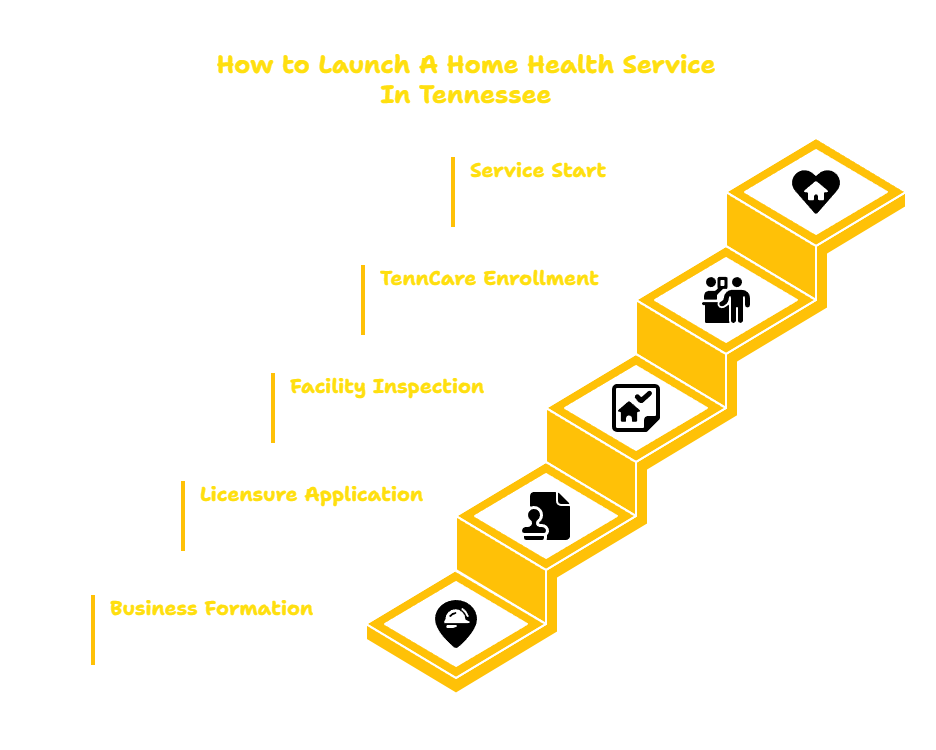
The path to becoming an approved provider is a multi-step process that demands attention to both business formation and health care administration. Entrepreneurs must first establish a formal business entity, register with the Tennessee Secretary of State, and secure an Employer Identification Number (EIN) alongside a Type 2 National Provider Identifier (NPI). This foundational work ensures the agency is recognized for legal and tax purposes before it engages with health regulators.
Once the business structure is in place, the applicant must apply for a Home Health Agency license through the Tennessee Department of Health. This phase involves a thorough review of the agency's operational readiness, including the development of a robust Policy & Procedure Manual. Following licensure, the provider must enroll with TennCare Managed Care Organizations (MCOs) and coordinate with DIDD or Katie Beckett programs as necessary to begin accepting referrals.
Staffing Standards and Clinical Oversight
High-quality home health care depends heavily on the competency and credentials of the clinical staff. Every agency must ensure that it maintains a staff roster composed of qualified professionals who hold active, unencumbered Tennessee licenses. The Clinical Director or Administrator is responsible for maintaining strict oversight of all clinical and operational services to ensure that the agency meets or exceeds state regulations.
Staff members must be trained and vetted in several key areas to remain compliant, including:
- HIPAA and Infection Control: Mandatory training to protect patient privacy and minimize the spread of illness in a home environment.
- Documentation Procedures: Standardized training on Medicaid compliance and clinical record-keeping.
- Abuse Prevention and Emergency Response: Required protocols to ensure patient safety and provide immediate action during medical emergencies.
- Competency Verification: Annual performance evaluations and mandatory background checks for all personnel.
Strategic Timeline for Launching Operations
The transition from a business concept to an active provider agency typically spans six to seven months, depending on the agency’s preparedness and the speed of regulatory processing. The initial phase of business formation and licensure application generally takes between two to three months. This period is critical for setting up the legal structure and drafting the policies that will govern the agency’s day-to-day operations.
The subsequent phase, involving facility inspections and enrollment with TennCare MCOs, also typically spans two to three months. Agencies must be prepared for site visits and the review of documentation. The final phase involves the recruitment of qualified staff and the finalization of internal quality assurance tools, which usually takes an additional one to two months. Service authorization and the acceptance of the first referrals can only commence once all licensure and enrollment steps are successfully verified.
Frequently Asked Questions
What is the primary role of the Tennessee Department of Health for a new agency?
The Tennessee Department of Health (TDH) acts as the state’s licensing authority. It oversees the Board for Licensing Health Care Facilities, which sets the standards for agency operations, performs facility inspections, and ensures that home health providers meet clinical compliance and safety regulations before they are permitted to operate.
How does a provider gain authorization to serve Medicaid waiver participants?
Authorization is achieved by enrolling with TennCare and the relevant Managed Care Organizations (MCOs). If serving individuals with intellectual or developmental disabilities, the agency must also coordinate with the Department of Intellectual and Developmental Disabilities (DIDD) to ensure the services offered align with the state’s 1915(c) waiver programs and the individual’s ISP goals.
What documentation is essential for initial licensure and audit readiness?
Providers must maintain comprehensive documentation, including Articles of Incorporation, proof of liability and malpractice insurance, staff credentialing files, and a comprehensive Policy & Procedure Manual. This manual should explicitly cover admission protocols, physician order tracking, medication management, and established procedures for Medicaid billing and clinical auditing.
Key Takeaway
Success in the Tennessee home health landscape requires a synthesis of operational excellence and strict adherence to the regulatory requirements set forth by TennCare, the Tennessee Department of Health, and other oversight bodies. By prioritizing a robust clinical infrastructure, compliant documentation, and skilled staffing, agency founders can effectively meet the complex medical needs of Tennesseans while ensuring long-term sustainability within the Medicaid ecosystem.
Last verified: October 2023. Disclaimer: This article is for informational purposes only and does not constitute legal or professional consulting advice. Requirements and policies are subject to change; always consult with the appropriate state agencies or a professional consultant before finalizing your business plans or submitting applications.