HOME HEALTH SERVICES PROVIDER IN SOUTH DAKOTA
By Fatumata Kaba · 2025-10-15 · 5 min read
Establishing a Home Health Services provider in South Dakota requires navigating a rigorous regulatory landscape governed by both state health authorities and federal Medicaid mandates. This clinical service sector is essential for maintaining the health, stability, and independence of individuals who require skilled nursing or therapeutic interventions within their own homes.
Home Health Services in South Dakota provide skilled nursing and therapeutic care to individuals in their homes under the State Plan Medicaid Home Health Benefit and select Home and Community-Based Services (HCBS) Waiver Programs, such as the Medically Fragile Waiver. These services support individuals recovering from illness, managing chronic conditions, or requiring clinical oversight to remain safely at home.
Regulatory Governance and Oversight
The provision of home health care is highly regulated to ensure the safety and standard of clinical practice for vulnerable populations. Prospective providers must coordinate with three primary entities: the South Dakota Department of Health (DOH), the Department of Social Services (DSS), and the Centers for Medicare & Medicaid Services (CMS).
The South Dakota Department of Health (DOH) – Office of Health Protection is the primary authority for licensing and inspecting home health agencies operating within the state. Simultaneously, the South Dakota Department of Social Services (DSS) – Medical Services Division manages Medicaid Home Health Services and reimbursement protocols. Finally, the Centers for Medicare & Medicaid Services (CMS) regulates federal standards for all Medicaid and Medicare-certified home health care providers.
Scope of Covered Home Health Services
Home Health Services are defined as medically necessary, intermittent skilled care delivered by licensed professionals. These services are typically initiated by a physician’s order, which mandates the frequency and duration of clinical interventions tailored to the specific needs of the patient.
Covered services generally include the following clinical and supportive activities:
- Skilled Nursing: Wound care, injections, medication management, and IV therapy.
- Home Health Aide Services: Personal care provided under direct nursing supervision.
- Rehabilitative Services: Physical Therapy (PT), Occupational Therapy (OT), and Speech Therapy (SLP).
- Medical Social Services: Professional support for high-risk or complex discharge cases.
- Clinical Management: Comprehensive assessments, ongoing re-evaluations, and the development of structured care plans.
- Administrative Support: Coordination with primary care providers and maintenance of Medicaid documentation for billing compliance.
Licensing and Provider Enrollment Requirements
To operate as a legitimate Home Health provider in South Dakota, an organization must fulfill both legal business requirements and clinical operational mandates. This process begins with the establishment of the legal entity through the South Dakota Secretary of State and the procurement of an Employer Identification Number (EIN) and a Type 2 National Provider Identifier (NPI).
Once the business entity is established, the provider must obtain a formal Home Health Agency License from the DOH. Following licensure, the agency must seek enrollment in the South Dakota Medicaid program through the DSS. For agencies intending to bill Medicare or participate in certain federal programs, maintaining CMS accreditation is also a critical requirement for sustained operations.
Steps to Launching a Home Health Agency
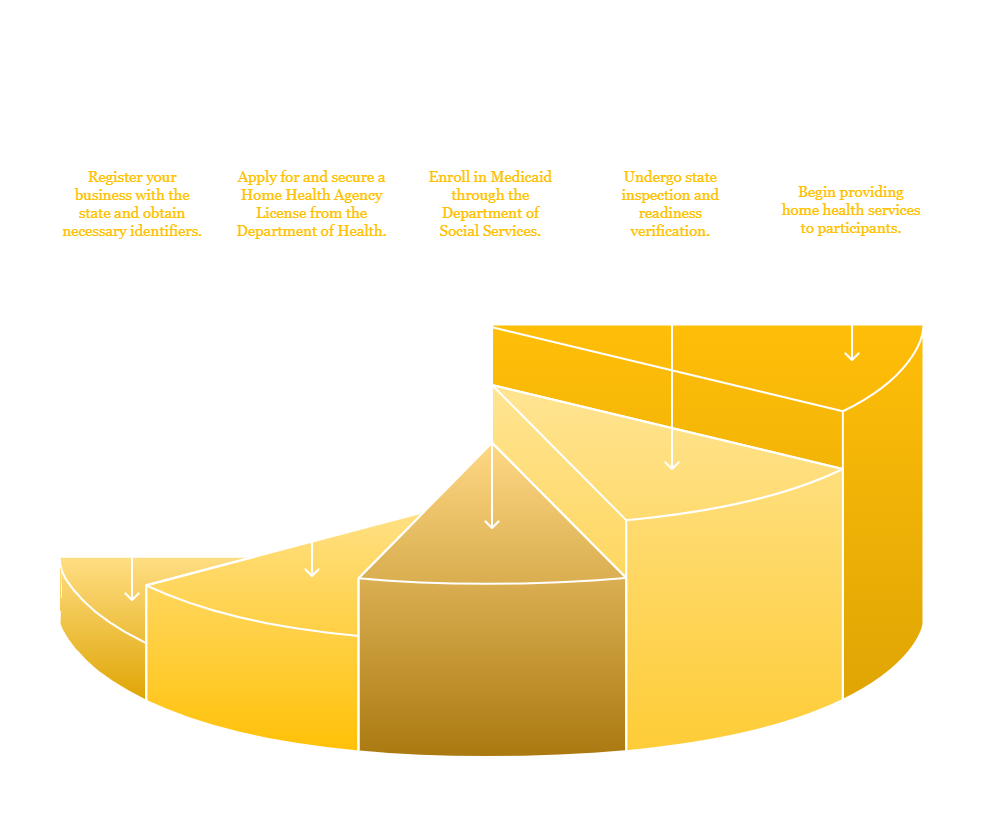
The launch process is sequential, requiring providers to complete administrative prerequisites before engaging in the delivery of clinical care. Failure to follow the prescribed order can result in significant delays in provider number activation and reimbursement capability.
The standard workflow for new agencies involves the following phases:
- Phase 1: Legal formation, EIN acquisition, and NPI registration.
- Phase 2: Submission of the application for a Home Health Agency License via the DOH.
- Phase 3: Formal Medicaid enrollment through the DSS, including the submission of all required organizational credentials.
- Phase 4: Submission of the comprehensive policy manual, detailed staff rosters, and designated service area documentation.
- Phase 5: Undergoing a state inspection and readiness verification to confirm compliance with health and safety standards.
- Phase 6: Activation of the provider profile to begin accepting patient referrals.
Staffing, Training, and Clinical Documentation
The quality of a Home Health Agency is defined by the competency of its staff and the rigor of its clinical documentation. Agencies are required to employ or contract qualified individuals who possess active South Dakota licenses, including Registered Nurses (RNs) for clinical supervision, and certified Home Health Aides (HHAs) who operate under the direct oversight of a nurse.
All personnel must undergo standardized training modules, including HIPAA compliance, infection control, and safety protocols. Additionally, agencies must maintain detailed records of staff licensure, background checks, and annual continuing education. Clinical documentation, such as care plans, daily nursing notes, and medication administration records, must be maintained according to state and federal standards to ensure eligibility for Medicaid reimbursement.
Medicaid Waiver Programs and Coverage Eligibility
Understanding which programs authorize home health services is vital for agency sustainability. While the State Plan Medicaid Home Health Benefit serves as a primary source of coverage, various waivers offer targeted support for individuals with more intensive needs.
Relevant programs include:
- State Plan Medicaid Home Health Benefit: Standard coverage for intermittent skilled care based on physician orders.
- Medically Fragile Waiver: Dedicated support for individuals requiring ongoing skilled nursing care at home.
- EPSDT (Early and Periodic Screening, Diagnostic, and Treatment): A program for youth under 21 that may authorize extended home health services.
- Other HCBS Waivers: May provide home health authorizations for exceptional cases as defined by individual program rules.
Frequently Asked Questions
What is the typical timeline for establishing a home health agency in South Dakota?
The process generally takes between 5 to 7 months. This includes 1–2 months for business registration and licensing preparation, 2–3 months for DOH licensing and policy development, and 1–2 months for Medicaid enrollment and state readiness inspections.
What documentation is required for the Home Health Policy & Procedure Manual?
The manual must detail protocols for care planning, medication management, wound care, infection control, and personal care aide oversight. It must also include sections on emergency preparedness, HIPAA compliance, clinical documentation standards, and billing/claim submission procedures.
Are Home Health Aides required to hold specific certifications?
Yes, Home Health Aides must be certified through an approved training program. Furthermore, they are required to operate under the direct, documented supervision of a licensed Registered Nurse at all times.
Key Takeaway: Developing a successful Home Health agency in South Dakota requires a meticulous approach to regulatory compliance, encompassing state-level licensing through the Department of Health and Medicaid-level enrollment through the Department of Social Services. By adhering strictly to the established protocols for clinical documentation, staffing credentials, and policy manual development, providers can ensure readiness for state surveys and maintain consistent program eligibility.
Last verified: [Insert Current Date]. This content is for informational purposes only and does not constitute legal or regulatory advice. Providers are encouraged to consult official state agency documentation and current CMS guidelines for the most accurate and up-to-date program requirements.